

Eyes Wide Open – Your Guide to Detecting Cyber Threats
The Growing Cyber Threat Landscape: Why Detection Matters More Than Ever
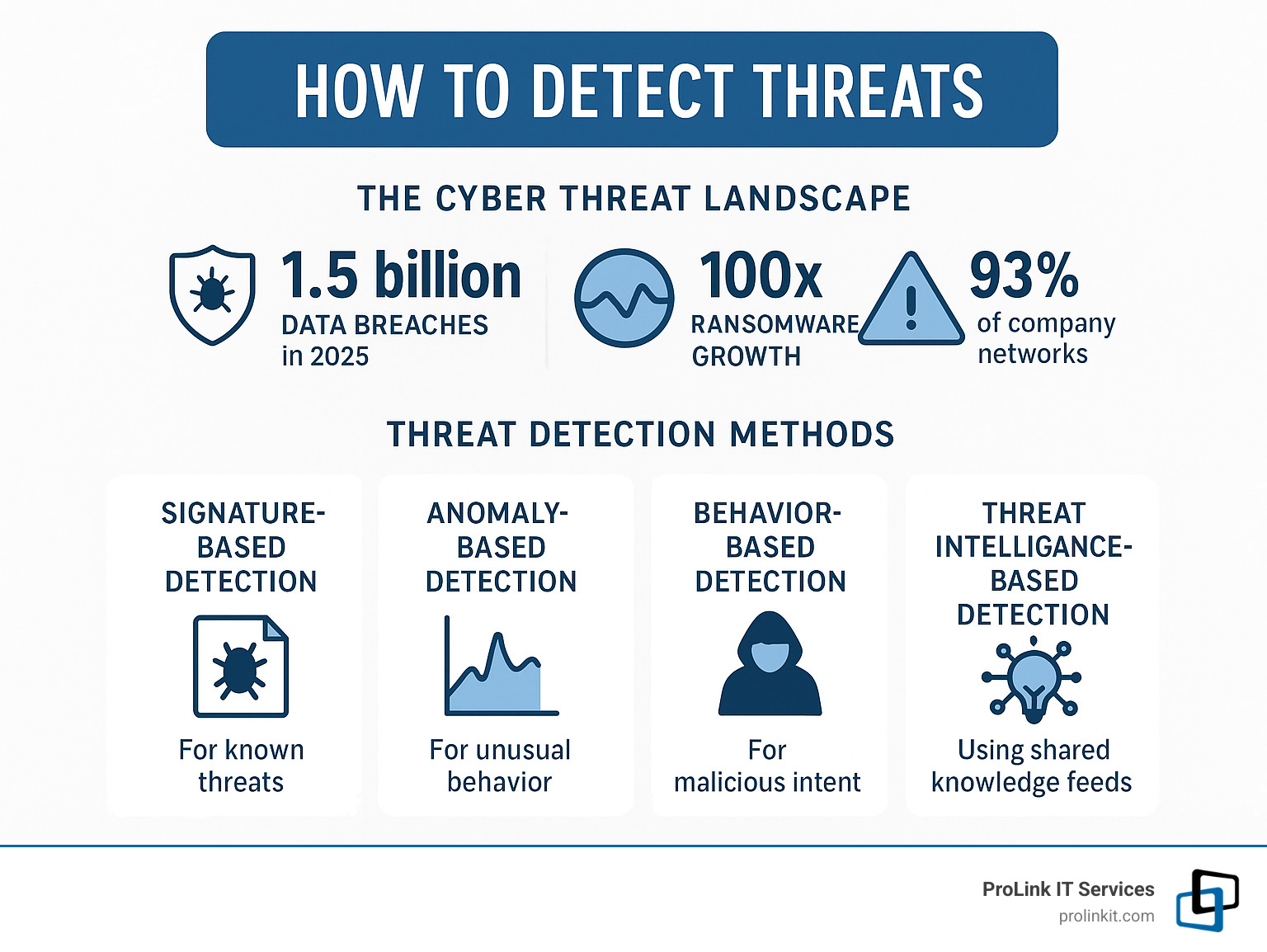
How to detect threats is a critical skill for every business in today’s digital world. With Q3 of 2021 alone seeing more data breaches than all of 2020, the stakes have never been higher. Cybercriminals penetrate 93 percent of company networks, and the costs are staggering.
Quick Answer: How to Detect Threats
- Monitor continuously – Track network traffic, user behavior, and system logs 24/7.
- Use multiple detection methods – Combine signature, anomaly, and behavior-based detection.
- Implement threat intelligence – Leverage shared knowledge about known threats.
- Deploy modern tools – Use SIEM, EDR, and XDR platforms for visibility.
- Train your team – Educate employees to recognize and report suspicious activity.
- Create response plans – Have clear procedures for when threats are detected.
Most successful attacks aren’t the result of advanced hacking; they succeed because organizations lack proper threat detection systems. Threat detection is the process of identifying malicious activity that could compromise your network, data, or systems. It’s your digital security system, alerting you before small problems become major disasters.
The challenge is building a disciplined approach that combines the right tools, processes, and people to detect both known and unknown threats while minimizing false alarms.
I’m Mitch Johnson, and with over 20 years in technology, I’ve helped countless businesses understand how to detect threats before they become costly breaches. Through ProLink IT Services, I’ve seen how the right detection strategy can mean the difference between a minor incident and a business-ending disaster.
Relevant articles related to how to detect threats:
Understanding the Battlefield: Core Threat Detection Methods
To understand how to detect threats, you must know what to look for, recognize suspicious behavior, and share intelligence. The goal is to shift from reactive response to proactive protection by understanding both Indicators of Compromise (IoCs) and attacker Tactics, Techniques, and Procedures (TTPs).
Signature-Based Detection: The Known Enemy
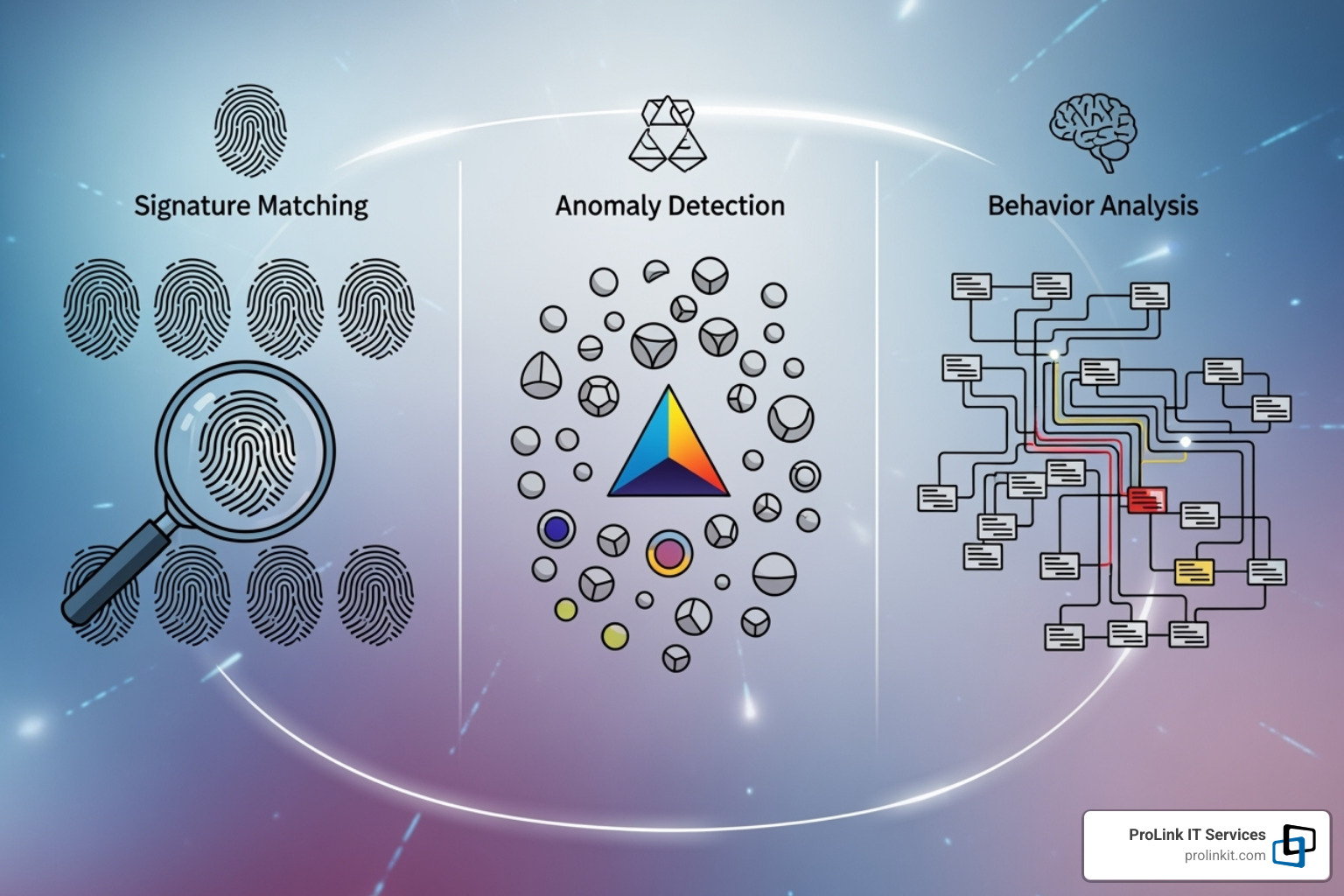
Signature-based detection uses a database of unique digital fingerprints—signatures—of known malware, malicious files, and blacklisted IP addresses. When the system scans traffic or files, it compares them against this database. A match triggers an immediate alert. This method is fast and accurate for catching common threats with few false alarms, but it’s blind to new or zero-day threats that haven’t been catalogued.
Anomaly-Based Detection: Spotting the Unusual
This method focuses on unusual behavior. It first establishes a baseline of normal activity on your network—typical traffic patterns, user behavior, and application usage. Machine learning helps the system learn what’s normal for your environment. It then continuously monitors for significant deviations. This approach is powerful for catching unknown threats, but it may generate false positives while learning your environment. For more on protection strategies, see our guide on 24/7 protection and how network security services keep your data safe.
Behavior-Based and Heuristic Analysis: Understanding Intent
Behavior-based analysis examines sequences of actions to identify malicious intent. It looks for patterns like lateral movement (an attacker spreading through your network) or privilege escalation (an attempt to gain higher-level access). Sandboxing is a key technique here, where suspicious files are executed in an isolated environment to observe their behavior safely. This method excels at catching sophisticated, multi-stage attacks.
Intelligence-Led Detection: Using Shared Knowledge
This approach leverages threat intelligence feeds that provide curated information about current and emerging threats from sources like Open-Source Intelligence (OSINT), government agencies, and cybersecurity vendors. By using this collective wisdom, organizations can proactively block malicious IPs and detect new malware variants. The MITRE ATT&CK framework is an invaluable resource, offering a knowledge base of real-world attack techniques. Resources like the Insider Threat Indicator Ontology help organizations understand various threat types.
The Modern Threat Detection Toolkit: Essential Technologies and Tools
Effective threat detection requires the right tools working together in a layered approach. A firewall might block one attack, while endpoint protection spots another, and network monitoring catches what slips through.
Centralizing Your Vision: SIEM and Log Management
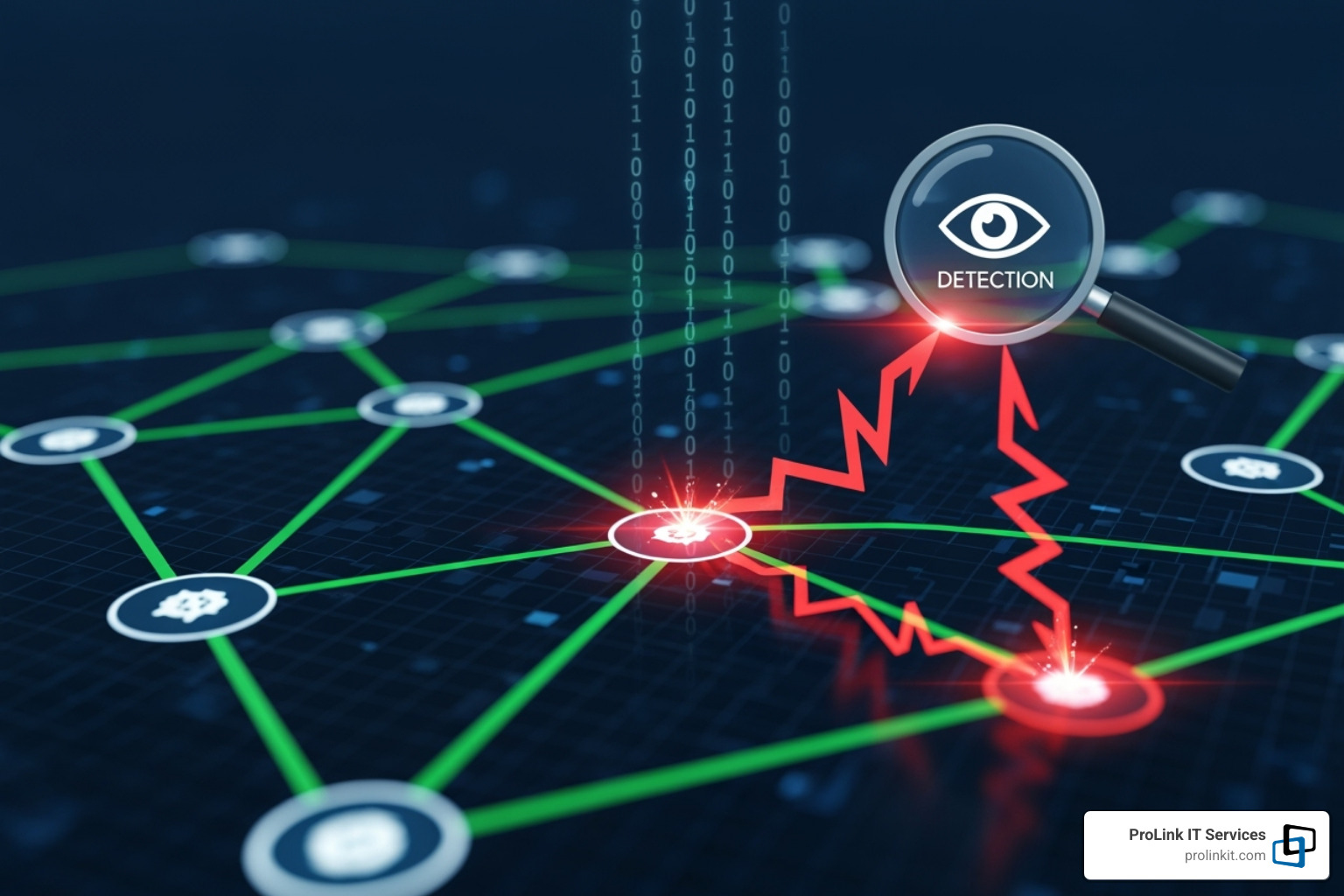
A Security Information and Event Management (SIEM) system acts as your security nerve center. It gathers logs and alerts from your entire network—firewalls, servers, applications, and cloud services—into one place for analysis. A SIEM’s power lies in correlating events to reveal a potential breach that individual alerts might miss. SIEMs also assist with compliance reporting.
Protecting the Front Lines: Endpoint and Network Detection (EDR & NDR)
Endpoint Detection and Response (EDR) solutions act like security guards for every computer, server, and mobile device. They continuously monitor device activity and can immediately isolate an endpoint if malware is detected, preventing a threat from spreading.
Network Detection and Response (NDR) solutions monitor your network traffic for unusual data flows and suspicious communication patterns, such as an attacker moving laterally. Using EDR and NDR together provides comprehensive, real-time visibility. For more tips, check out our 7 Top Network Security Tips for Businesses.
The Power of Integration: XDR and SOAR
Extended Detection and Response (XDR) integrates your various security tools into a single, unified platform. It correlates data from multiple sources to provide a complete view of an attack, enabling faster, more accurate detection.
Security Orchestration, Automation, and Response (SOAR) platforms address alert fatigue. SOAR uses automated playbooks to handle routine security tasks, freeing up your security team to focus on complex investigations.
The Human-Machine Partnership: How AI and Analysts Work Together
The most effective threat detection combines artificial intelligence with human expertise. AI excels at processing vast amounts of data to spot patterns, while human analysts provide critical context to understand why something is happening. This partnership is vital for threat hunting—the proactive search for hidden threats. This synergy creates a continuous cycle of improvement, making the entire system smarter. For more on this, explore the An Insider Threat Indicator Ontology.
A Disciplined Approach: How to Detect Threats Step-by-Step
Knowing how to detect threats requires a systematic, disciplined approach. Following a proven process, like one inspired by the Cyber Kill Chain, creates a continuous cycle of monitoring, detection, investigation, and response that prevents threats from becoming disasters.
Step 1: Continuous Monitoring and Data Collection
Effective threat detection begins with complete visibility. Asset findy helps map every device and connection point. We continuously collect logs from firewalls, servers, applications, and endpoints, while also monitoring network traffic and cloud environments. This comprehensive data collection provides the necessary context to understand any suspicious activity.
Step 2: Analysis, Detection, and Alerting
Once data is collected, systems apply various detection methods—signature-based, anomaly-based, behavior-based, and intelligence-led—to analyze it. When something seems wrong, the system generates an alert. By correlating events across different systems, we can see the full picture. Alerts are then prioritized based on severity, ensuring the security team focuses on the most critical threats first.
Step 3: Triage and Investigation
Human expertise is crucial for validating alerts and eliminating false positives. Analysts review each alert, gathering context to determine if it’s a genuine threat. If confirmed, the investigation deepens to understand the scope of the incident: which systems are affected, how the attacker gained entry, and what data is at risk. To learn more, see our guide on The 4 Types of Data Breaches You Need to Know.
Step 4: Response and Remediation
When a threat is confirmed, we take swift action. The response phase focuses on containing the threat by isolating infected systems or blocking malicious IPs. Next, we focus on eradicating the malicious presence by removing malware and closing security gaps. Recovering systems involves restoring infrastructure from secure backups. Finally, post-incident analysis helps us learn from the event to strengthen defenses. For guidance, refer to our 6 Steps to Regain Control During a Cyberattack.
Know Your Adversary: Common Cyber Threats to Detect
Understanding the threat landscape is crucial when learning how to detect threats. Most successful attacks rely on common methods we can prepare for, including Malware, Ransomware, Phishing, DDoS attacks, and Insider threats.
External Threats: Attacks from the Outside
These are digital intruders trying to breach your network.
-
Malware and viruses are malicious programs that disrupt operations or steal information. Telltale signs include slow computers or strange program behavior.
-
Ransomware attacks have become a nightmare for businesses, with payments growing 100x since 2014. This malware encrypts files before demanding a ransom. Detecting it involves watching for unusual file activity, such as mass encryption. Learn more by reading Don’t Fall for These 3 Ransomware Myths.
-
Phishing and spear-phishing are social engineering attacks that trick users into clicking malicious links or sharing credentials. Detection relies on email filtering systems and user awareness.
-
Denial-of-Service (DDoS) attacks overwhelm your systems with traffic, causing outages. Detection involves monitoring for abnormal traffic spikes that degrade network performance.
Internal Threats: Dangers from Within
Internal threats can be more dangerous because perpetrators already have legitimate access.
-
Malicious insiders are employees or contractors who abuse their access. Since they have legitimate credentials, traditional defenses are often ineffective.
-
Negligent employees are not malicious but make costly mistakes, like clicking on phishing links or mishandling sensitive data.
-
Compromised credentials occur when an attacker steals an employee’s login and masquerades as a legitimate user, making their activity difficult to detect.
-
Data exfiltration is the unauthorized transfer of sensitive data. Detection relies on user behavior analytics to spot anomalies, such as employees accessing unusual files or downloading large amounts of data.
For more on this topic, the FBI’s resource Making Prevention a Reality: Identifying, Assessing, and Managing the Threat of Targeted Attacks offers valuable guidance.
Clarifying the Concepts: Threat Detection vs. Hunting vs. TDIR
When learning how to detect threats, it’s important to understand the difference between related but distinct concepts. Think of it as the difference between a home security system, a private investigator, and a full-service security company.
| Feature | Threat Detection | Threat Hunting | TDIR (Threat Detection, Investigation, Response) |
|---|---|---|---|
| Goal | Identify known/unknown threats via alerts | Proactively search for hidden, undetected threats | Holistic management of the threat lifecycle |
| Approach | Reactive (alerts on anomalies) | Proactive (hypothesis-driven search) | Comprehensive (detect, investigate, respond) |
| Analyst Role | Monitor alerts, initial triage | Active, skilled investigation, hypothesis testing | Orchestrate, analyze, respond, improve |
| Automation | High (rules, signatures, ML) | Low to Medium (tools assist, human leads) | Medium to High (orchestration, playbooks) |
| Primary Output | Alerts, incidents | New detections, improved rules, IoCs | Resolved incidents, stronger security posture |
How to Detect Threats vs. Proactive Threat Hunting
Threat detection is your always-on, automated security system. It’s reactive, generating alerts when its rules spot something suspicious. It’s essential for real-time protection against common attacks.
Threat hunting is a proactive, human-led process. Instead of waiting for alerts, skilled analysts form hypotheses about potential hidden threats and actively search for them. Threat hunting is crucial for finding sophisticated attacks that automated systems might miss. The findings from a hunt are then used to create smarter detection rules.
The Rise of TDIR: A Holistic Framework
TDIR—Threat Detection, Investigation, and Response—is a comprehensive framework that goes beyond simple detection. The TDIR model recognizes that you need a unified approach that seamlessly connects all phases of handling a threat.
TDIR integrates the detection of a threat, the investigation by analysts to understand its scope, and the response to contain, eliminate, and recover from it. This holistic framework turns cybersecurity from disconnected activities into a disciplined, coordinated defense strategy.
Building a Resilient Strategy: Challenges and Best Practices
Building an effective threat detection system means overcoming real-world challenges like evolving threats, overwhelming data volumes, and limited resources. Understanding these obstacles is the first step to building a resilient defense.
Overcoming Key Challenges in Threat Detection
Organizations face several key problems:
- Volume of Data: The sheer amount of log and network data can make finding malicious activity difficult.
- Alert Fatigue: A high volume of daily alerts can overwhelm security teams, causing them to miss critical threats.
- Encrypted Traffic: Encryption can create blind spots that attackers use to hide their activities.
- Lack of Skilled Personnel: The shortage of cybersecurity professionals leads to cybersecurity burnout.
- Integrating Disparate Tools: Making security products from different vendors work together seamlessly is a common challenge.
Best Practices for How to Detect Threats in Real-Time
Despite these challenges, successful threat detection is achievable with a strategic approach.
- Implement a multi-layered defense: Use a combination of security controls so that if one layer fails, others provide backup.
- Maintain security hygiene: Simple practices like regular software updates, strong password policies, and multi-factor authentication are incredibly effective.
- Automate where possible: Use automation to handle high-volume data processing, freeing up human analysts for complex investigations.
- Conduct regular user training: A well-trained workforce is a powerful line of defense. Teach employees to spot and report suspicious activity.
- Develop and test an incident response plan: Regular drills ensure your team knows what to do during a real incident.
- Leverage behavioral analytics: Understanding normal user and system behavior helps you spot anomalies that may indicate an advanced threat.
For many businesses, partnering with a managed security service provider offers access to 24/7 monitoring and expert analysis. At ProLink IT Services, our veteran-owned approach brings discipline and integrity to security operations. For more insights, see our guide to 5 Essential IT Security Services to Consider.
Conclusion: A Partnership for Proactive Protection
Learning how to detect threats is essential for business survival in a world where cybercriminals penetrate 93% of company networks. The organizations that succeed are those that adopt a disciplined approach, combining powerful technology with human expertise.
Technology alone isn’t enough. The real advantage comes from the partnership between AI-driven tools and skilled human analysts who provide the context and critical thinking needed for an effective response. This synergy transforms reactive security into proactive protection.
At ProLink IT Services, we embody this approach. As a veteran-owned business, we bring the values of discipline and integrity to every client relationship. We don’t just deploy tools; we become true partners in your security journey.
For businesses in West Jordan, UT, and across Utah, navigating cybersecurity doesn’t have to be an overwhelming task. A partnership provides the expert guidance needed to build a robust threat detection strategy while you focus on running your business.
Don’t wait for a breach to reveal your security gaps. Let’s work together to build a resilient defense that protects what matters most.