

Securing the Cloud Without Losing Your Mind
Why Your Business Needs Cloud Security Managed Services Now
Cloud security managed services are outsourced security solutions that protect your cloud infrastructure through 24/7 monitoring, threat detection, and incident response. Here’s what you need to know:
- What they are: Third-party providers who monitor and secure your cloud environments
- Key benefits: Cost savings, expert expertise, continuous compliance, and proactive threat hunting
- Core services: Security monitoring, incident response, vulnerability management, and compliance reporting
- Best for: Organizations lacking internal cloud security expertise or wanting to focus on core business
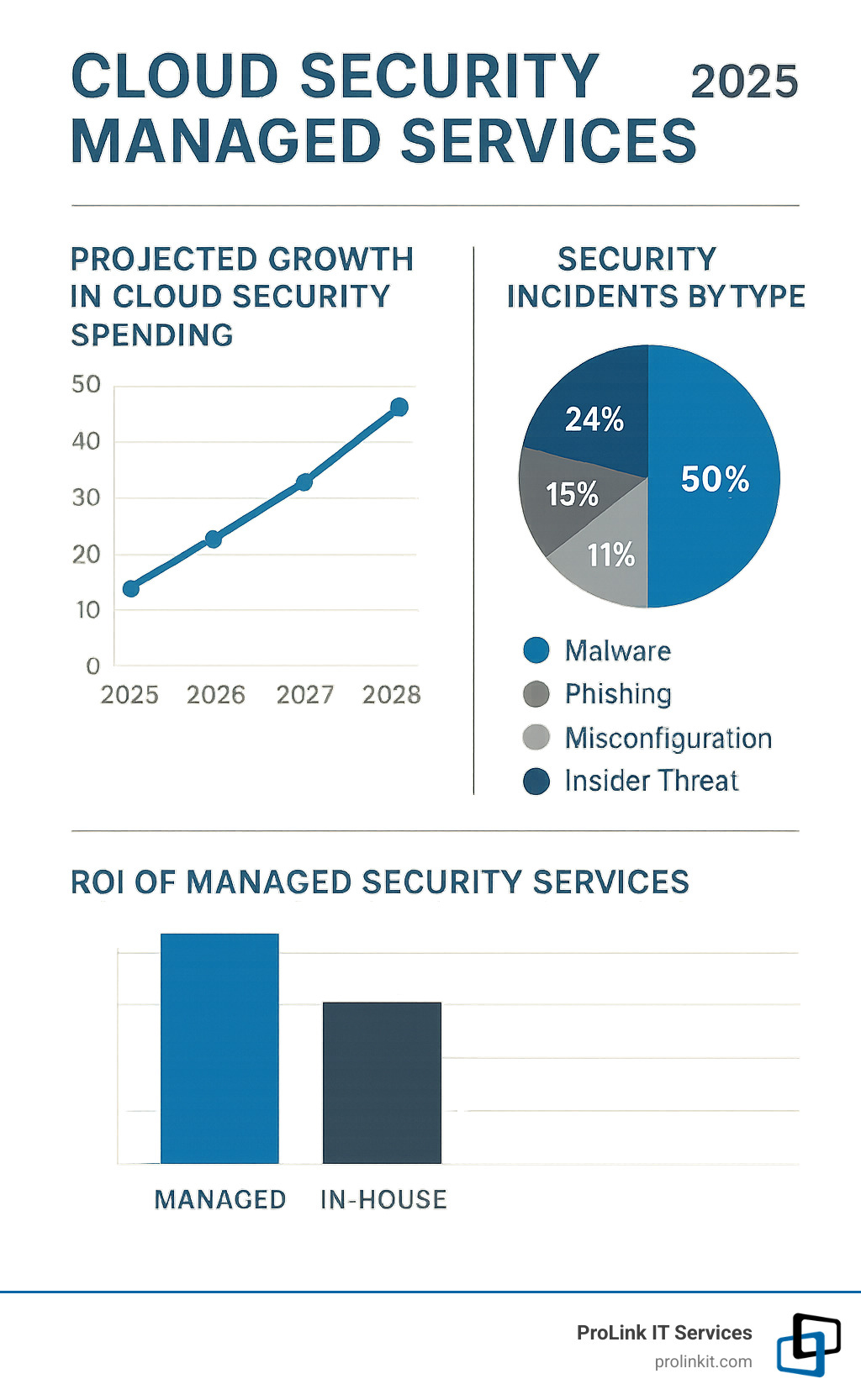
The cloud security landscape has become a minefield. More than 69% of companies report data breaches due to multi-cloud security misconfigurations, with the average breach costing $4.35 million. As Gartner predicts global cloud spending will reach $591.8 billion by 2024, the attack surface keeps expanding.
The problem isn’t just complexity – it’s the speed of change. Your business moved to the cloud for agility and cost savings. But now you’re drowning in security alerts, compliance requirements, and the constant fear that one misconfiguration could expose your entire operation.
Traditional security approaches fall short in cloud environments. The shared responsibility model means you’re accountable for securing your data and applications, even when they’re running on someone else’s infrastructure. Add remote workforces, regulatory pressures, and the talent shortage in cybersecurity, and it’s clear why many business owners feel overwhelmed.
This is where managed cloud security services shine. They bridge the gap between your business needs and the complex reality of cloud security. Instead of building an expensive internal security team, you can leverage specialized expertise that’s available 24/7.
I’m Mitch Johnson, Founder and CEO of Prolink IT Services, and I’ve spent over 20 years helping businesses steer technology challenges, including implementing cloud security managed services that protect operations without breaking budgets. My experience has shown that the right managed security partner can transform cloud security from a constant worry into a competitive advantage.
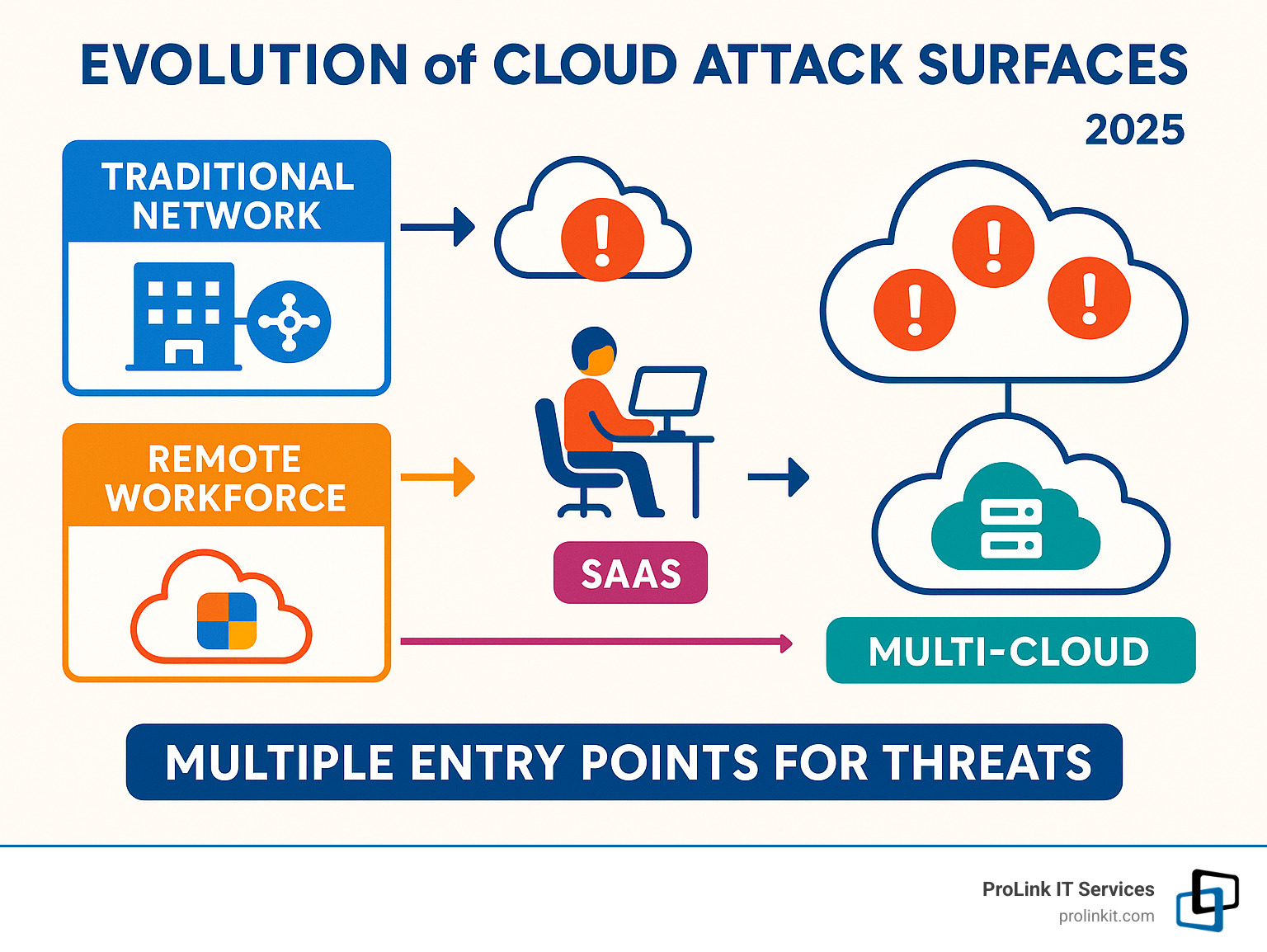
Cloud security managed services terms made easy:
Understanding Cloud Security Managed Services
Cloud security managed services represent a strategic shift from reactive to proactive security. Instead of waiting for something to go wrong, you’re partnering with security experts who monitor your cloud infrastructure around the clock, detect threats before they become breaches, and respond to incidents with precision.
Think of it as having a team of cybersecurity specialists working for your business 24/7, but without the overhead of hiring, training, and retaining full-time employees. These services typically include Security Operations Center (SOC) monitoring, Managed Detection and Response (MDR), Security Information and Event Management (SIEM), and incident response capabilities.
The beauty of managed security lies in its scalability and pay-as-you-go model. As your business grows or faces seasonal fluctuations, your security coverage scales accordingly. This elasticity addresses one of the biggest challenges: organizations either over-investing in security during quiet periods or being under-protected during peak times.
From our experience at ProLink IT Services, we’ve seen how internal skill gaps can leave businesses vulnerable. The cybersecurity talent shortage is real – qualified security professionals are expensive and hard to find. Cloud Security Managed Services fill this gap by providing access to teams of specialists who live and breathe cloud security.
The Essence of “cloud security managed services”
Cloud security managed services go beyond traditional monitoring. They encompass proactive threat hunting, where security analysts actively search for signs of compromise before automated systems detect them. This includes managed detection and response cycles that can identify, contain, and remediate threats in minutes rather than days.
The proactive defense approach means your security team isn’t just responding to alerts – they’re anticipating threats, understanding your unique risk profile, and implementing controls before attacks occur.
The Shared Responsibility Model Demystified
Understanding the shared responsibility model is crucial for making informed decisions about Cloud Managed Services. In Infrastructure as a Service (IaaS), you’re responsible for securing your operating systems, applications, and data, while the cloud provider secures the underlying infrastructure. Platform as a Service (PaaS) shifts more responsibility to the provider, and Software as a Service (SaaS) leaves you primarily responsible for user access and data classification.
The confusion around these responsibilities is where many security gaps emerge. We’ve seen businesses assume their cloud provider handles all security, only to find they’re liable for data breaches caused by misconfigurations they didn’t know they were responsible for managing.
Here’s how the responsibilities typically break down:
| Security Layer | On-Premises | Cloud (IaaS) | Managed Services |
|---|---|---|---|
| Physical Security | Your responsibility | Provider responsibility | Provider responsibility |
| Network Controls | Your responsibility | Shared responsibility | Managed provider responsibility |
| Operating System | Your responsibility | Your responsibility | Managed provider responsibility |
| Application Security | Your responsibility | Your responsibility | Shared/Managed responsibility |
| Data Encryption | Your responsibility | Your responsibility | Managed provider responsibility |
| Identity & Access | Your responsibility | Your responsibility | Managed provider responsibility |
| Compliance Monitoring | Your responsibility | Your responsibility | Managed provider responsibility |
Policy enforcement becomes critical in this model. Even with managed services, you need clear policies about data handling, user access, and incident response procedures.
Why Organizations Can’t Ignore Managed Cloud Security
The threat landscape has evolved dramatically. Modern attackers aren’t just looking for obvious vulnerabilities – they’re exploiting the complexity of multi-cloud environments, targeting misconfigurations, and using sophisticated techniques that can evade traditional security tools.
The cost of getting it wrong is staggering. Beyond the average $4.35 million breach cost, businesses face regulatory fines, customer churn, and long-term reputation damage. We’ve worked with companies that spent more recovering from a single incident than they would have invested in comprehensive managed security over several years.
Business continuity and disaster recovery have become table stakes. When your applications and data live in the cloud, your disaster recovery strategy must account for cloud-specific risks. Managed security providers bring expertise in geo-redundancy, automated failover, and immutable backups that most internal teams struggle to implement effectively.
The competitive advantage aspect is often overlooked. While your competitors are dealing with security incidents and compliance headaches, you can focus on innovation and growth. This strategic focus is where we see the biggest impact for our clients – security becomes an enabler rather than a constraint.
The talent shortage in cybersecurity continues to worsen. Qualified security professionals command high salaries, and even when you find them, retaining them requires ongoing investment in training and career development. For many businesses, especially those outside major tech hubs, building an internal security team isn’t realistic.
Regulatory compliance adds another layer of complexity. GDPR fines can reach 4% of annual revenue, and healthcare organizations face HIPAA penalties that can cripple smaller businesses. The Scientific research on cloud misconfigurations shows that most breaches result from preventable configuration errors rather than sophisticated attacks.
Key Benefits of cloud security managed services
Cloud security managed services deliver cost predictability that internal teams can’t match. Instead of unpredictable capital expenses for security tools and personnel, you get a predictable monthly cost that scales with your business.
Continuous compliance monitoring is another game-changer. Rather than scrambling to prepare for audits, managed providers maintain ongoing compliance posture monitoring. They generate the reports you need, track control effectiveness, and alert you to compliance gaps before they become violations.
Rapid incident response capabilities can mean the difference between a minor security event and a major breach. Managed providers typically commit to response times measured in minutes, not hours or days.
Compliance & Governance Booster Shot
Modern compliance frameworks like GDPR, HIPAA, PCI DSS, and ISO 27001 require continuous monitoring and documentation that most internal teams struggle to maintain. Managed security providers specialize in these requirements, maintaining the policies, procedures, and technical controls needed for compliance.
Automated reporting capabilities eliminate the manual effort typically required for compliance documentation. Instead of spending weeks preparing for audits, you can generate real-time compliance reports that show your security posture and control effectiveness.
Audit readiness becomes a continuous state rather than a periodic scramble. When auditors arrive, your managed provider can demonstrate ongoing compliance monitoring, incident response capabilities, and risk management processes.
For organizations requiring specific compliance certifications, More info about Managed Security Services can provide the expertise and documentation needed to achieve and maintain these certifications.
Core Features, Tools & Architecture
Modern cloud security managed services rely on an integrated toolset that would be costly to build in-house. The essentials include:
- Cloud-Native Application Protection Platforms (CNAPP) for end-to-end visibility
- Cloud Security Posture Management (CSPM) to spot and fix misconfigurations
- Cloud Access Security Brokers (CASB) that monitor SaaS usage and enforce data-loss prevention
- Cloud Workload Protection Platforms (CWPP) guarding VMs, containers and serverless code
- Secure Access Service Edge (SASE) for unified network and security controls
- Zero Trust architecture reinforced with IAM, MFA and least-privilege access
- Encryption lifecycle management, WAF, IDS/IPS, vulnerability scanning and real-time threat intelligence
- Automation powered by AI/ML analytics to slash false positives and accelerate response
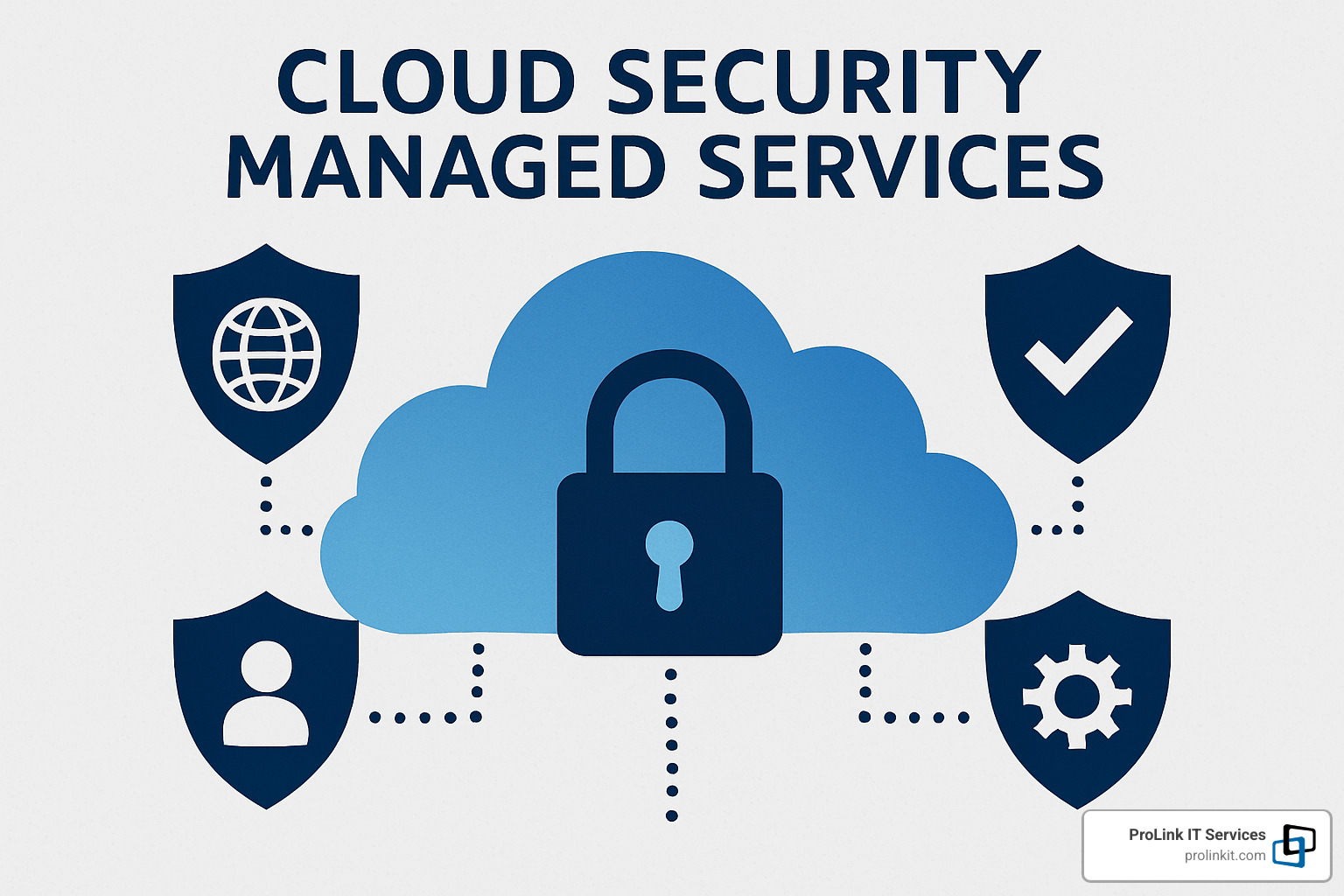
Must-Have Capabilities in cloud security managed services
Your provider should deliver continuous behavioral monitoring, automated containment that can isolate systems or revoke credentials in seconds, and forensic analysis for post-incident learning.
Built-In Cloud Controls vs Third-Party Expertise
Native cloud tools provide a helpful baseline, but specialized providers add deeper analytics, cross-platform visibility, and a true single-pane-of-glass experience—critical for hybrid or multi-cloud deployments.
Overcoming Challenges & Best Practices
Multi-cloud sprawl, tool overload, and noisy alerts overwhelm many teams. A seasoned provider can rationalize tools, apply machine learning to cut false positives, and enforce consistent security policy across clouds.
DevSecOps, API security, least-privilege IAM, regular key rotation, and automated testing should be built into every deployment pipeline.
Here are the top 5 cloud misconfiguration pitfalls we see most often:
- Default or weak credentials
- Excessive permissions
- Unencrypted storage
- Open security groups
- Insufficient logging and monitoring
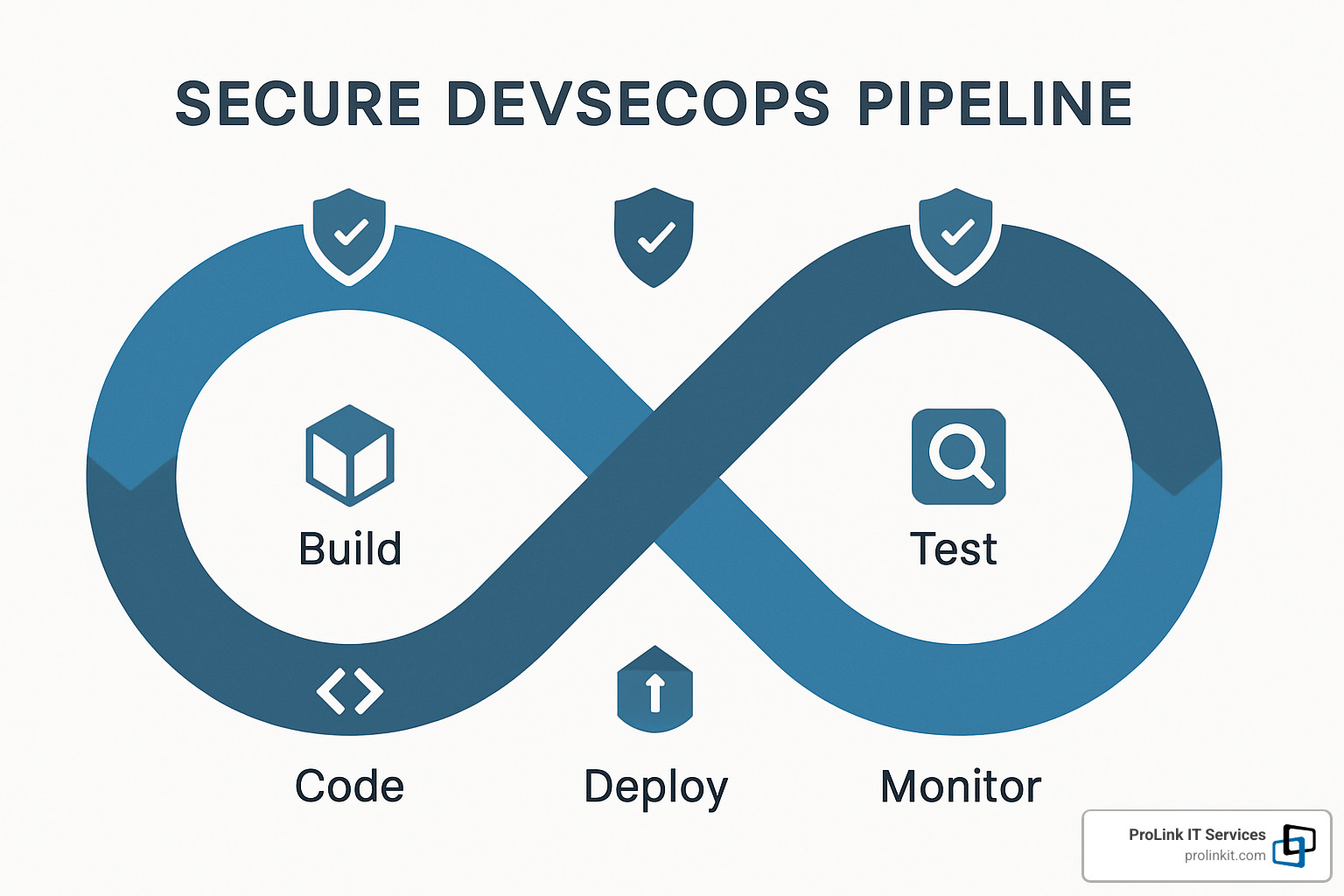
Business Continuity & Disaster Recovery Safeguards
Define realistic RTO/RPO targets, keep data geo-redundant, test automated failover, and maintain immutable backups to blunt ransomware.
Seamless Integration With Existing IT Environments
API connectors, SIEM feeds, federated IAM, and phased rollouts ensure new controls fit smoothly into existing operations without disrupting users.
Choosing the Right Managed Security Partner & Looking Ahead
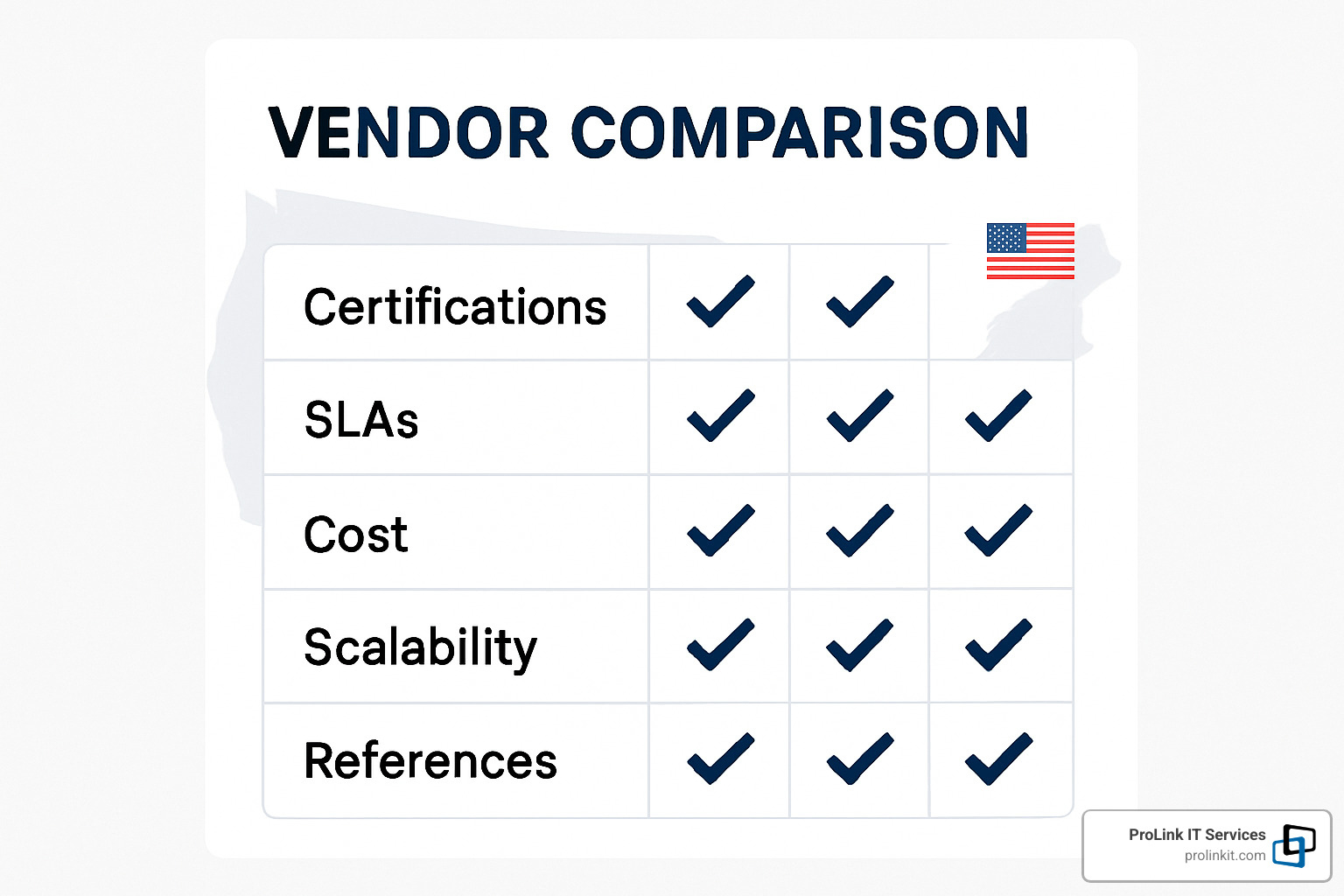
Vendor vetting should include evaluation of technical capabilities, industry experience, and cultural fit. Look for providers with relevant certifications, proven track records, and experience in your industry or regulatory environment.
Industry certifications like SOC 2, ISO 27001, and cloud provider certifications demonstrate that the managed provider follows established security practices. These certifications should be current and should cover the services you’re considering.
Service Level Agreements (SLAs) should specify response times, availability guarantees, and performance metrics. These agreements should include penalties for non-performance and should be realistic given your requirements and budget.
SOC maturity assessment helps you understand the provider’s security operations capabilities. Look for providers with mature processes, experienced analysts, and proven incident response capabilities.
Transparent reporting ensures that you understand what the managed provider is doing on your behalf. This includes regular security reports, incident summaries, and compliance documentation.
Scalability considerations ensure that the managed provider can grow with your business. This includes both technical scalability and the ability to add new services as your requirements evolve.
Cultural fit assessment helps ensure that the managed provider’s approach aligns with your organization’s values and working style. This includes communication preferences, escalation procedures, and collaboration approaches.
Cost models should be transparent and predictable. Look for providers that offer clear pricing structures and that can provide accurate cost estimates based on your specific requirements.
Proof-of-concept opportunities allow you to test the managed provider’s capabilities before making a long-term commitment. This testing should include both technical capabilities and service delivery quality.
Future-Proofing With Emerging Trends
Edge computing brings new security challenges as processing moves closer to end users. Managed providers should have strategies for securing edge deployments and integrating them with centralized security operations.
5G networks will enable new applications and use cases but also create new attack vectors. Security strategies should account for the increased connectivity and reduced latency that 5G enables.
Automated compliance capabilities will become increasingly important as regulatory requirements continue to evolve. Look for providers that can adapt their compliance monitoring and reporting as new regulations emerge.
Self-healing systems that can automatically respond to security incidents and system failures will become more common. These systems should be integrated with human oversight to ensure appropriate response to complex incidents.
Frequently Asked Questions about Cloud Security Managed Services
Do cloud security managed services replace my internal security team?
Cloud security managed services complement rather than replace your internal security team. They handle the 24/7 monitoring, threat detection, and initial incident response, while your internal team focuses on strategic security initiatives, policy development, and business-specific security requirements.
For smaller organizations without dedicated security staff, managed services can provide capabilities that would be impossible to develop internally. For larger organizations with existing security teams, managed services extend your capabilities and provide round-the-clock coverage that most internal teams can’t maintain cost-effectively.
The key is finding the right balance between managed services and internal capabilities based on your organization’s size, industry, and risk profile. Many of our clients at ProLink IT Services find that a hybrid approach works best – leveraging managed services for operational security tasks while maintaining internal expertise for strategic decision-making.
How quickly can a managed provider detect and contain threats?
Response times vary depending on the threat type and severity, but leading managed providers typically commit to detecting high-priority threats within minutes and beginning containment procedures within 15-30 minutes of detection. This rapid response is possible because of automated detection systems, pre-configured response procedures, and dedicated security analysts who are available 24/7.
The speed advantage comes from having security operations centers that are specifically designed for rapid response. These centers have established procedures, automated tools, and experienced analysts who can quickly assess threats and implement appropriate countermeasures.
For comparison, organizations relying on internal security teams typically take hours or days to detect and respond to threats, especially if the incident occurs outside of normal business hours. This delay can significantly increase the impact and cost of security incidents.
Will managed services lock me into a single cloud platform?
Quality managed security providers are cloud-agnostic and can work across multiple cloud platforms. They should provide consistent security policies and monitoring regardless of whether you’re using AWS, Azure, Google Cloud, or a combination of providers.
In fact, managed services can actually increase your flexibility by providing unified security management across multiple cloud platforms. This capability is especially valuable for organizations pursuing multi-cloud strategies or those that need to work with different cloud providers for different business units or applications.
Look for providers that have certifications and partnerships with multiple cloud providers and that can demonstrate experience managing security across diverse cloud environments. This multi-cloud expertise is becoming increasingly important as organizations adopt more complex cloud architectures.
Conclusion
Cloud security managed services represent a strategic shift from reactive security to proactive protection. As we’ve explored throughout this guide, the complexity of modern cloud environments, combined with the evolving threat landscape and regulatory requirements, makes it nearly impossible for most organizations to maintain effective security using only internal resources.
The statistics speak for themselves: 69% of companies experience breaches due to cloud misconfigurations, with an average cost of $4.35 million per incident. Meanwhile, global cloud spending continues to grow, reaching a projected $591.8 billion by 2024. This growth creates an expanding attack surface that requires specialized expertise to secure effectively.
Here’s your actionable roadmap for implementing managed cloud security:
- Assess your current security posture – Identify gaps in your existing security capabilities and understand your risk profile
- Define your requirements – Determine what security capabilities you need based on your industry, regulatory environment, and business objectives
- Evaluate potential providers – Use the vendor selection criteria we’ve outlined to identify providers that match your needs
- Start with a pilot program – Begin with a limited scope to test the provider’s capabilities and cultural fit
- Plan for integration – Develop a phased approach for integrating managed services with your existing IT environment
- Establish governance – Create clear policies and procedures for working with your managed security provider
- Monitor and optimize – Regularly review service delivery and adjust your approach based on evolving needs
The risk reduction benefits of managed security services extend beyond just preventing breaches. They include improved compliance posture, better business continuity, and the ability to focus your internal resources on strategic initiatives that drive business growth.
At ProLink IT Services, our veteran-owned discipline brings a unique perspective to cloud security management. We understand that security isn’t just about technology – it’s about people, processes, and partnerships. Our approach emphasizes integrity, attention to detail, and a commitment to our clients’ success that goes beyond typical vendor relationships.
The future of cloud security lies in partnerships between businesses and specialized security providers. As threats continue to evolve and cloud environments become more complex, the organizations that thrive will be those that recognize security as a strategic enabler rather than a necessary evil.
Don’t wait until a security incident forces your hand. The time to implement comprehensive cloud security is now, while you can do it strategically rather than reactively. More info about Cloud-Managed-Security Services can help you take the first step toward securing your cloud environment without losing your mind – or your business.
In today’s digital landscape, the question isn’t whether you’ll face a security threat – it’s whether you’ll be prepared when it arrives. Managed cloud security services provide the expertise, tools, and round-the-clock vigilance needed to protect your business while allowing you to focus on what you do best: growing your company and serving your customers.