

Managed Data Centers Made Easy—No IT Degree Required
Why Cloud Managed Data Center Services Are Changing Modern Business
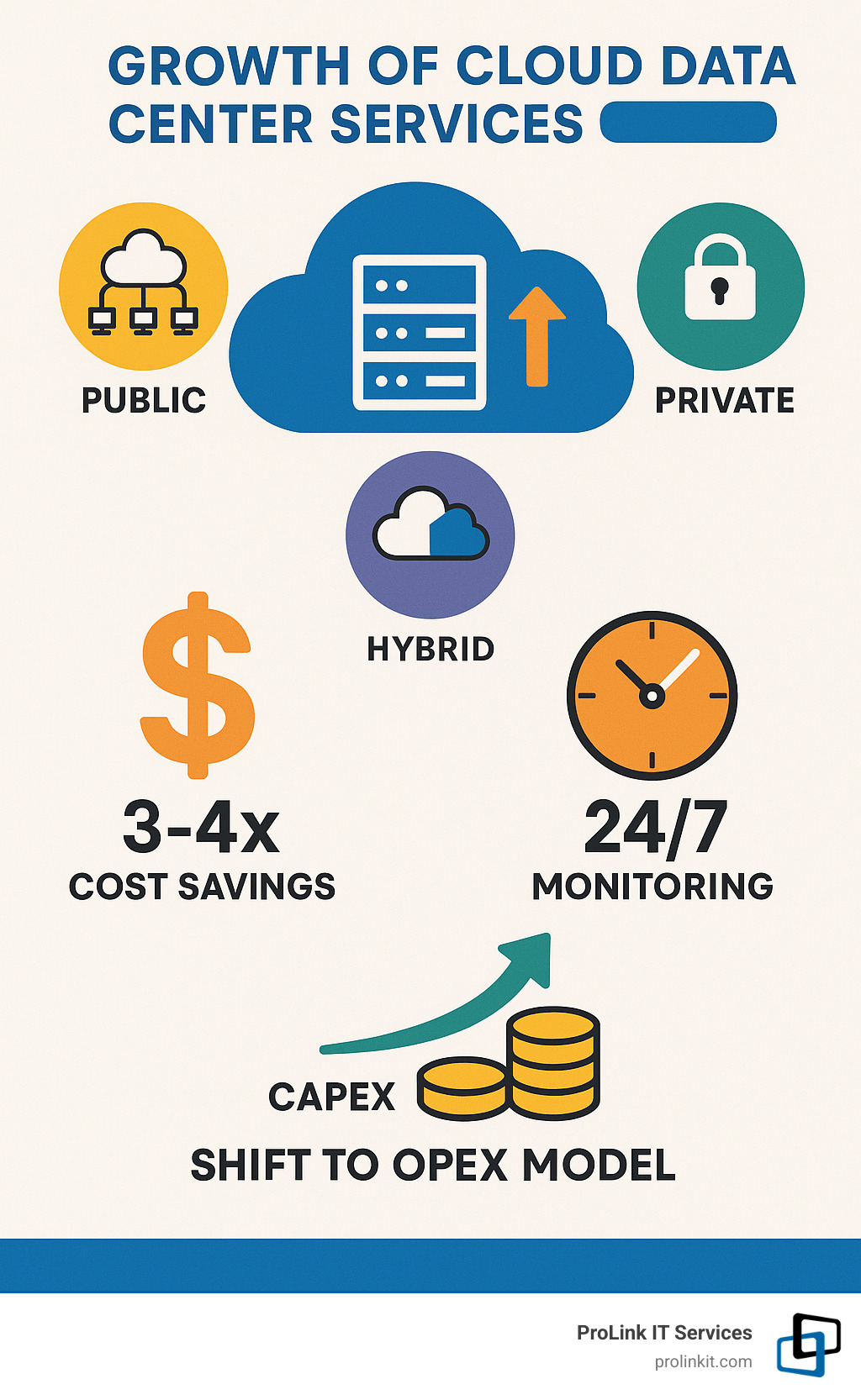
Cloud managed data center services are third-party solutions that handle the complete management, monitoring, and maintenance of your IT infrastructure through cloud-based tools and remote expertise. Here’s what you need to know:
Key Service Components:
– 24/7 monitoring of servers, storage, and network equipment
– Remote management through cloud platforms and automation
– Scalable infrastructure that grows with your business needs
– Expert support without hiring full-time IT staff
Three Main Types:
1. Public Cloud Services – Shared infrastructure with major providers
2. Private Cloud Solutions – Dedicated resources for your organization
3. Hybrid Cloud Solutions – Mix of public and private environments
Primary Benefits:
– Reduce IT costs by 3-4x compared to traditional models
– Access 24/7 expert monitoring and maintenance
– Scale resources up or down based on demand
– Focus your team on core business objectives
The managed data center services market includes over 60 major providers and specialized firms. According to industry research, the global data center services market continues to grow rapidly as organizations shift from managing infrastructure to partnering with experts.
As one technical operations leader put it: “Stuff happens. But I know when it does, I can count on [managed services] to fix it.” This shift lets businesses focus on what they do best.
I’m Mitch Johnson, CEO of ProLink IT Services, and I’ve spent over 20 years helping businesses steer complex technology decisions including cloud managed data center services. This guide will walk you through everything you need to know to make the right choice for your organization.
Understanding Cloud Managed Data Center Services
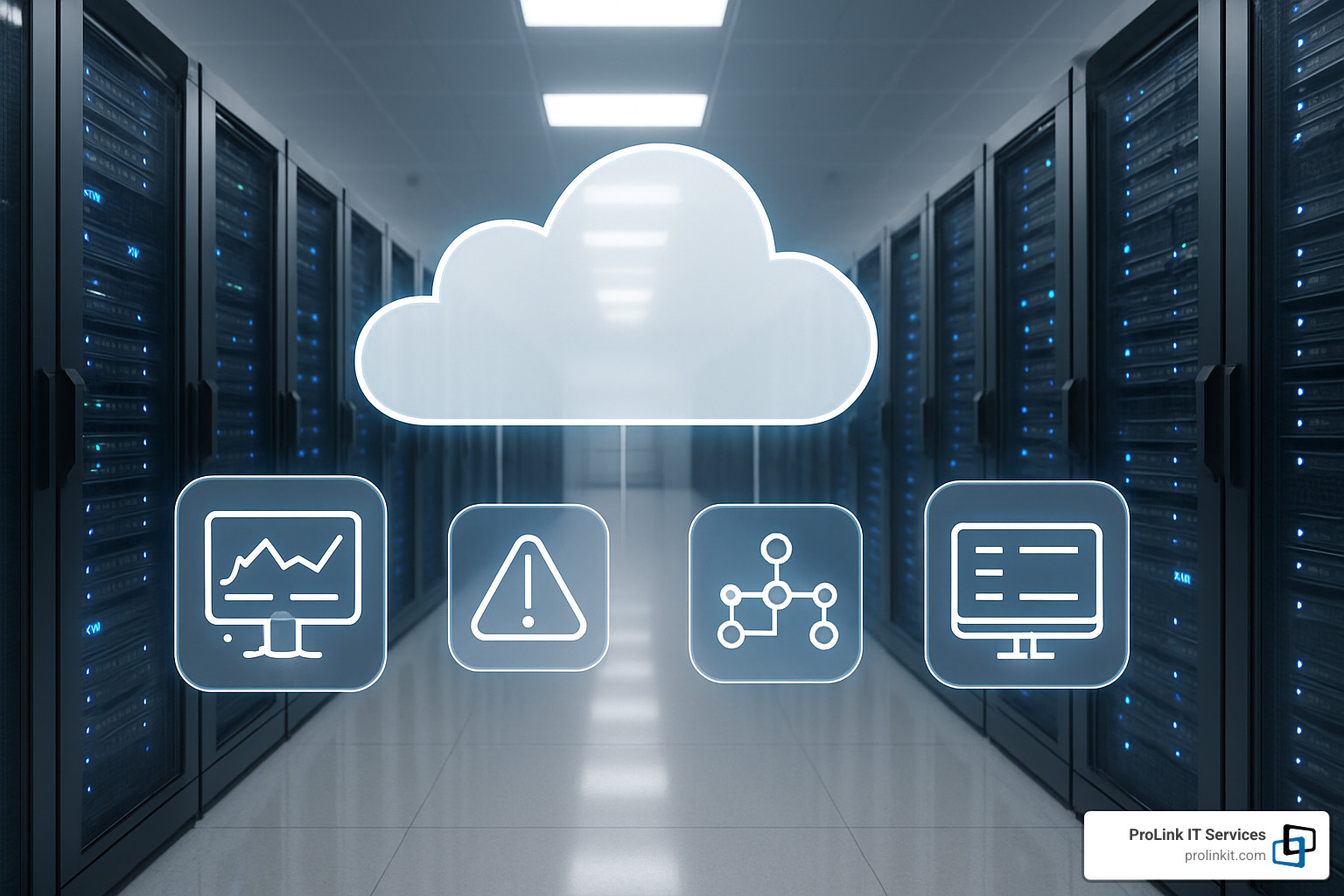
Think of cloud managed data center services as having a virtual pit crew for your ITevery component is watched, tuned, and repaired before the race ever stops. A thirdparty provider remotely manages your servers, storage, and networks 24/7 so your own staff can stay focused on building the business.
Instead of buying big, expensive hardware every few years, you pay a predictable monthly fee that scales up or down with demand. For background on where this model came from, see the history of cloud computing.
Key points at a glance:
* 24/7 monitoring and automated remediation
* Payasyougo pricing that turns CAPEX into OPEX
* Expert engineers without the recruiting headache
| Service Type | You Manage | Provider Manages | Best Fit |
|---|---|---|---|
| Managed Services | Apps & data | Infrastructure, security | Teams that want some control |
| Colocation | Hardware, OS, monitoring | Power, cooling, space | Firms with deep IT skills |
| Fully Managed DC | Strategy only | Everything endtoend | Companies prioritizing core ops |
Why they beat traditional onprem management
Traditional IT is reactivewaiting for a failure, then scrambling. Modern cloud platforms use AIdriven analytics to spot anomalies and fix them before users notice. Remote tools let engineers patch, reboot, or expand capacity in minutes instead of hours. Its faster, safer, and dramatically more predictable.
Public, private, and hybrid options
- Public cloud costefficient shared infrastructure
- Private cloud dedicated resources for strict compliance or latency
- Hybrid cloud mix and match so each workload lands in its ideal home
Smart workload placement is the secret sauce: sensitive data might live in private cloud, while bursty dev/test projects enjoy the nearinfinite scale of public resources.
Core Components and Service Models
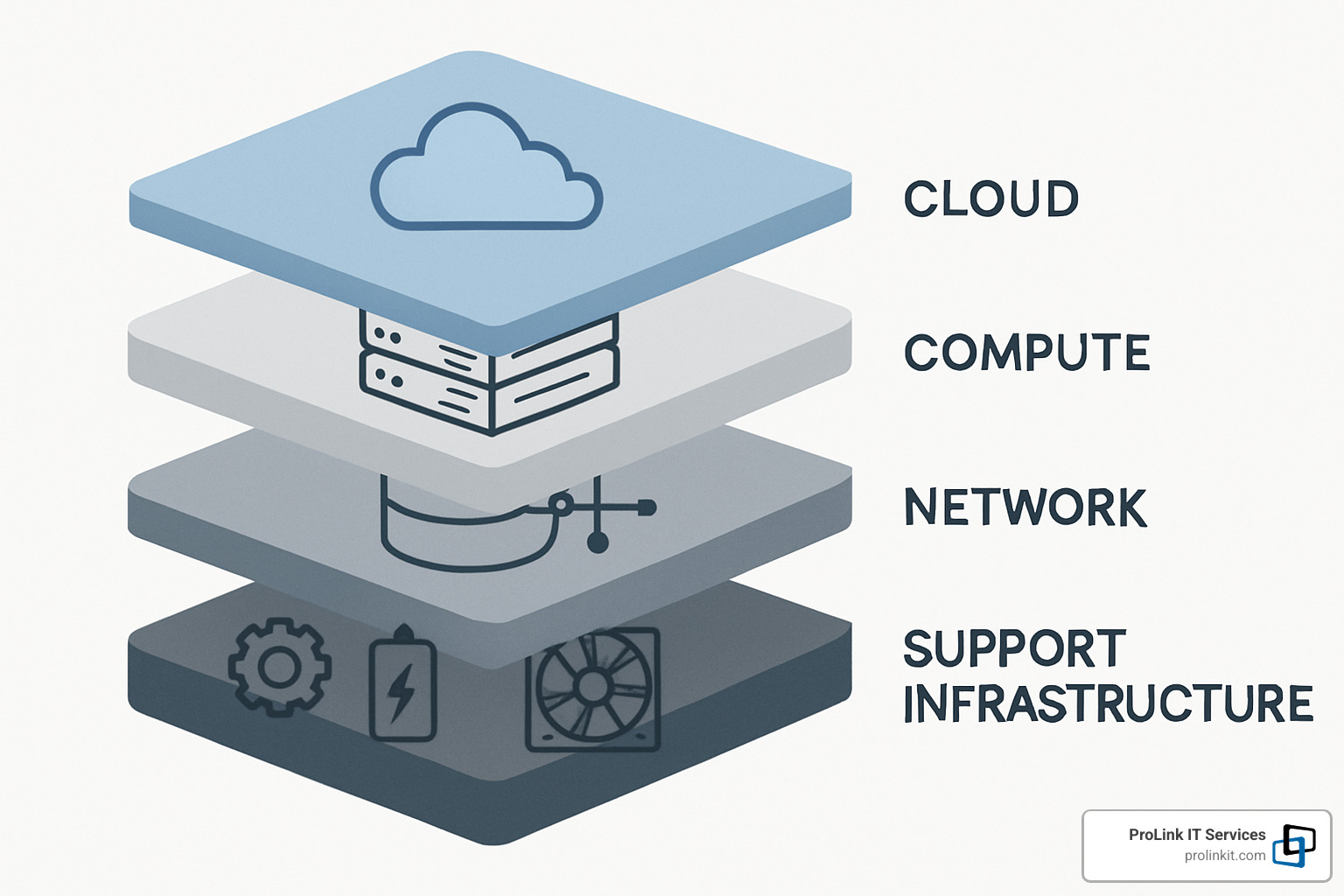
Four building blocks power every cloud managed data center service:
- Compute virtual machines and containers on energyefficient blade servers.
- Storage block storage for highspeed apps, object storage for cheap, limitless archives.
- Network softwaredefined routing, microsegmentation, and secure interconnects.
- Support systems redundant power, cooling, fire suppression, and physical security.
Managed compute & virtualization layers
Hypervisors carve one physical server into many logical ones, while container orchestration (Kubernetes, Docker) lets you spin up lightweight workloads in seconds. Predictive capacity tools ensure you never over or underprovision.
Storage, backup & disaster recovery as a service
Snapbased backups, crossregion replication, and automated failover give you enterprisegrade resilience with no extra hardware. Explore our endtoend Cloud Managed Services for details.
Network, interconnect & observability
SDWAN directs traffic across the best available link, cutting MPLS costs. Deep telemetry feeds dashboards so you can tune performance in real time, while zerotrust policies verify every packet. Need design help? See our Network Management offerings.
Benefits and Challenges for Modern Enterprises
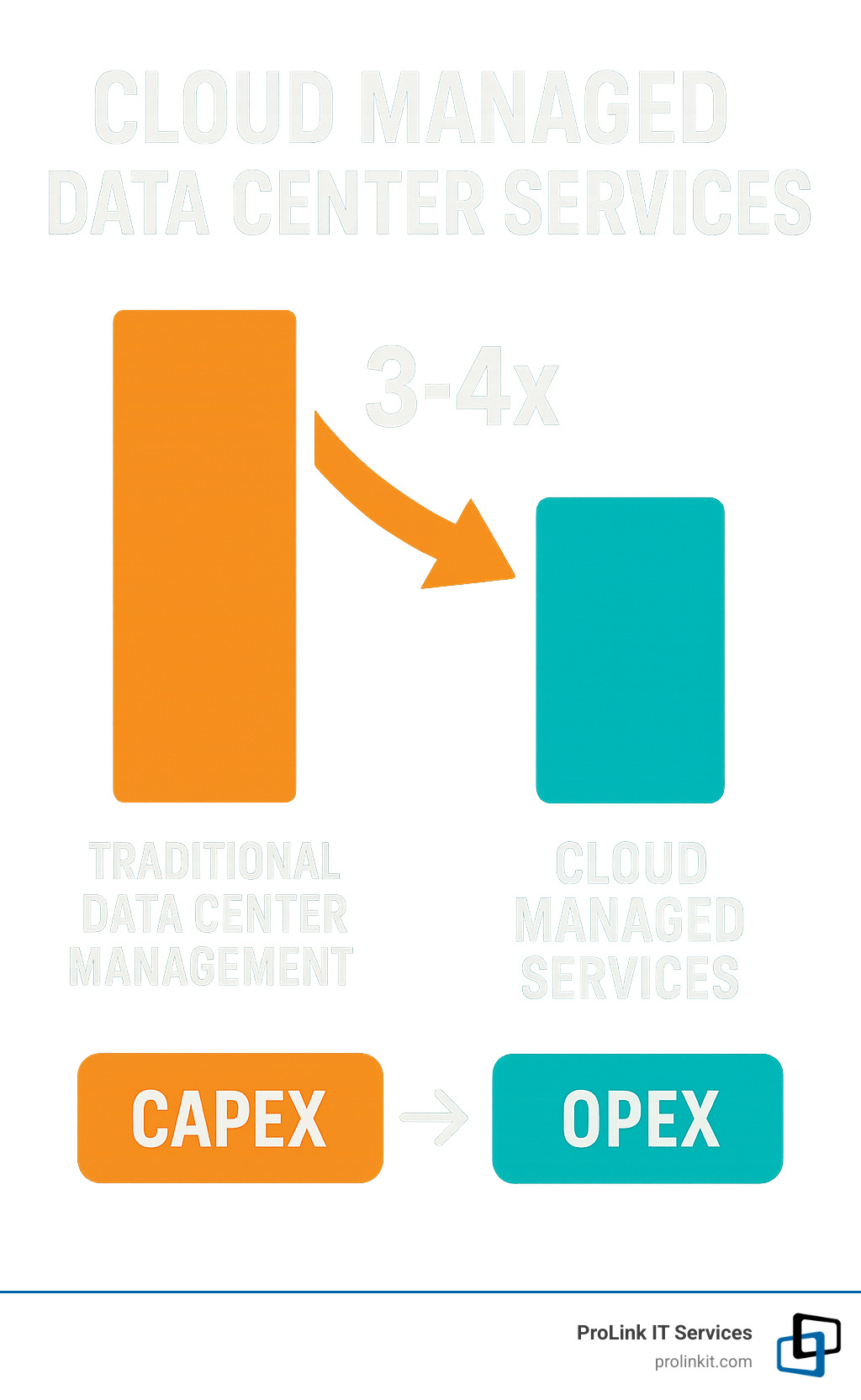
Shifting to cloud managed data center services is rarely just an IT decisionits a business strategy. Most clients cut infrastructure costs by 34X while boosting uptime and agility.
Business benefits that move the needle
- Predictable OPEX no surprise hardware failures
- Instant scalability provision capacity in minutes
- Specialized expertise security, compliance, and architecture pros on call
- Global reach serve users closer to where they live without building new sites
Common adoption problems
- Data gravity large datasets are hard to move; hybrid strategies often win
- Compliance mandates choose providers with SOC 2, HIPAA, or PCIDSS audits
- Budget visibility monitor usage to avoid bill spikes
- Skills gap upskill staff and partner with veterans in the field
Wellplanned change management and references such as this scientific research on datacenter efficiency show that the longterm gains far outweigh the shortterm effort.
Migration Roadmap & Best Practices
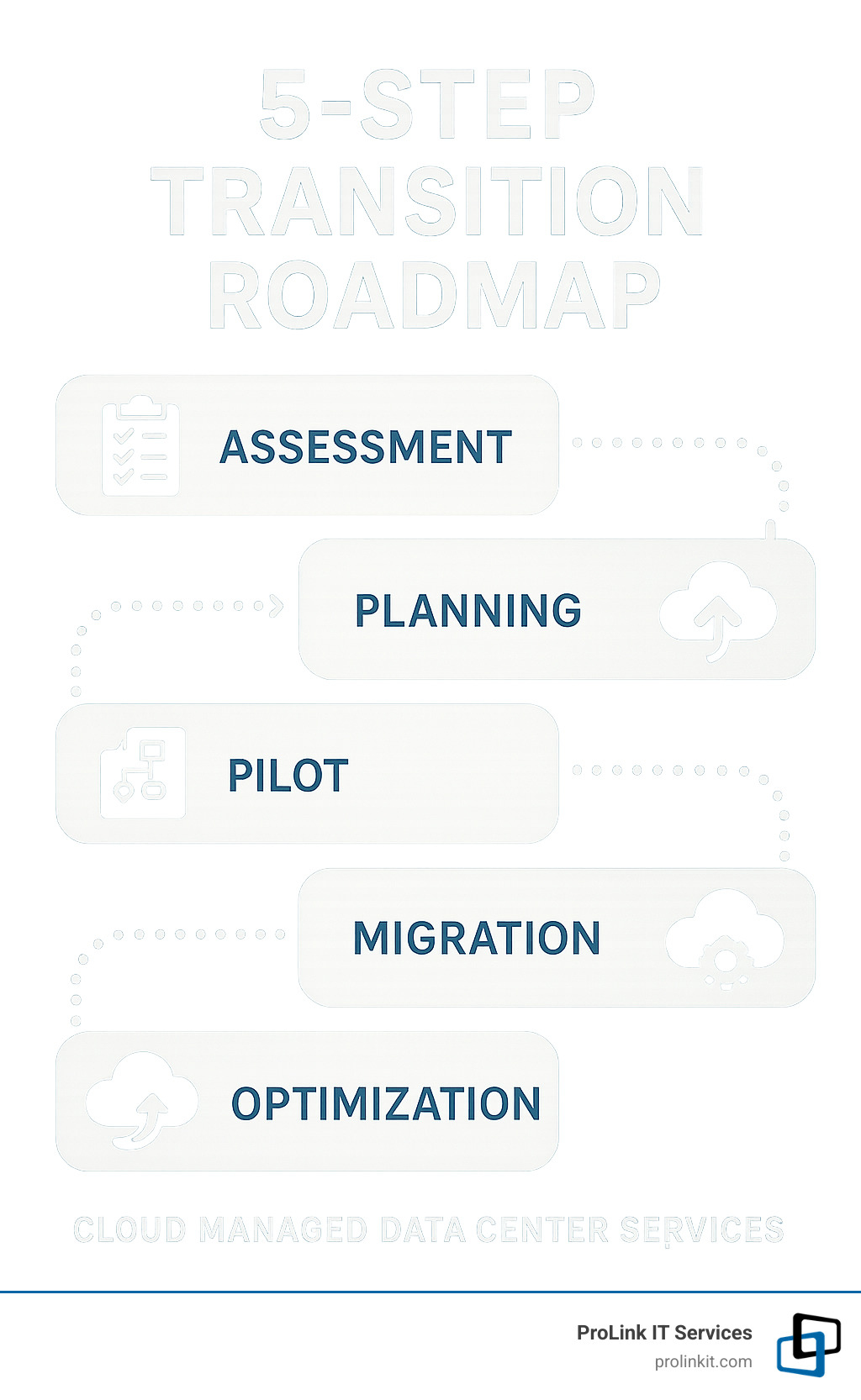
Successful moves to cloud managed data center services follow five lean steps:
- Assess inventory apps, servers, and hidden dependencies.
- Plan group workloads into lowrisk waves.
- Pilot migrate a noncritical app to validate tooling.
- Migrate automate repeatable tasks; protect data with synchronized backups.
- Optimize rightsize resources, enable autoscaling, and launch FinOps reviews.
Need handson help? Our Managed IT Services team guides Utah businesses through every step, from audit to golive.
Security, Compliance & SLAs You Can Trust

Handing data to a provider only works when security beats what you could build inhouse. Cloud managed data center services layer zerotrust controls, encryption, and roundtheclock monitoring over hardened facilities.
How providers secure cloud managed data center services
Firewalls that learn, AIdriven intrusion prevention, automatic patching, and certified incident response teams create banklevel protection. Compliance auditsSOC 2, HIPAA, PCIDSSprove those controls every year.
Explaining Service Level Agreements (SLAs)
SLAs are promises with penalties. Typical tiers include:
* 99.9% uptime (or higher for missioncritical apps)
* 15minute response for P1 issues
* Measurable performance metrics for storage and network throughput
If the provider slips, you receive service creditsbut the real win is accountability.
Frequently Asked Questions about Cloud Managed Data Center Services
These are the questions we hear most often from business leaders considering cloud managed data center services. Let me break down the answers in plain English.
What is the difference between managed services, colocation, and fully managed data centers?
Think of these three options like different levels of restaurant service. Colocation is like renting kitchen space where you bring your own ingredients, cook your own food, and clean up afterward. You get the professional facility—power, cooling, and security—but you handle everything else.
Managed services are more like having a sous chef who handles the prep work and keeps your kitchen running smoothly. You still decide what goes on the menu and how it’s prepared, but someone else takes care of maintenance, monitoring, and the technical details that keep everything working.
Fully managed data centers are like hiring a complete catering service. You tell them what business outcomes you need, and they handle absolutely everything from the infrastructure to the applications. Your job becomes strategic oversight rather than day-to-day management.
The choice depends on your team’s expertise and how much you want to focus on your core business. Companies with strong IT teams often prefer managed services for the control it provides. Organizations that want to focus entirely on their business operations typically choose fully managed solutions.
How do cloud managed data center services support scalability and flexibility?
The beauty of cloud managed data center services lies in their ability to grow and shrink with your business needs. Traditional data centers require you to buy capacity for your busiest day of the year, leaving expensive equipment sitting idle most of the time.
Real-time monitoring gives providers detailed insight into how your systems are performing and when they’re approaching capacity limits. Instead of waiting for systems to slow down or fail, they can add resources proactively.
Automated resource allocation means new capacity can be available in minutes rather than weeks. Need more server power for a big product launch? It’s available immediately. Traffic died down after the promotion ended? The extra capacity gets removed automatically so you’re not paying for resources you don’t need.
Workload balancing spreads your applications across multiple servers and even multiple locations. If one server gets busy, traffic automatically shifts to servers with available capacity. This approach provides both better performance and built-in redundancy.
The pay-as-you-grow pricing model transforms unpredictable capital expenses into manageable operational costs. You pay for what you actually use rather than what you think you might need someday.
Which industries benefit most from cloud managed data center services?
While virtually every industry can benefit from managed services, certain sectors find them particularly valuable.
Healthcare organizations face strict regulatory requirements that can be challenging to implement and maintain. HIPAA compliance, data encryption, and disaster recovery capabilities come built into quality managed services rather than requiring separate implementation projects. When patient data is involved, having experts handle security and compliance provides peace of mind.
Financial services firms need the perfect combination of security, availability, and scalability. Banks, insurance companies, and investment firms can’t afford downtime, and they face intense regulatory scrutiny. Managed providers offer the enterprise-grade infrastructure and compliance expertise these organizations require.
Growing businesses across all industries appreciate the ability to access enterprise-level infrastructure without enterprise-level capital investments. A startup can have the same quality of IT infrastructure as a Fortune 500 company from day one. Established companies can expand into new markets without building local data centers.
Organizations with limited IT staff find managed services particularly attractive. This includes not just small businesses, but also large organizations in industries like manufacturing, retail, or professional services where IT isn’t the core competency. Why struggle to hire and retain specialized IT talent when you can partner with experts who live and breathe this technology?
Conclusion
Making the move to cloud managed data center services isn’t just about upgrading your technology—it’s about positioning your business for the future. When you step back and look at the big picture, the advantages are clear: lower costs, better reliability, and access to world-class expertise without the headache of building it yourself.
But here’s the thing—success doesn’t happen automatically. It takes careful planning, honest assessment of your needs, and most importantly, the right partner walking alongside you through the process.
At ProLink IT Services, we bring something different to the table. Our veteran-owned approach means we understand the value of discipline, clear communication, and following through on commitments. When we say we’ll be there for you, we mean it. No fancy sales pitches or disappearing acts after you sign the contract.
We’ve seen too many businesses get burned by providers who promise the world but don’t deliver when it counts. That’s not how we operate. We believe in building real partnerships where your success becomes our success.
The beauty of cloud managed data center services is that there’s no one-size-fits-all solution. Maybe you need the unlimited scalability of public cloud. Perhaps your compliance requirements demand private cloud security. Or you might find that a hybrid approach gives you the best of both worlds. Whatever your situation, the right solution exists—and we’re here to help you find it.
Over the years, we’ve guided organizations throughout Utah and beyond through these exact decisions. Every business is different, but the questions are usually similar: How do we reduce costs without sacrificing performance? How do we improve reliability without adding complexity? How do we access better technology without breaking the bank?
These are the conversations we love having because we know the answers exist. More importantly, we know how to help you implement them successfully.
Technology will keep evolving—that’s guaranteed. New tools, new capabilities, new challenges. But the fundamentals never change: good partnerships, honest communication, and doing what you say you’ll do. These principles have guided us from day one, and they’ll continue guiding us as we help more businesses transform their IT infrastructure.
Ready to see what cloud managed data center services could do for your organization? Let’s start with a simple conversation about where you are today and where you want to be tomorrow. No pressure, no sales pitch—just an honest discussion about your options and what makes sense for your business.
Our team is standing by to help you build a technology foundation that actually supports your goals instead of getting in your way. Because at the end of the day, that’s what this is all about—giving you the tools to focus on what you do best.
For more information about our comprehensive approach to cloud infrastructure, visit our cloud managed data center services page to learn how we can help your organization thrive in the cloud era.