

Beginner’s Guide to Cybersecurity Solutions for Your Business
Why Your Business Needs Cybersecurity Solutions Now More Than Ever
Cybersecurity solutions are products and services designed to protect your digital systems and data from cyberattacks. With cyber threats evolving daily and attackers “supercharging their speed and scale” using AI, no business can afford to operate without proper protection.
Quick Answer – Essential Cybersecurity Solutions:
– Network Security: Firewalls, intrusion detection, and network monitoring
– Endpoint Protection: Antivirus, EDR, and device management
– Email Security: Anti-phishing and malware filtering
– Identity Management: Multi-factor authentication and access controls
– Backup & Recovery: Data protection and incident response planning
– Security Monitoring: 24/7 threat detection and response services
The statistics paint a sobering picture. 43% of cyber attacks target small businesses, yet only 14% of small companies rate their ability to mitigate cyber risks as highly effective. Even more alarming – 60% of small companies go out of business within six months of falling victim to a data breach or cyber attack.
Organizations now face an average of 1,673 weekly attacks – a 44% increase from the previous year. With the global average cost of a data breach reaching $4.45 million in 2023, investing in proper cybersecurity solutions isn’t just smart business – it’s essential for survival.
I’m Mitch Johnson, Founder and CEO of ProLink IT Services, with over 20 years of experience helping businesses implement comprehensive cybersecurity solutions.
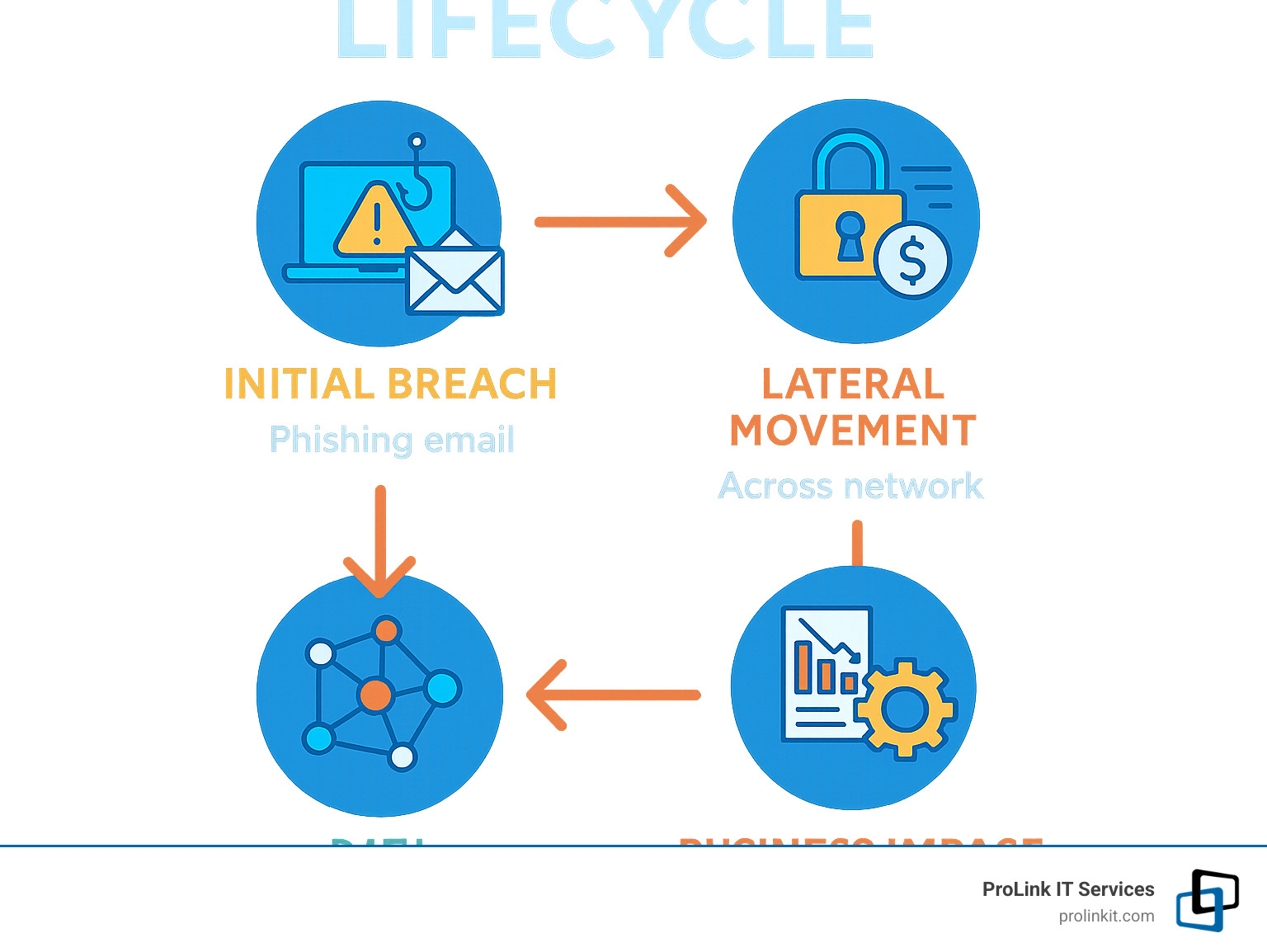
Why Cybersecurity Matters for Businesses of Every Size
Cybersecurity solutions aren’t just for Fortune 500 companies. Cyber criminals often prefer targeting smaller businesses because they know these companies typically have weaker defenses while still holding valuable data.
43% of all cyberattacks specifically target small and medium-sized businesses. Yet most small business owners still think “it won’t happen to us.” This dangerous mindset leaves companies vulnerable to attacks that can literally shut them down permanently.
The Business Impact of Breaches
Operational downtime hits first and hardest. Your systems go dark, employees can’t work, and revenue stops flowing. I’ve seen companies lose $10,000 per hour during ransomware attacks.
Customer trust erosion follows quickly. When customers learn their personal information was compromised, they don’t just get upset – they leave. We’ve worked with clients who lost 30-40% of their customer base after security incidents.
Legal and financial liability adds insult to injury. Beyond immediate recovery costs, businesses face potential lawsuits, regulatory fines, and mandatory breach notifications. The harsh reality is that 60% of small companies go out of business within six months of a major cyberattack.
More info about 24/7 protection services
Regulatory & Compliance Drivers
Modern businesses operate in a maze of regulations requiring specific cybersecurity solutions:
GDPR affects any business handling data from European residents. Violations can result in fines up to 4% of annual revenue.
HIPAA requirements extend beyond hospitals to dental offices, physical therapy practices, and businesses processing health insurance claims.
CCPA started in California but its influence is spreading as other states adopt similar privacy laws.
PCI-DSS compliance is mandatory if you accept credit card payments. Violate PCI standards and you could lose the ability to process payments entirely.
Proper cybersecurity solutions address both security threats and compliance requirements simultaneously.
The Top Threats and How Cybersecurity Solutions Neutralize Them
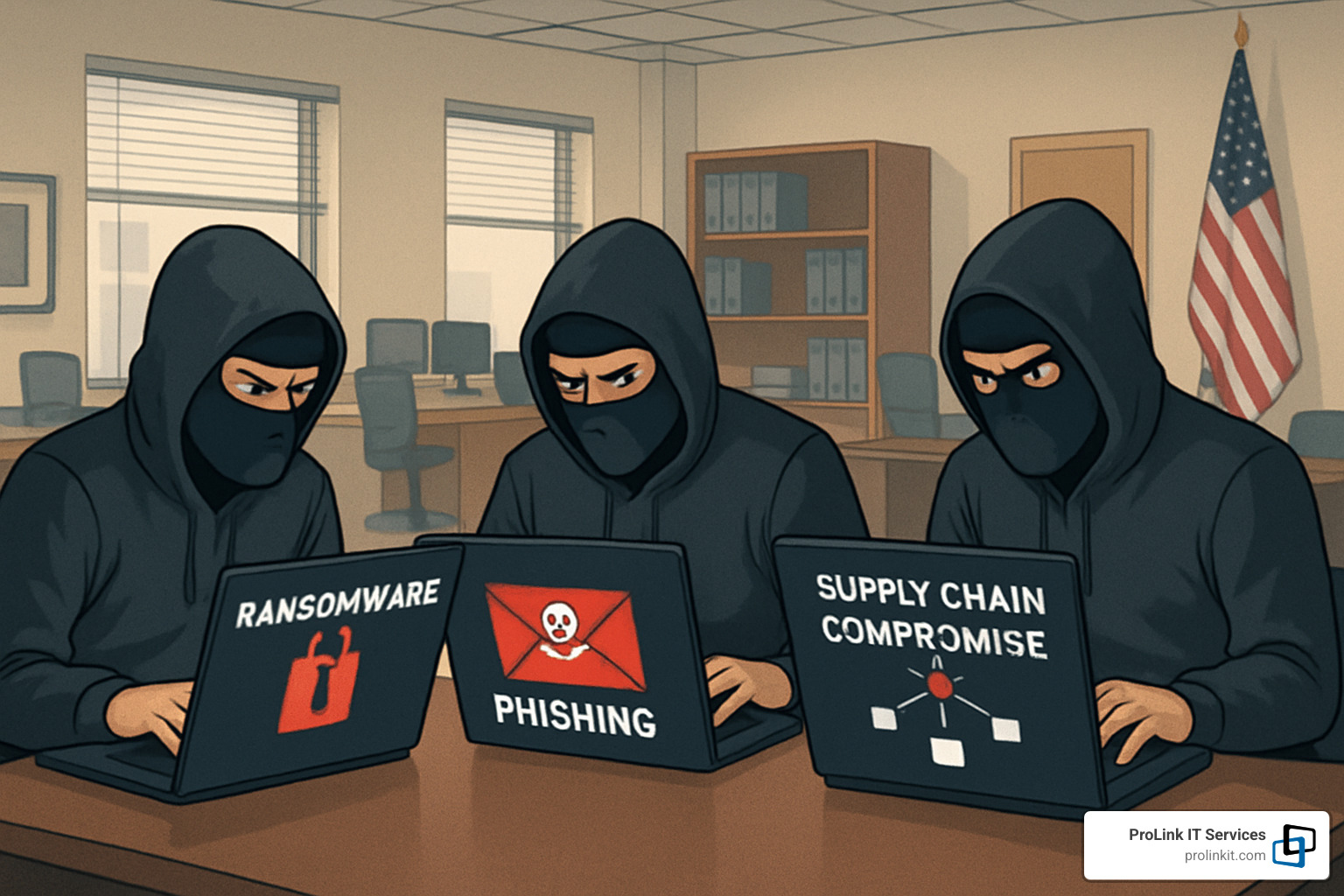
With organizations facing an average of 1,673 weekly attacks – a 44% year-over-year increase – the volume and sophistication of threats continue to escalate.
Ransomware Reality Check
Ransomware remains one of the most devastating threats. Modern ransomware employs multiple extortion tactics: encrypting data, stealing information before encryption, threatening public release, and targeting customers directly.
Ransomware attacks have increased by 13% in the last year alone. The shift to Ransomware-as-a-Service has lowered barriers for cybercriminals.
Modern cybersecurity solutions combat ransomware through:
– Behavioral analysis to detect encryption activities
– Microsegmentation to limit lateral movement
– Automated backup isolation to protect recovery data
– Real-time threat intelligence to identify known signatures
Don’t Fall for These 3 Ransomware Myths
Phishing & Social Engineering Surges
With 95% of cybersecurity breaches caused by human error, attackers focus on manipulating people rather than breaking technology.
Email attacks surged by 667% following COVID-19. Modern phishing includes brand impersonation, spear phishing, business email compromise, and credential harvesting.
Effective cybersecurity solutions address the human factor through advanced email filtering, user awareness training, multi-factor authentication, and behavioral analytics.
Emerging Supply-Chain & GenAI Threats
Supply Chain Attacks exploit trusted vendor relationships, bypassing traditional defenses by leveraging trusted connections.
Generative AI Threats represent new risks including data exposure through AI training, prompt injection attacks, model theft, and bias issues.
Scientific research on GenAI risks
The Pillars of Cybersecurity Solutions You Need in Your Stack
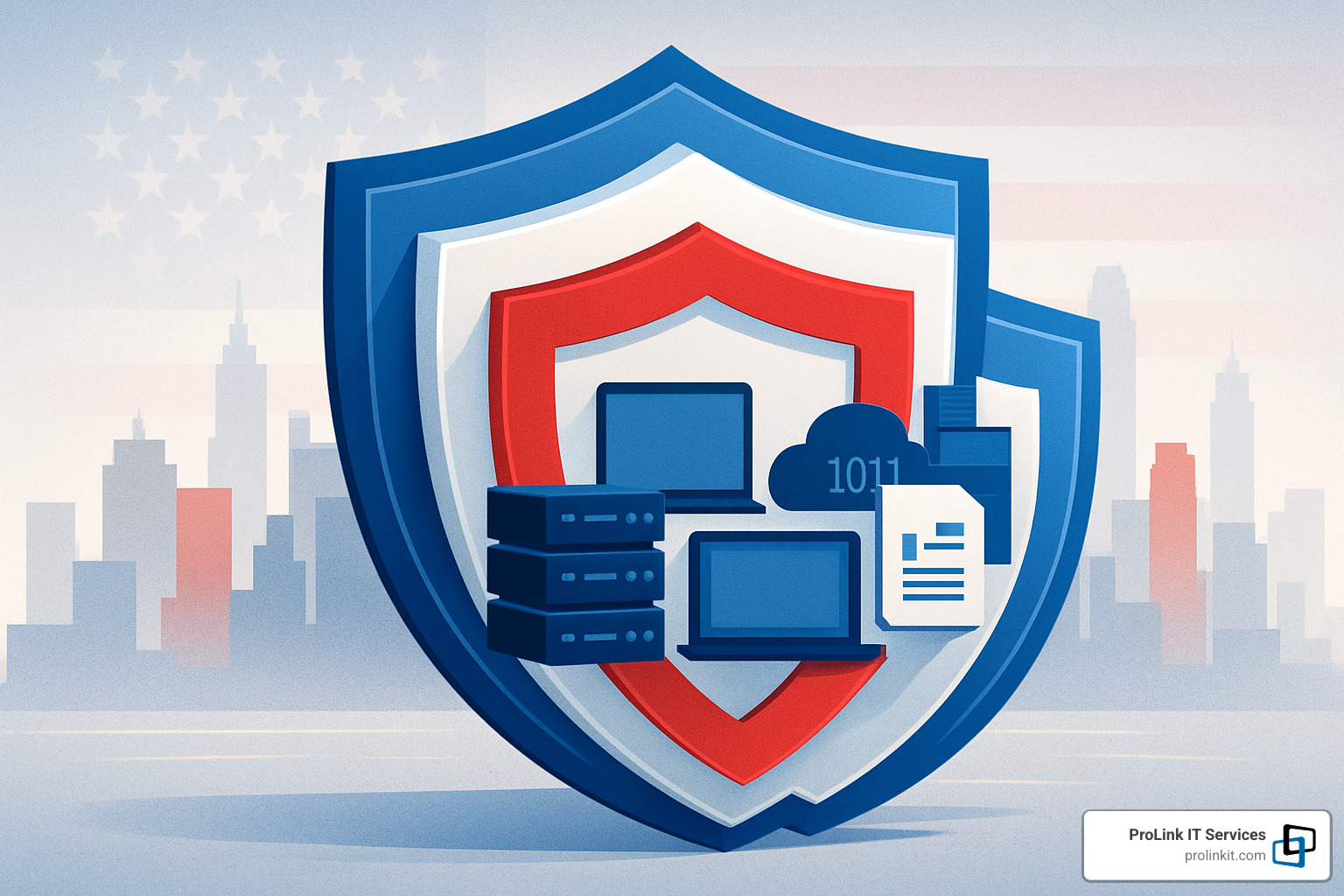
Building effective cybersecurity solutions requires multiple layers of defense working together. Modern cybersecurity architecture relies on five core layers that create overlapping shields around your business.
Core Layer 1 – Network Security
Next-Generation Firewalls (NGFW) examine network traffic content, identifying specific applications and blocking dangerous activities even when encrypted.
Intrusion Detection and Prevention Systems (IDS/IPS) monitor networks 24/7, watching for suspicious patterns and automatically blocking threats.
Network segmentation divides networks into isolated sections, limiting attacker movement if they breach your perimeter.
DNS security blocks access to malicious websites and prevents malware communication.
7 Top Network Security Tips for Businesses
Core Layer 2 – Endpoint & Mobile Protection
Endpoint Detection and Response (EDR) continuously monitors device behavior to spot sophisticated attacks beyond traditional malware.
Patch management ensures devices receive security updates promptly. 80% of successful breaches exploit vulnerabilities with available patches.
Application allow-listing only permits approved programs to run, effectively blocking ransomware.
Mobile device management enforces security policies and can remotely wipe lost devices.
Core Layer 3 – Cloud & Application Safeguards
Cloud Access Security Brokers (CASB) provide visibility into cloud application usage and enforce data protection policies.
Cloud-Native Application Protection Platforms (CNAPP) secure applications from development through deployment.
API security protects digital connections between applications.
Web Application Firewalls (WAF) protect web applications from common attacks.
Core Layer 4 – Identity, Access & Authentication
Multi-factor authentication (MFA) prevents the vast majority of credential-based attacks.
Single Sign-On (SSO) balances security with convenience while providing centralized access control.
Privileged Access Management (PAM) controls access to critical systems and monitors privileged activities.
Least privilege principles limit user access to only necessary resources.
Core Layer 5 – Governance, Risk & Training
Security awareness training educates employees about threats and safe practices.
Risk assessment and management help identify vulnerabilities and prioritize security investments.
Security policies and procedures provide clear guidelines for secure behavior.
Compliance management ensures adherence to regulations and industry standards.
Essential security policies include: Acceptable Use Policy, Incident Response Plan, Data Classification Policy, Remote Work Security Policy, Vendor Risk Management Policy, and Business Continuity Plan.
Implementing and Managing Security: DIY vs Managed Security Services
One critical decision businesses face is whether to manage cybersecurity solutions internally or partner with a Managed Security Service Provider (MSSP).
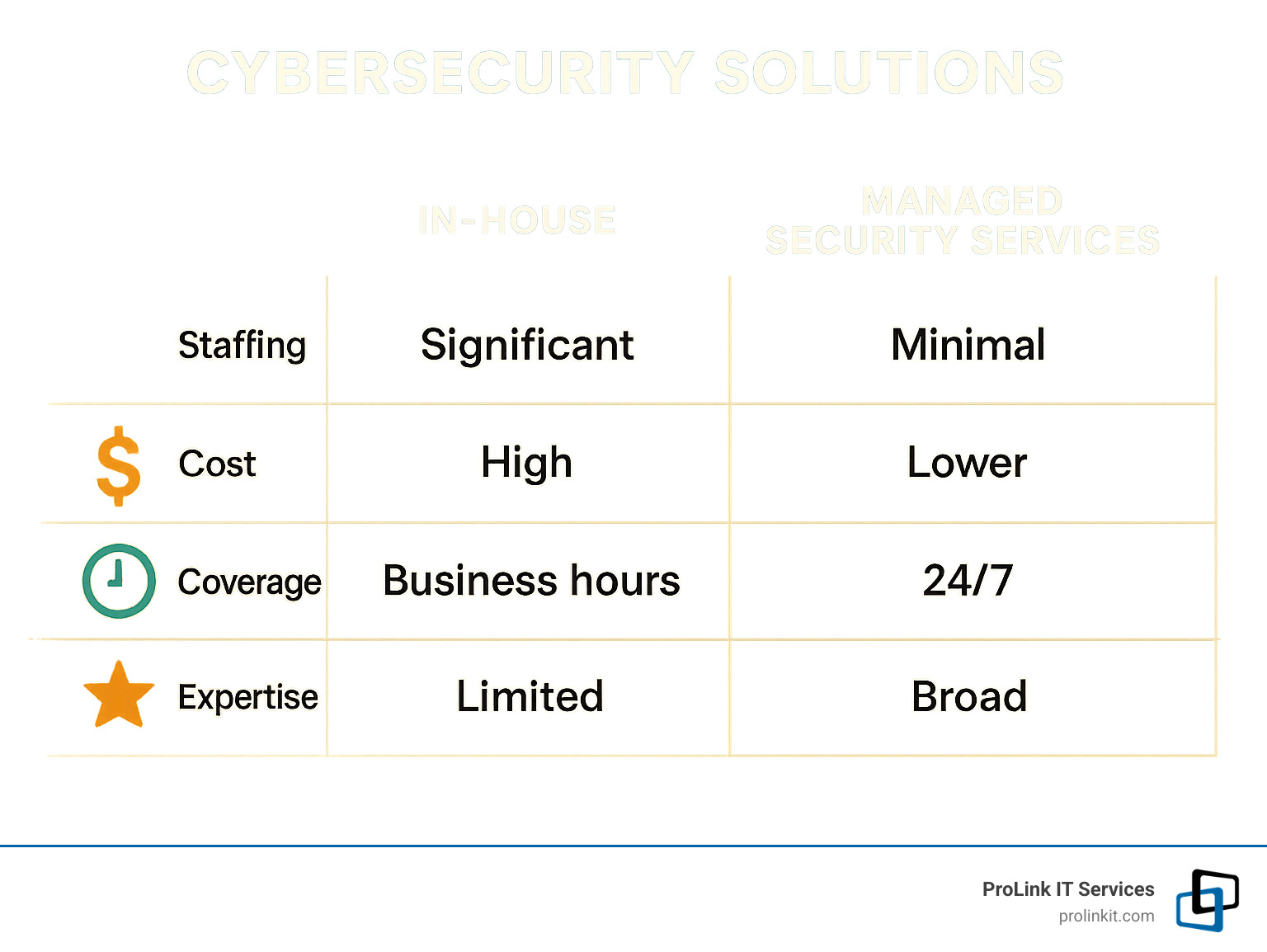
In-House Approach to Cybersecurity Solutions
Building internal cybersecurity teams offers control but comes with serious challenges.
Staffing challenges are brutal. Good cybersecurity professionals are expensive – basic security analysts start around $75,000 annually, while experienced engineers command $90,000 to $150,000. For 24/7 coverage, you need multiple people for each role.
Tool sprawl becomes expensive as teams manage separate systems for endpoint protection, network security, email filtering, and compliance.
Response gaps occur when internal IT staff lack experience handling sophisticated attacks, especially during off-hours.
Continuous learning requirements mean constant training and certifications, taking time away from day-to-day IT needs.
Outsourcing to an MSSP: Pros & Cons
Expert depth from MSSPs is impressive. These teams see attacks daily across hundreds of clients and know what real threats look like.
Cost predictability through fixed monthly fees makes budgeting easier than surprise security expenses.
24/7 monitoring through Security Operations Centers means someone always watches your systems.
Advanced tools access provides enterprise-grade security platforms normally out of reach for smaller organizations.
Potential drawbacks include provider risk, data residency concerns, and less direct control over security decisions.
More info about Managed Security Services
Hybrid Models & Provider Evaluation Criteria
Many successful clients use hybrid approaches combining internal capabilities with external expertise.
When evaluating MSSPs, examine their security standards adherence, service offerings, staff certifications, compliance knowledge, technology integration capabilities, industry references, SLA metrics, alerting mechanisms, data protection practices, remediation support, certifications, threat intelligence capabilities, client access, supplier transparency, and total costs.
Staying Ahead: Best Practices, Compliance & Continuous Improvement
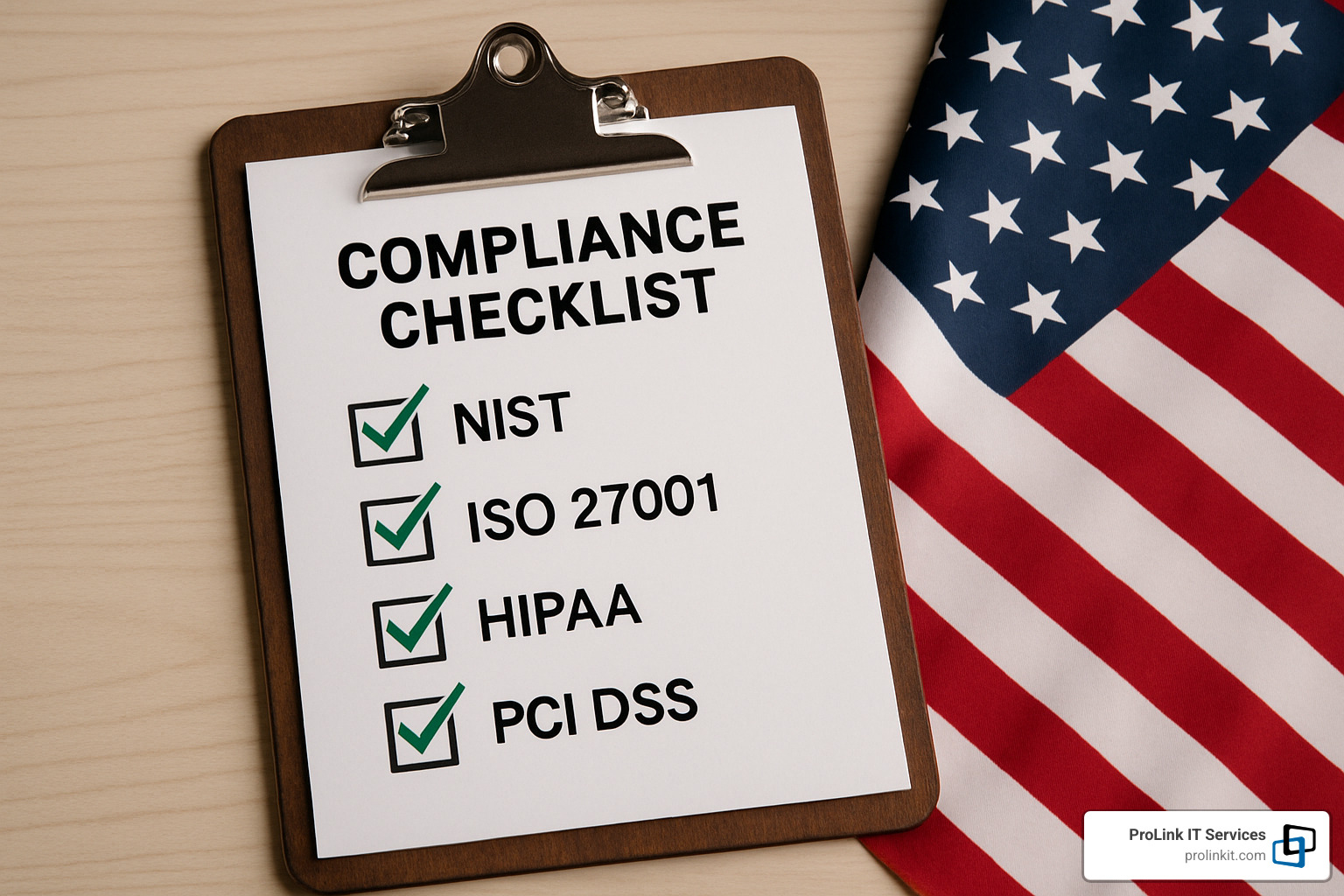
Cybersecurity is never really “done.” The most successful businesses treat cybersecurity solutions as an ongoing journey rather than a destination.
Assessing Your Current Posture
Asset inventory catalogs all computers, servers, mobile devices, network equipment, cloud services, data repositories, and third-party connections.
Gap analysis compares current security measures against industry standards and regulatory requirements, helping prioritize security investments.
Penetration testing simulates real-world attacks to find exploitable vulnerabilities. Professional testing should happen annually with internal scans performed more frequently.
Risk assessment evaluates potential impact and likelihood of various threats, helping make informed decisions about security investments.
Developing an Incident Response & Recovery Plan
Incident response playbooks provide step-by-step procedures including clear roles, communication procedures, evidence preservation, containment procedures, and recovery processes.
Backup and recovery systems should follow the 3-2-1 rule: three copies of critical data, stored on two different media types, with one copy offline. Include immutable backups, regular testing, and air-gapped storage.
Business continuity planning ensures critical operations continue during security incidents.
6 Steps to Regain Control During a Cyberattack
Budget-Friendly Cybersecurity Solutions for SMBs
Prioritization based on risk focuses limited resources on critical threats. Start with multi-factor authentication, regular updates, employee training, secure backups, and basic email security.
Open-source and cloud-based tools provide enterprise-grade capabilities at reduced costs with pay-as-you-go pricing.
Cyber insurance helps manage financial risk but isn’t a substitute for proper security controls.
Phased implementation builds security capabilities over time, spreading costs and preventing team overwhelm.
Small business cyber security statistics
Future Trends in Cybersecurity Solutions
AI-driven security operations change how organizations detect and respond to threats, though attackers also use AI.
Secure Access Service Edge (SASE) combines network security and networking in cloud-delivered services.
Zero trust architecture assumes no user or device should be trusted by default, requiring continuous verification.
Quantum-safe cryptography prepares for eventual quantum computers that could break current encryption methods.
Frequently Asked Questions about Cybersecurity Solutions
What is the first cybersecurity solution a small business should deploy?
If you’re just starting your cybersecurity journey, multi-factor authentication (MFA) should be your first priority. It’s like adding a deadbolt to a door that previously only had a basic lock – simple but incredibly effective.
MFA can prevent up to 99.9% of credential-based attacks, which are responsible for most successful breaches we see. Even if someone steals your password through a phishing email or data breach, they still can’t access your accounts without that second form of verification.
After implementing MFA across all your business accounts, focus on these foundational cybersecurity solutions: regular software updates and patch management to close security holes before attackers find them, basic email security filtering to catch malicious messages before they reach your team, secure backup procedures with offline storage to protect against ransomware, and employee security awareness training to help your team recognize threats.
These steps won’t break your budget, but they’ll provide solid protection against the most common attacks targeting small businesses.
How often should we review our cybersecurity solutions and policies?
Think of cybersecurity like maintaining a car – regular check-ups prevent major breakdowns. Quarterly reviews work well for most small businesses, but different security elements need attention at different intervals.
Daily monitoring of security alerts helps catch problems early, while weekly vulnerability scans show you what needs patching. Monthly access reviews ensure former employees can’t still log into your systems – we’ve seen too many businesses forget this step.
Quarterly policy updates keep your procedures current with new threats and business changes. Your team needs regular reminders about security best practices, so quarterly training sessions work well. Annual comprehensive assessments including penetration testing give you the big picture view of your security posture.
The key isn’t perfection – it’s consistency. Pick a schedule you can actually maintain rather than creating an elaborate plan that falls apart after a few months.
Are cybersecurity solutions different for cloud-native businesses?
Absolutely. Cloud-native businesses face a completely different security landscape that requires specialized cybersecurity solutions.
The biggest shift is understanding shared responsibility models. Your cloud provider secures the underlying infrastructure, but you’re responsible for protecting your data and applications. It’s like renting an apartment – the building owner handles structural security, but you need to lock your own door.
API security becomes critical because cloud-native applications communicate constantly through these interfaces. Traditional firewalls can’t see this traffic, so you need specialized tools that understand how modern applications work.
Container and serverless security require different approaches than traditional server protection. These computing models spin up and down rapidly, making conventional security tools ineffective.
Cloud Access Security Brokers (CASB) help you see and control how your team uses cloud services. Without these tools, you might not even know which cloud applications your employees are using for business purposes.
Identity and access management becomes your new perimeter. When your applications run in the cloud and your team works remotely, user identity verification is often your primary security control. This makes solutions like single sign-on and privileged access management essential rather than optional.
Conclusion
Building effective cybersecurity solutions for your business doesn’t have to feel like solving a puzzle with missing pieces. By understanding what threats you’re facing, creating multiple layers of protection, and working with the right partners, businesses of any size can stay safe from cyber attacks.
Here at ProLink IT Services, we’ve spent years helping hundreds of businesses steer the sometimes confusing world of cybersecurity. As a veteran-owned company, we bring the same discipline and integrity to protecting your business that we learned in military service. We know that no two businesses are exactly alike, which is why we customize our cybersecurity solutions to fit your specific situation, budget, and comfort level with risk.
The numbers we’ve shared in this guide tell a pretty sobering story. When nearly half of all cyber attacks target small businesses, and 6 out of 10 companies that get breached end up closing their doors within six months, it’s clear that doing nothing isn’t really an option. The good news? The cost of getting proper protection is far less than the cost of dealing with a successful attack.
Whether you’re starting from scratch with cybersecurity or looking to strengthen what you already have in place, we’re here to walk alongside you. Our team covers everything we’ve talked about today – network security, endpoint protection, identity management, incident response planning, and all the other pieces that make up a solid defense.
The reality is that cyber threats aren’t going anywhere. If anything, they’re getting more sophisticated and more frequent. But with the right approach and the right partner, you can focus on growing your business while knowing your digital assets are properly protected.
We’d love to start with a free security assessment for your business. We’ll take a close look at where you stand today, point out any gaps that need attention, and give you a clear roadmap for implementing the cybersecurity solutions that make sense for your situation.
Your business has gotten this far because of your hard work and dedication. Let’s make sure it stays protected so you can keep building on that success. After all, the best cybersecurity solution is one that works quietly in the background, letting you focus on what you do best.