

How to Manage Remote Teams Without Losing Your Mind (or Your Wi-Fi)
Why Managing Remote Teams is the New Leadership Reality
How manage remote teams effectively has become the defining skill for modern business leaders. The quick answer: success requires clear expectations, the right communication tools, regular check-ins, trust-building practices, and intentional support for team well-being.
Essential Remote Management Framework:
1. Set Clear Goals – Use SMART objectives and document everything
2. Choose the Right Tools – Video for nuance, chat for speed, shared docs for transparency
3. Communicate Constantly – Schedule regular 1:1s and team check-ins
4. Build Trust – Focus on outcomes over hours worked
5. Support Well-being – Invest in mental health and prevent isolation
6. Celebrate Wins – Recognize achievements publicly and frequently
The numbers tell the story: 56% of US companies have increased remote work since 2021, and this isn’t a temporary trend. With 60% of job seekers wanting hybrid roles and 37% seeking fully remote positions, the ability to lead distributed teams has shifted from nice-to-have to business-critical.
But here’s the reality check – 45% of employees worry about not seeing teammates in person, and 34% doubt their virtual collaboration abilities. Add the fact that 20% of remote workers experience heightened loneliness, and it’s clear that managing remote teams requires a completely different playbook than traditional office leadership.
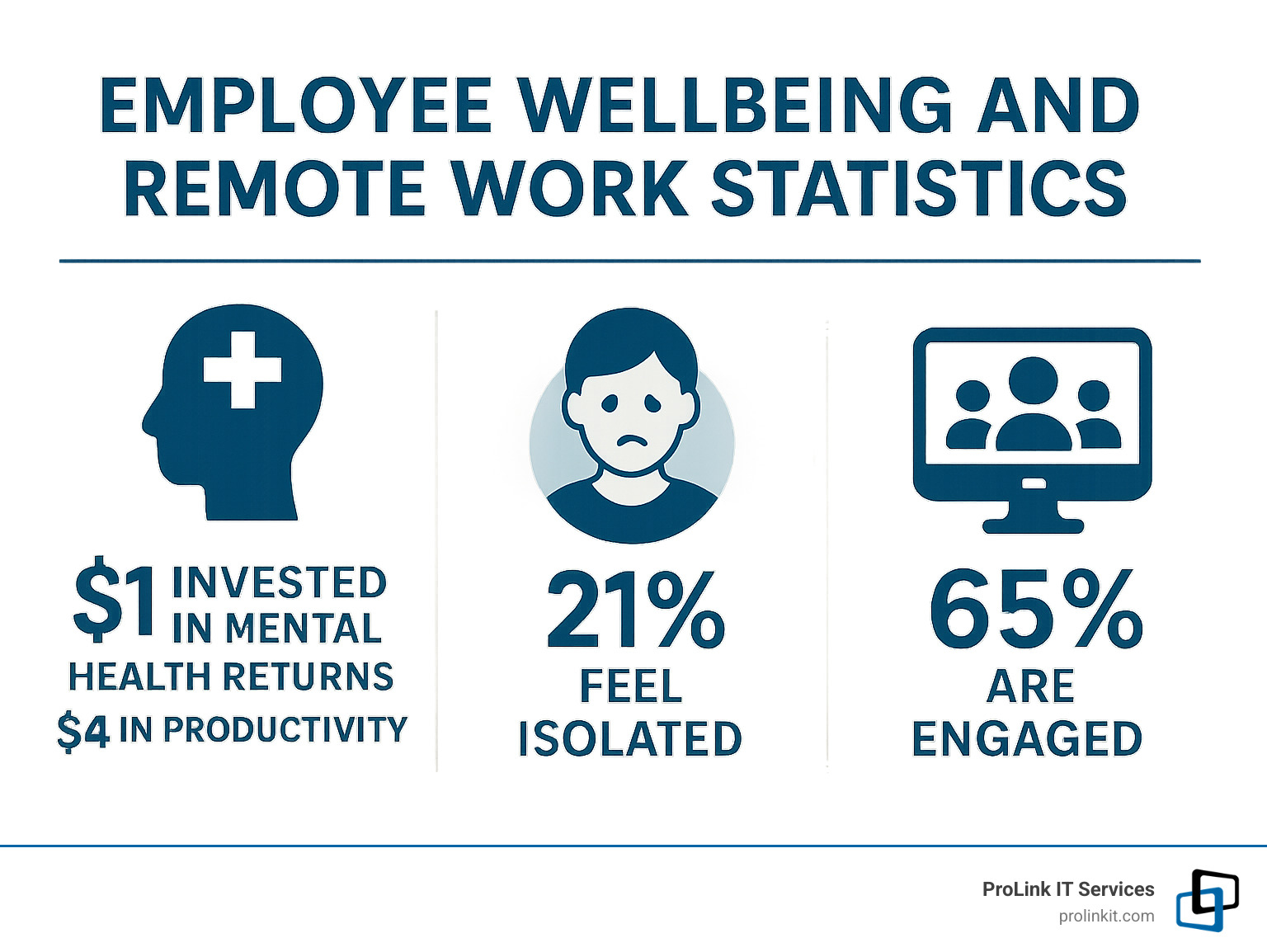
The good news? Research shows that investing just $1 in employee mental health returns $4 in productivity gains. Companies that get remote management right aren’t just surviving – they’re thriving with access to global talent, reduced overhead costs, and often higher employee satisfaction.
As Mitch Johnson, Founder and CEO of Prolink IT Services, I’ve spent over 20 years helping businesses steer technology challenges, including how manage remote teams effectively through robust IT infrastructure and strategic solutions.
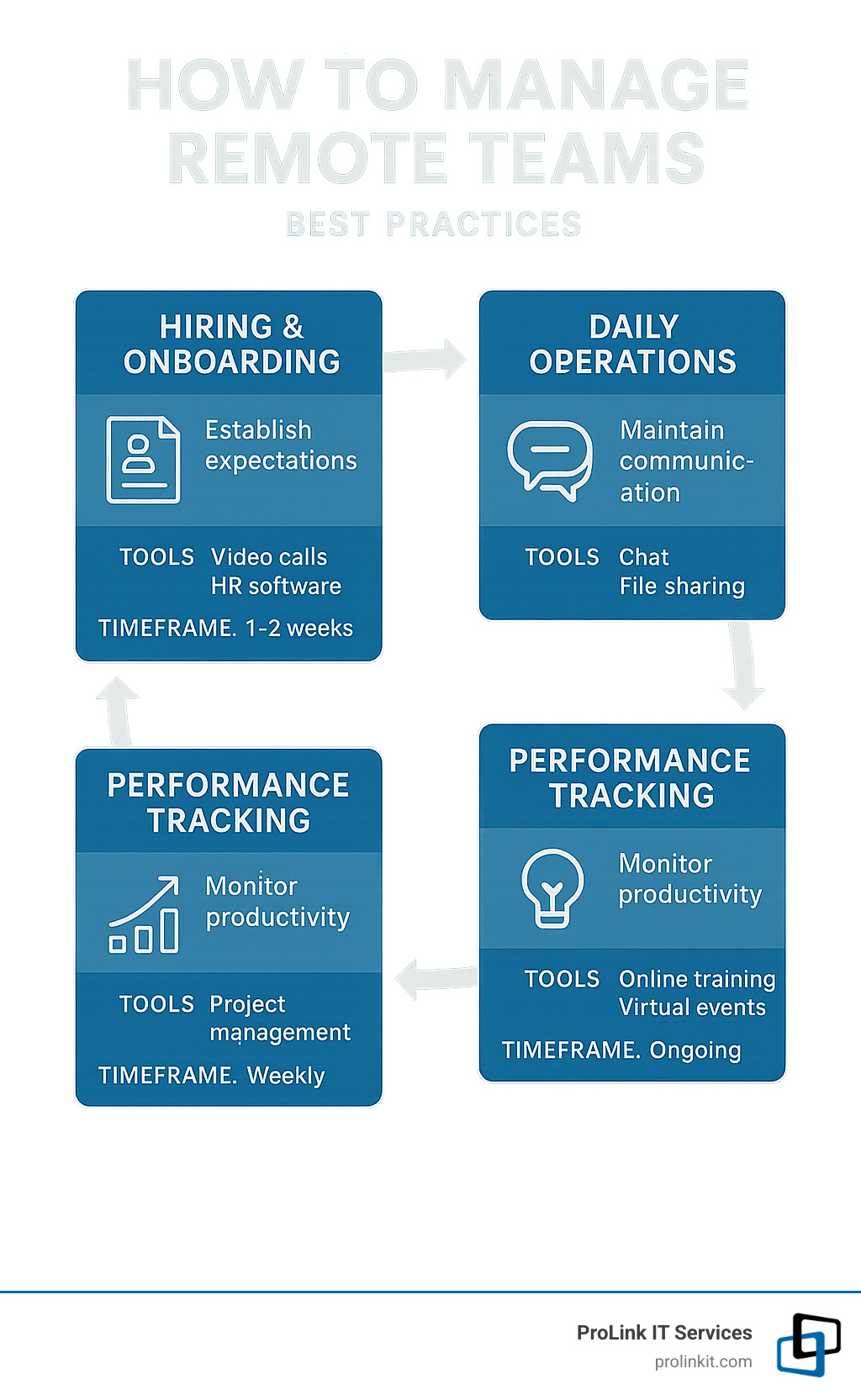
The Hidden Challenges of Remote Leadership
How manage remote teams effectively isn’t just about moving your office meetings to Zoom. It’s a completely different beast that requires new skills and approaches.

The real challenge isn’t the technology – it’s what researchers call “micro-understanding.” You need to know what’s really happening with your team without breathing down their necks. Unlike old-school micromanagement where you could just peek over cubicle walls, remote leadership requires you to build deeper insight into how each person works and communicates.
Burnout sneaks up differently when everyone’s working from home. There’s no physical office to leave, so the boundaries between work and life get blurry fast. We’ve seen teams where 10 PM Slack messages become normal, and suddenly everyone feels like they need to be “always on.”
Time zone challenges mean someone’s always getting inconvenienced with meeting times. Smart managers rotate who gets the short end of the stick fairly, alternating between early and late meeting times.
Trust becomes your biggest challenge when you can’t see people working. The managers who succeed focus on what gets done, not when or how it happens.
Data Snapshot: Why Remote Isn’t Going Away
56% of US companies are actively increasing their remote work options, and the trend is only getting stronger. Nearly half of all organizations now offer remote or hybrid work specifically to keep good people from leaving.
Common Pain Points Managers Report
Everything takes longer to communicate. That quick hallway chat now requires scheduling a meeting, setting context, and following up with documentation.
People doubt their ability to collaborate virtually. About a third of employees worry they can’t work together effectively when they’re not in the same room.
Loneliness is a real productivity killer. One in five remote workers says isolation is their biggest challenge, affecting engagement and creativity.
The workday never seems to end. Without clear boundaries, remote employees often work longer hours than they did in the office.
How Manage Remote Teams: Setting Crystal-Clear Expectations & Goals
When you’re figuring out how manage remote teams effectively, clarity isn’t just helpful—it’s absolutely essential. That casual “we’ll figure it out as we go” approach becomes a recipe for confusion when your team is scattered across different cities and time zones.
SMART goals become your best friend when managing distributed teams. But remote teams need something extra – goals that are “Reviewable” without constant check-ins. Every goal needs to be trackable without you having to constantly ask “how’s it going?”
OKRs (Objectives and Key Results) work beautifully for remote teams because they create alignment without the need for constant supervision. Each team member knows exactly what success looks like and can measure their own progress.
The biggest mindset shift? Results matter more than hours logged. Some of the most productive remote workers do their best thinking at 6 AM or 10 PM. As long as they’re delivering quality work and participating in team collaboration, the specific hours don’t matter.
Transparency becomes essential. Remote teams need intentional transparency—shared project boards, regular updates, and clear processes for when things go sideways.
| In-Office Goal Setting | Remote Goal Setting |
|---|---|
| Verbal check-ins sufficient | Everything documented |
| Implicit availability assumed | Explicit availability windows |
| Progress visible through observation | Progress tracked through systems |
| Immediate clarification possible | Async clarification processes needed |
Essential Setup Practices
Every remote team needs a structured way to get everyone on the same page before starting work together. Skip this step, and you’ll spend months dealing with preventable confusion.
Start by mapping out availability windows. When is everyone available for video calls? How quickly should people respond to different types of messages? These guidelines prevent the anxiety of wondering if messages got lost.
Response-time agreements save everyone stress. Maybe Slack messages get answered within four hours during business hours, emails within 24 hours, and emergency calls within 30 minutes.
Document everything as if the person reading it wasn’t in the original conversation. Include context, explain reasoning behind decisions, and outline clear next steps.
At ProLink IT Services, we’ve seen how proper network management infrastructure supports all these collaborative processes, letting teams focus on work instead of wrestling with technology.
Communication & Collaboration Toolbelt
Think of your remote team’s tech stack like a well-organized toolbox. You don’t need every gadget on the market, but the tools you choose need to work together seamlessly.
The magic number is usually five to seven core tools that cover all your communication needs. Any more than that, and you’ll spend more time managing tools than using them effectively.
Slack or Microsoft Teams becomes your team’s digital headquarters. Create channels by project rather than just department, and establish clear rules about notification usage.
Video conferencing through Zoom or similar platforms requires “meeting hygiene.” Always start with cameras on, use waiting rooms for security, and record important sessions for teammates who couldn’t join live.
Project management tools like Asana, Trello, or Monday.com keep everyone aligned on who’s doing what by when. Pick one, train everyone properly, and stick with it.
Google Workspace or Microsoft 365 handles document collaboration, but only if you set up proper folder structures and sharing permissions from the start.

Choosing the Right Channel for the Message
Video calls work best for nuanced conversations where tone and body language matter. Performance feedback, brainstorming sessions, or any discussion where you need to read the room should happen face-to-face.
Chat platforms excel at quick coordination – status updates, brief questions, and informal check-ins. But resist having complex discussions in chat threads.
Shared documents provide the foundation for anything that needs to stick around. Meeting notes, project requirements, and decision records all belong in searchable, editable documents.
Essential Tech Stack & Security
Remote work security needs to be built into your foundation from day one.
VPN connections protect your team’s access without slowing down daily work. Multi-factor authentication on every business application has become non-negotiable. Automated cloud backup with proper versioning saves the day when laptops crash during critical deadlines.
At ProLink IT Services, we’ve helped hundreds of businesses build cloud infrastructure that actually supports remote work rather than fighting against it.
Ritualize Connection
Virtual water cooler conversations don’t happen by accident. Remote teams need to intentionally create these moments.
Scheduled coffee chats aren’t optional – they’re strategic relationship building. Fifteen minutes of small talk at the beginning of team calls isn’t wasted time. It’s the social glue that holds your team together.
The research on face-to-face communication effectiveness shows why video calls matter so much for building trust and understanding.
Supporting Well-Being, Inclusion & Motivation
The difference between a thriving remote team and a struggling one often comes down to how well managers support their people’s emotional and social needs. The World Health Organization reports that anxiety and depression cost the global economy $1 trillion annually in lost productivity.
Psychological safety becomes much harder to create when you can’t see someone’s facial expression during a meeting or notice when they seem stressed. Recognition systems need to be more intentional and frequent in remote settings.
Prevent Burnout Before It Starts
Smart managers know that every $1 invested in mental health returns $4 in productivity gains. This isn’t about fixing problems after they happen – it’s about building systems that prevent burnout.
PTO culture hits differently when home is the office. The psychological barriers to taking time off become huge when your bedroom is twenty feet from your desk. As a manager, you need to actively encourage time off and model it yourself.
Right-to-disconnect policies protect everyone’s sanity. When can people ignore work messages? What constitutes a real emergency? How quickly should someone respond to different types of requests?
Build Trust & Rapport at a Distance
Servant leadership becomes even more critical when you can’t manage by walking around. Your job shifts from overseeing work to removing obstacles.
Weekly 1:1s become absolutely non-negotiable for remote teams. These aren’t status update meetings – they’re relationship maintenance, coaching opportunities, and your early warning system for problems.
Onboarding buddies make a huge difference for new remote employees. Formal training covers job requirements, but informal buddies help with cultural integration.
Celebrate Wins—Big, Small & Gif-Sized
Public praise carries amplified importance in remote settings because casual recognition moments don’t exist. Make achievements visible through dedicated team channels and meeting shout-outs.
Virtual parties require more planning than office celebrations, but they can be just as meaningful. Online games, virtual happy hours, and coordinated meal deliveries help maintain team traditions.
The key to supporting well-being remotely is intentionality. Everything that happens naturally in an office environment needs to be deliberately created in a virtual one.
Accountability, Performance & Career Growth
How manage remote teams successfully means completely rethinking how you measure and develop performance. The shift from input-based to output-based measurement often reveals that many managers never really knew what good performance looked like in the first place.
Output metrics become your north star. Instead of wondering if someone logged in on time, you’re tracking whether they hit project milestones, delivered quality work, and created measurable impact.
Dashboards and shared tracking systems make progress visible without creating a surveillance culture. When everyone can see how projects are progressing, problems surface early and teams can collaborate on solutions.

Tracking Performance Without Micromanaging
The most successful remote managers focus on outcomes rather than activities. They measure customer satisfaction scores, project completion rates, and quality metrics instead of email response times or hours logged.
Key Performance Indicators (KPIs) should connect directly to business results. OKR check-ins provide structure without surveillance. Quarterly goal-setting sessions followed by monthly progress reviews create natural accountability touchpoints.
At ProLink IT Services, our Managed IT Services help businesses implement monitoring and reporting tools that support performance tracking while respecting employee privacy.
Coaching & Developing Remote Talent
Remote employees often worry about being “out of sight, out of mind” when it comes to career development. Smart managers turn this into an opportunity by being more systematic about talent development.
Skill matrices make capabilities visible across the entire team. Learning Management Systems (LMS) level the playing field for remote employees who can’t learn through casual observation.
The research shows that 82% of workers would be more engaged if managers regularly discussed their career aspirations. Yet only 16% report having these conversations regularly.
Onboarding New Remote Hires
How manage remote teams during onboarding sets the tone for everything that follows. New remote employees need technical setup, cultural integration, and relationship building.
Shadow sessions provide context that formal training can’t deliver. Structured ramp-up plans with clear deliverables eliminate ambiguity. Feedback loops need to be more frequent during remote onboarding – weekly check-ins for the first month help identify integration challenges before they become retention problems.
Frequently Asked Questions about Managing Remote Teams
After working with hundreds of distributed teams, we’ve noticed the same questions come up repeatedly. These are the real challenges keeping managers up at night as they figure out how manage remote teams effectively.
How do you effectively manage a remote team?
The secret isn’t complicated, but it does require intentionality. Clarity beats everything else. When your team can’t walk over to your desk for quick questions, every expectation needs to be crystal clear.
Start with documented goals and processes. What gets written down gets done consistently. Consistent communication becomes your management superpower – weekly one-on-ones for relationship building, async updates for progress tracking, and video calls for complex discussions.
Choose tools that help, not hinder. The best remote teams use fewer tools, not more. Pick a core set of platforms and stick with them long enough for your team to get really good at using them.
Build relationships intentionally. Office small talk doesn’t happen naturally in remote settings, so you need to create it through virtual coffee chats and team celebration calls.
The shift from managing presence to managing outcomes is fundamental. Focus on what gets accomplished rather than when or where the work happens.
How do you manage multiple teams remotely?
Managing multiple remote teams requires scalable processes that work regardless of team size. Think in frameworks, not individual solutions. Use the same project management tools, meeting structures, and reporting formats across all your teams.
Develop strong team leads who can handle day-to-day coordination. Your job becomes coaching these leads and ensuring they have the authority and resources to make decisions.
Create unified metrics that let you see the big picture without micromanaging individual teams. Dashboard views showing key performance indicators help you spot trends and allocate support where it’s needed most.
What is the key to success working remotely?
Success comes down to three fundamental elements: communication, autonomy, and well-being.
Communication in remote settings means being more explicit than feels natural. Over-communicate important information and create multiple channels for different types of interaction.
Autonomy works when people have clear boundaries and decision-making authority. Remote workers need to solve problems independently because they can’t always get immediate guidance.
Well-being encompasses both professional support and personal care. Remote workers need flexible schedules, mental health resources, and genuine social connections with teammates.
Conclusion & Next Steps
How manage remote teams effectively has evolved from a pandemic necessity to a permanent competitive advantage. The companies that master distributed leadership aren’t just surviving – they’re thriving with access to global talent pools, reduced overhead costs, and higher job satisfaction.
Success comes from building crystal-clear expectations, choosing communication tools that improve collaboration, and creating trust-based cultures where outcomes matter more than hours logged. Most importantly, it requires intentional investment in your team’s well-being and professional growth.
But the technology foundation makes or breaks everything else. You can have perfect processes and exceptional leadership skills, but if your team is fighting unreliable connections or clunky tools, productivity suffers and frustration builds.
At ProLink IT Services, our veteran-owned approach brings military discipline and attention to detail to your remote team infrastructure. We understand that when your team is scattered across time zones, there’s no room for “IT will look at it tomorrow” responses.
Our comprehensive Managed IT Services create the invisible backbone that lets exceptional remote leadership flourish. Secure network management ensures your team can access what they need from anywhere. Cloud services that work reliably become the foundation for seamless collaboration. Cybersecurity that protects without getting in the way of productivity.
We’re not just keeping your servers running – we’re enabling human connection across distances. When you’re having a crucial client video call, the technology fades into the background and lets you focus on leading your team and serving your customers.
Ready to stop fighting technology and start leveraging it? The best remote team management strategies won’t help if your infrastructure can’t support them. Whether you’re managing your first distributed team or looking to optimize operations that have grown beyond your current IT capabilities, we’re here to help.
Contact ProLink IT Services today to discuss how our veteran-owned expertise can transform your remote team’s technology foundation from a daily frustration into a competitive advantage.