

Why SaaS Management Services Are Your New Best Friend
Why Your Business Needs SaaS Management Services Now More Than Ever
SaaS management services help organizations control, optimize, and secure their growing portfolio of cloud applications. These services provide centralized visibility, cost optimization, security monitoring, and automated governance for all your software subscriptions.
What SaaS Management Services Do:
- Findy & Inventory – Find all SaaS apps across your organization
- Cost Optimization – Eliminate unused licenses and redundant tools
- Security & Compliance – Monitor access and ensure policy adherence
- User Lifecycle Management – Automate onboarding and offboarding
- Renewal Management – Track contracts and optimize negotiations
The numbers tell a sobering story. The average organization now uses over 100 different SaaS applications, with some large enterprises managing more than 400 tools. Yet companies typically use only 49% of their SaaS licenses, wasting millions on unused subscriptions.
Even more concerning? 83% of employees admit to retaining access to accounts from former employers, and without centralized visibility, companies are five times more likely to experience a cybersecurity incident.
This explosive growth in SaaS adoption has created what experts call “SaaS sprawl” – a chaotic landscape where different departments independently procure software without IT oversight. The result? Duplicate subscriptions, security gaps, compliance violations, and budget overruns that can cripple your operations.
I’m Mitch Johnson, founder and CEO of ProLink IT Services, and I’ve spent over 20 years helping businesses steer complex technology challenges including implementing comprehensive SaaS management services strategies. Through my experience working with small and medium-sized businesses, I’ve seen how proper SaaS governance transforms chaos into competitive advantage.
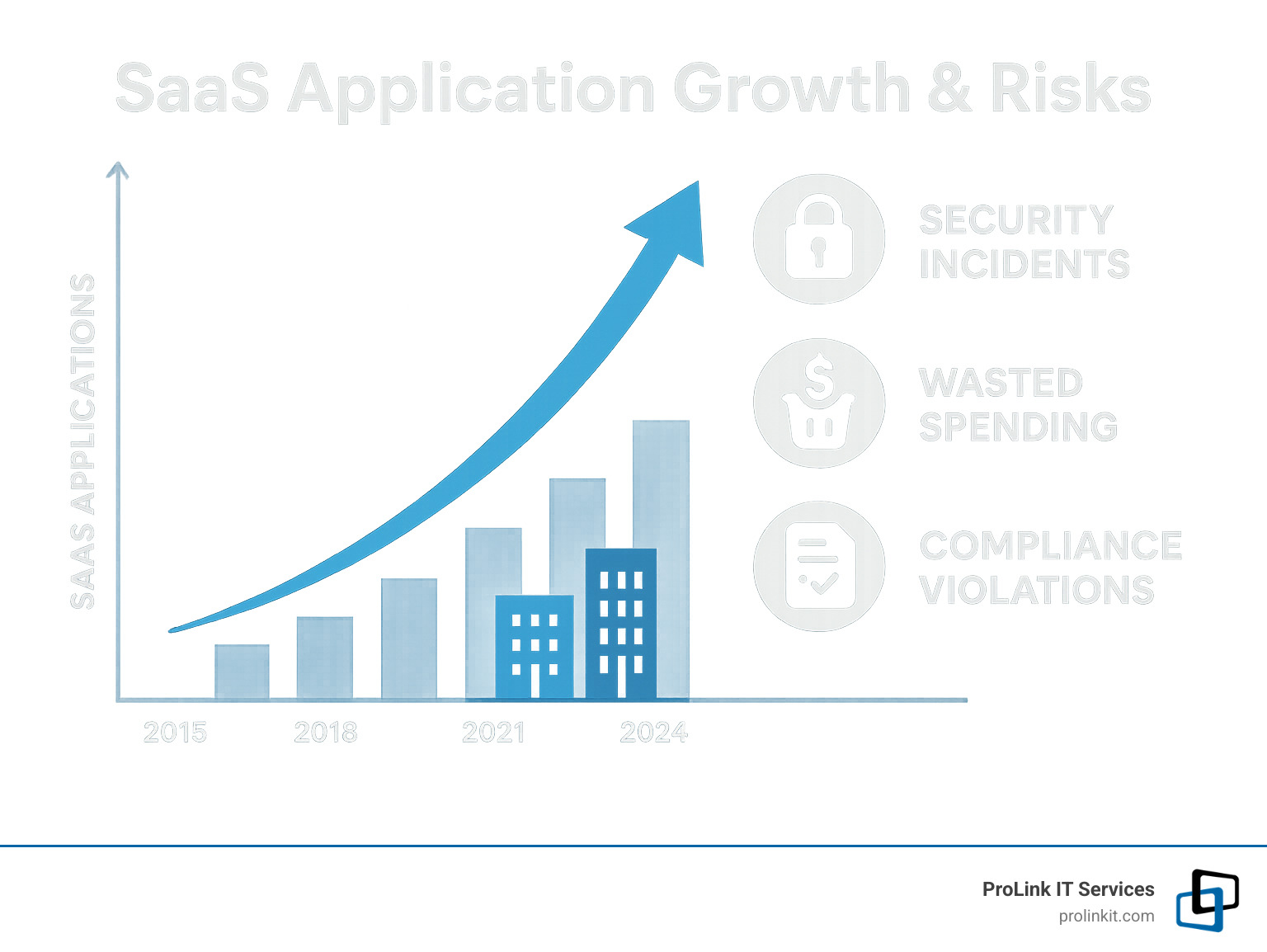
The Hidden Dangers of Unmanaged SaaS
Picture this: your marketing team signs up for a new social media tool, your sales team finds a promising CRM add-on, and your HR department starts using a recruiting platform—all without telling IT. Sound familiar? This scenario plays out daily in organizations worldwide, creating what we call “SaaS sprawl.”
While the flexibility to quickly adopt new tools has revolutionized how we work, it’s also opened Pandora’s box of challenges. When departments can purchase software with just a credit card click, it creates dangerous blind spots for IT, finance, and security teams.
The real problem isn’t the tools themselves—it’s the lack of visibility and control. Without proper SaaS management services, these seemingly innocent software purchases can snowball into serious operational, financial, and security nightmares.
Skyrocketing Costs and Wasted Resources
Here’s a statistic that might make your CFO lose sleep: companies typically waste 30% of their entire SaaS budget. That’s like throwing away three out of every ten dollars you spend on software subscriptions.
The math gets even more shocking when you dig deeper. Organizations use an average of 125 different SaaS applications, but only use 49% of their purchased licenses. With the average annual SaaS spend per employee exceeding $13,000, that unused 51% represents a massive financial drain.
Think of it like a gym membership you forgot about—except multiply that by hundreds of software subscriptions across your entire organization. The waste typically comes in three flavors:
Unused licenses pile up when employees leave but their accounts remain active, or when teams sign up for premium features they never actually use. It’s digital clutter that costs real money.
Redundant applications emerge when different departments unknowingly purchase similar tools. You might find your company is paying for three project management platforms, two video conferencing solutions, and multiple document storage services—all doing essentially the same job.
Surprise renewals can blindside your budget when forgotten subscriptions auto-renew at higher rates. Without centralized tracking, these stealth renewals can lock you into costly contracts you no longer need or want.
This financial bleeding doesn’t happen overnight—it accumulates gradually until you’re facing serious budget overruns. Fortunately, comprehensive cloud-based managed services can help identify and eliminate this waste before it spirals out of control.
Critical Security and Compliance Gaps
While wasted money hurts your budget, unmanaged SaaS applications can devastate your security posture. The same ease of access that makes these tools attractive also creates vulnerabilities that cybercriminals love to exploit.
Data breaches become far more likely when IT teams can’t see or secure all the applications in use. Every unvetted tool becomes a potential backdoor for hackers. The statistics are sobering: companies without centralized visibility are five times more likely to experience a cybersecurity incident.
Insider threats present an even more troubling risk. Here’s an alarming fact: 83% of employees admit to retaining access to accounts from former employers. When someone leaves your organization, they shouldn’t be able to log into your systems six months later—yet this happens more often than you’d think.
Inefficient offboarding compounds this problem significantly. Our research shows that 21.7% of companies take up to a month to fully deprovision departing employees, while 14% take an incredible six months or longer. That’s like leaving your house keys with someone who no longer lives there.
Compliance violations can result in devastating penalties when unmanaged applications violate industry regulations. Companies subject to HIPAA requirements in healthcare or GDPR rules for European data face massive fines—GDPR violations alone can cost up to 4% of worldwide annual revenue or €50 million, whichever is higher.
These security gaps highlight why robust SaaS management services aren’t just nice to have—they’re essential for protecting your organization’s data and reputation. To learn more about comprehensive protection strategies, explore our Cloud Security Managed Services and see how we can help secure your digital ecosystem.
What Are SaaS Management Services and How Do They Help?
After seeing the chaos that unmanaged SaaS can create, you’re probably wondering how to get back in control. That’s exactly where SaaS management services come to the rescue. Think of them as your digital air traffic controllers, bringing order to the sky full of applications flying around your organization.
At their core, SaaS management services transform your scattered SaaS landscape into a well-orchestrated system. Instead of playing whack-a-mole with surprise renewals and security gaps, you get centralized visibility, proactive governance, and strategic optimization across your entire software portfolio.
These services work by analyzing your current SaaS spend and usage patterns, identifying pain points and security risks, then developing smart strategies to reduce costs and tighten security. It’s like having a GPS for your software journey – you finally know where you are, where you’re going, and the best route to get there.
The shift from reactive firefighting to proactive management makes all the difference. Instead of finding problems after they’ve already cost you money or put your data at risk, you stay ahead of issues before they become headaches.
Gaining Full Visibility and Control
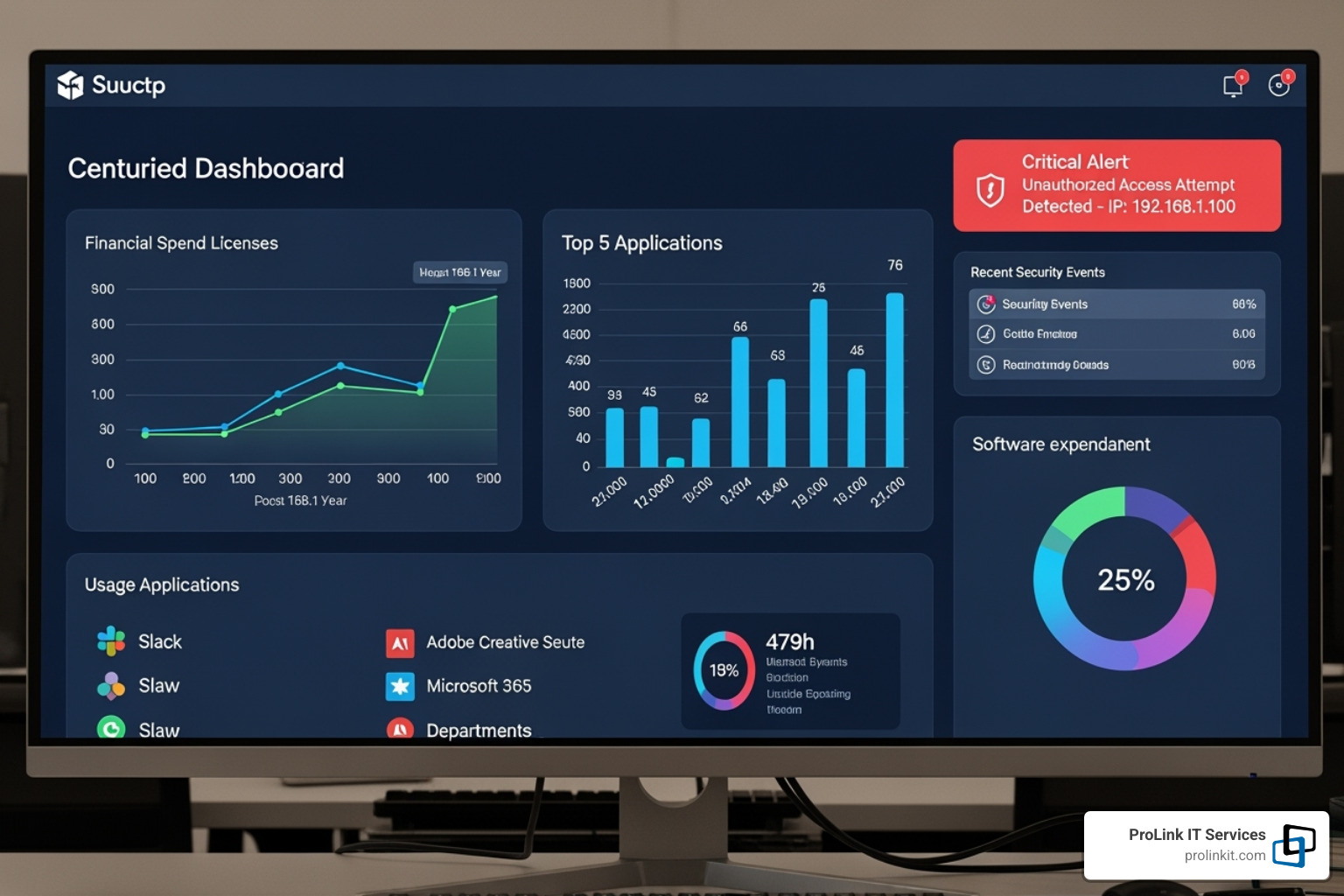
You can’t manage what you can’t see – and in SaaS, there’s usually a lot more hiding in the shadows than you’d expect. The first superpower of SaaS management services is shining a light on every corner of your software ecosystem.
SaaS findy (the process of finding all your applications) works like a detective, gathering clues from multiple sources. It connects to your single sign-on systems, expense reports, network traffic, and application APIs to build a complete picture. Many organizations are shocked to learn they have four times more applications than they thought they did.
Once everything is found, it gets organized into a comprehensive application inventory. This isn’t just a boring spreadsheet – it’s a living database that tracks who owns each app, what it does, how much it costs, who uses it, and when contracts renew.
Usage tracking takes things a step further by showing you what’s actually happening with these applications. Are people using the premium features you’re paying for? Are licenses sitting idle while employees struggle without the tools they need? This intelligence helps you make smart decisions about where to invest and where to cut back.
The spend analysis piece brings your financial data together with usage patterns to create a clear picture of your SaaS return on investment. Suddenly, you can spot opportunities to consolidate duplicate tools or negotiate better deals based on actual usage data.
Companies without this centralized visibility are five times more likely to experience a security incident. Getting this comprehensive view isn’t just about saving money – it’s about protecting your business.
Streamlining Operations and User Lifecycles
Beyond just knowing what you have, SaaS management services make your day-to-day operations run smoother. The biggest game-changer is automating all those tedious tasks that eat up your IT team’s time and create security risks.
Automated onboarding means new employees get the tools they need on day one, without anyone having to remember to set up their accounts manually. No more new hires sitting around waiting for access while your IT team scrambles to provision everything.
Automated offboarding is even more critical for security. When someone leaves your company, their access to all applications gets cut off immediately – no delays, no forgotten accounts, no former employees still lurking in your systems months later. Given that 83% of employees admit to keeping access from former jobs, this automation is absolutely essential.
License provisioning becomes intelligent too. When roles change or projects end, licenses automatically get reassigned where they’re needed most. No more paying for software that’s gathering digital dust.
Access control gets much more sophisticated with proper SaaS management. Employees only get access to what they actually need for their jobs, following the security principle of least privilege. This reduces both costs and security risks.
Workflow automation handles routine tasks like approval requests and renewal alerts, freeing up your team to focus on strategic projects instead of administrative busywork.
This operational efficiency isn’t just about convenience – it’s about building a secure, cost-effective foundation for your business to grow on. For more details on how we can streamline your entire IT infrastructure, check out our Managed IT Services.
Your Roadmap to Effective SaaS Management
Getting your SaaS house in order doesn’t happen overnight. It’s more like renovating your home – you need a solid plan, the right team, and patience to see it through. I’ve walked countless businesses through this change, and I can tell you that the organizations that succeed are those that approach it systematically.
The good news? You don’t have to figure this out alone. At ProLink IT Services, we’ve helped businesses across Utah and beyond turn their SaaS chaos into a well-oiled machine. Let me share what we’ve learned about making this journey as smooth as possible.

Building a Comprehensive SaaS Management Strategy
Think of your SaaS strategy like building a house – you wouldn’t start hammering nails without blueprints, right? The same principle applies here. Before you dive into tools and platforms, you need a clear vision of where you’re headed.
Start by defining your goals. Are you bleeding money on unused licenses? Worried about security gaps? Frustrated with slow employee onboarding? Maybe it’s all three. Whatever your pain points, write them down and make them measurable. “Save money” is vague. “Reduce SaaS spending by 25% in the next 12 months” gives you something concrete to work toward.
Next, figure out who’s going to own this process. In my experience, the most successful implementations involve a cross-functional team. You’ll need someone from IT who understands the technical side, a finance person who can track the dollars, and often someone from HR who deals with employee lifecycle management. Don’t try to make this one person’s side project – it’s too important for that.
Establishing governance policies might sound boring, but it’s where the magic happens. These are your rules of the road. How does someone request a new SaaS tool? Who approves it? What security requirements must it meet? Without clear policies, you’ll end up right back where you started – with shadow IT running wild.
Vendor lifecycle management is where many organizations drop the ball. It’s not just about picking good vendors; it’s about managing them throughout the entire relationship. This means tracking performance, preparing for renewals months in advance, and having exit strategies if things don’t work out. SaaS management services give you the data you need to negotiate from a position of strength.
Renewal management deserves special attention because auto-renewals are budget killers. I’ve seen companies get hit with surprise renewals worth tens of thousands of dollars simply because nobody was watching the calendar. A good system will alert you months before renewals, giving you time to evaluate whether you still need the service and negotiate better terms.
This strategic foundation is crucial, but you don’t have to build it alone. Our team has helped dozens of organizations develop these frameworks. More info about our Expert IT Consultancy Services.
Essential Features of a SaaS Management Platform
Once you have your strategy mapped out, you’ll need the right technology to execute it. A SaaS management platform is like having a really smart assistant who never sleeps and never forgets to check on your subscriptions.
But not all platforms are created equal. After implementing these systems for years, I’ve learned which features actually matter versus which ones just look good in demos.
The foundation of everything is SaaS findy and inventory capabilities. Your platform needs to be a detective, automatically finding applications across your entire organization. It should integrate with your single sign-on system, scan your financial records, and even analyze network traffic to find those sneaky shadow IT applications. The best platforms can uncover four times more applications than what you think you have.
License management and optimization is where you’ll see immediate ROI. Your platform should track who’s using what, identify unused licenses, and help you rightsize your subscriptions. I’ve seen companies save 30% of their SaaS spend just by cleaning up unused accounts and duplicate tools.
Spend and budget tracking gives you the financial visibility that most finance teams desperately want. You’ll finally be able to answer questions like “How much are we spending on productivity tools?” or “Which department is driving our SaaS costs?” This data is gold when it comes to budget planning and departmental accountability.
Renewal and contract management prevents those nasty surprise renewals I mentioned earlier. Your platform should centralize all contract information, send alerts well before renewal dates, and provide usage data to inform your renewal decisions. No more scrambling at the last minute or getting locked into unfavorable terms.
Security and compliance monitoring is non-negotiable in today’s threat landscape. Your platform should continuously scan for security risks, identify applications that aren’t meeting your security standards, and help you maintain compliance with regulations like GDPR or HIPAA. Companies without centralized visibility are five times more likely to experience a security incident.
Finally, workflow automation and integrations tie everything together. Your platform should integrate seamlessly with your existing systems – your HR system, your identity provider, your IT service management tools. When someone joins or leaves your company, the platform should automatically provision or deprovision their SaaS access. This isn’t just about efficiency; it’s about security.
The right SaaS management services platform becomes the central nervous system of your SaaS ecosystem, giving you the visibility and control you need to optimize costs, improve security, and streamline operations.
Frequently Asked Questions about SaaS Management
Over the years, I’ve noticed that business owners and IT managers often have similar questions when they first learn about SaaS management services. Let me address the most common ones I hear, drawing from real conversations I’ve had with clients here in Utah and beyond.
What is the difference between SaaS and managed services?
This question comes up all the time, and I totally understand why! The terminology can be confusing when you’re trying to wrap your head around all these different IT concepts.
SaaS (Software as a Service) is simply how software gets delivered to you. Instead of buying a box of software and installing it on your computer, you subscribe to it online. Think of tools like Salesforce, Microsoft 365, or Google Workspace. The vendor takes care of hosting and maintaining everything, and you just log in through your web browser.
Managed services, on the other hand, are about outsourcing your IT functions to experts like us. Rather than hiring an entire IT department or trying to handle everything yourself, you partner with a managed service provider to take care of your network, security, cloud infrastructure, and support needs.
Here’s where it gets interesting: SaaS management services are actually a specialized type of managed service. They’re complementary, not competing concepts. You might use dozens of SaaS applications for your business, and we help you manage them effectively as part of your broader IT strategy. It’s like having a fleet of vehicles (your SaaS apps) and hiring a fleet management company (us) to keep everything running smoothly.
How does SaaS management differ from traditional IT Asset Management (ITAM)?
While both aim to manage your technology assets, they’re designed for completely different worlds.
Traditional IT Asset Management covers everything – your laptops, servers, and software installed directly on your computers. ITAM focuses on tracking these physical assets from purchase to disposal, managing licenses, and ensuring compliance. It’s built for a world where you buy something once and own it.
SaaS management is a specialized discipline for our cloud-first world. Because SaaS applications are so easy to sign up for (often without IT even knowing), accessed remotely, and paid for monthly or yearly, they need completely different tracking and management approaches. Traditional ITAM tools often miss these “shadow IT” applications that employees sign up for with their credit cards.
Think of ITAM as managing a traditional library with physical books you catalog and shelve. SaaS management services are more like managing a digital subscription service where new content appears constantly, people access it from anywhere, and you need specialized tools to track what everyone’s actually using.
For businesses that rely heavily on cloud applications, SaaS management becomes essential for staying efficient and secure. Even if you already have ITAM processes in place, SaaS management services fill a critical gap that traditional tools simply weren’t designed to handle.
Can SaaS management tools integrate with other IT platforms?
Absolutely! Integration is what makes SaaS management services truly powerful. A good SaaS management platform needs to connect with your existing systems to provide complete visibility and automate workflows.
The most important integrations include IT Service Management tools like ServiceNow, which streamline ticketing and provisioning requests. Single Sign-On providers like Azure AD or Okta are crucial for finding applications and managing user access automatically.
HR systems like Workday enable seamless employee lifecycle management – when someone joins or leaves your company, their SaaS access gets handled immediately. Financial systems and expense platforms help track spending and identify unauthorized purchases.
These integrations transform SaaS management services from a standalone tool into the central nervous system of your IT environment. Everything works together, data stays consistent, and you get that complete picture you need to make smart decisions.
The bottom line? Modern SaaS management services are designed to play well with others. They improve your existing IT infrastructure rather than replacing it, giving you the comprehensive control you need in today’s cloud-first business world.
Conclusion: Take Control of Your Cloud Ecosystem
We’ve covered a lot of ground together, haven’t we? From the staggering reality that most organizations waste 30% of their SaaS spending to the sobering fact that 83% of employees still have access to accounts from former employers. The numbers paint a clear picture: the SaaS revolution that promised to make our lives easier has, in many ways, created new headaches.
But here’s the thing – it doesn’t have to be this way.
SaaS management services aren’t just another IT buzzword or nice-to-have luxury. They’re becoming as essential as having a good accountant or a reliable security system. When you implement proper SaaS governance, you’re not just plugging financial leaks or closing security gaps. You’re changing what feels like digital chaos into a strategic advantage.
Think about the cost savings alone. If you’re like most businesses, you could reclaim hundreds of thousands – or even millions – of dollars annually just by eliminating unused licenses and redundant applications. That’s money that could go toward growth initiatives, employee benefits, or simply improving your bottom line.
The security improvements are equally compelling. Companies without centralized visibility are five times more likely to experience a cybersecurity incident. In today’s threat landscape, can you really afford those odds?
And let’s not forget about operational efficiency. When your team spends less time chasing down shadow IT purchases or manually provisioning accounts, they can focus on what really matters – driving your business forward.
At ProLink IT Services, we’ve seen this change happen countless times. As a veteran-owned company, we bring the same discipline and integrity to your SaaS challenges that we learned in service. We don’t just implement technology; we partner with you to build a sustainable, secure, and cost-effective cloud ecosystem.
Your SaaS portfolio should work for you, not against you. It should be a source of competitive advantage, not constant frustration.
Take the next step with our Managed Cloud Services and let’s turn your SaaS sprawl into a well-orchestrated symphony of productivity and growth. Your future self – and your CFO – will thank you.