

Monitor from Afar: Top Remote Network Monitoring Solutions
Why Remote Network Monitoring Has Become Essential for Business Success
A remote network monitoring system is a technology solution that continuously tracks the performance, availability, and security of network infrastructure from a centralized location. These systems use various protocols and techniques to monitor distributed networks, cloud services, and remote devices without requiring physical presence at each location.
Key capabilities of remote network monitoring systems:
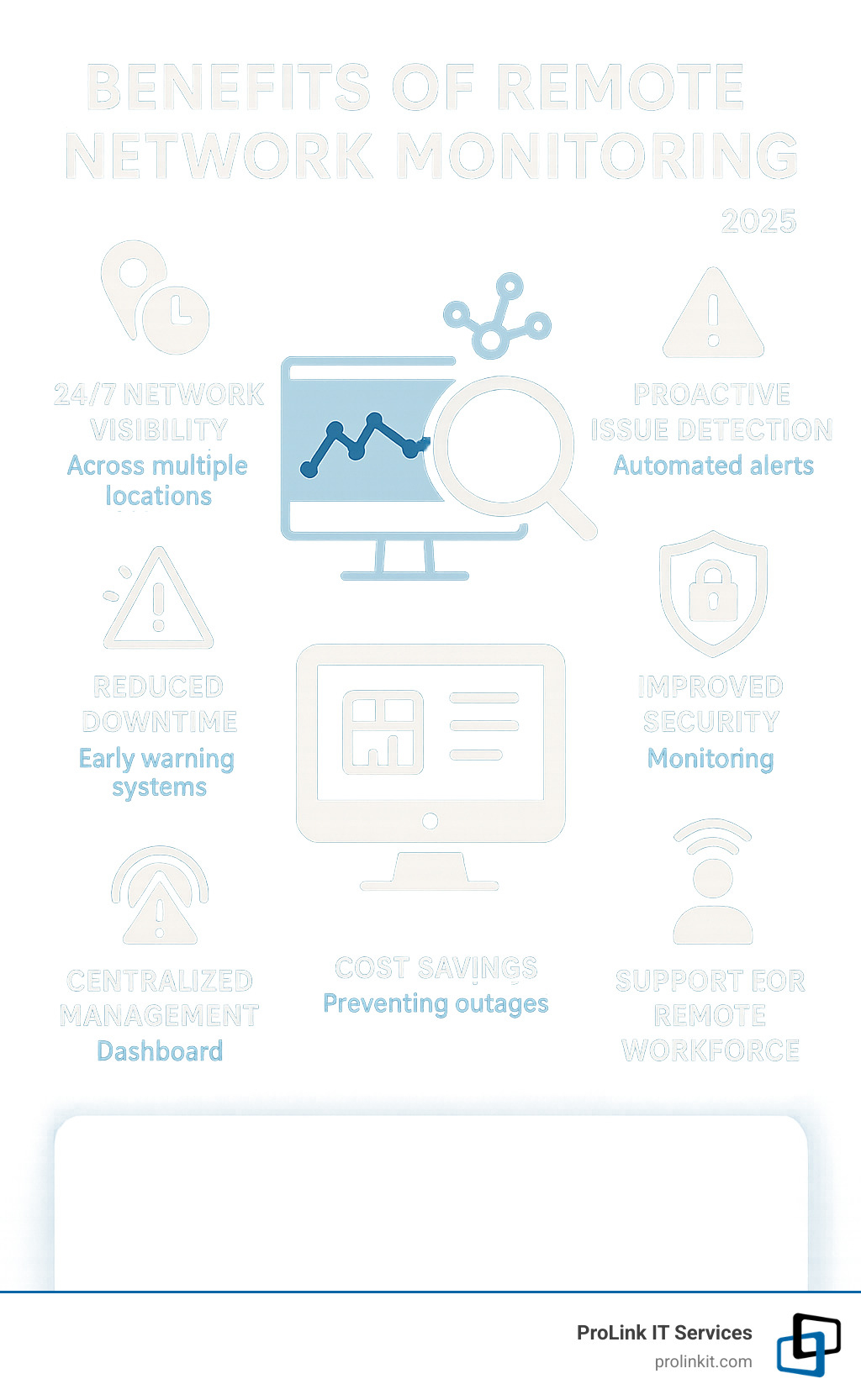
- Real-time visibility into network performance across multiple locations
- Automated alerts when issues are detected to prevent downtime
- Centralized dashboards for managing distributed infrastructure
- Proactive issue detection before problems impact users
- Historical reporting for capacity planning and compliance
The shift to remote work and cloud-first infrastructure has made network monitoring more complex than ever. With employees working from home, applications running in the cloud, and IoT devices connecting from everywhere, IT teams need visibility into networks they can’t physically access.
Modern businesses face a critical challenge: how do you maintain network performance when your infrastructure is scattered across offices, data centers, and cloud platforms? The answer lies in implementing a robust monitoring solution that can “see” into every corner of your network infrastructure.
As Mitch Johnson, Founder and CEO of ProLink IT Services with over 20 years in the technology sector, I’ve helped countless businesses implement remote network monitoring systems to gain visibility into their distributed infrastructure. My experience has shown that proactive monitoring is the difference between businesses that thrive and those that struggle with constant network issues.
Remote network monitoring system vocab to learn:
Why Every Modern Business Needs a Remote Network Monitoring System
Imagine a network outage affecting your entire business—employees, customers, and critical operations. A remote network monitoring system is your early warning system, spotting trouble before it becomes a disaster. Proactive issue detection catches problems while they’re small. Instead of waiting for user complaints, the system alerts you to a server’s high memory usage or a slow connection. This dramatically reduces your Mean Time to Resolution (MTTR) because you can start the fix before most people notice an issue.
The operational efficiency gains are remarkable. Your IT team can shift from firefighting to focusing on strategic projects that grow the business. Preventing downtime protects revenue and keeps customers happy, leading to significant cost savings.
For businesses with remote workforces, a remote network monitoring system is essential. It provides visibility into performance across all locations, ensuring your team stays connected to the resources they need, whether they’re in the office or working from home.
Beyond performance, these systems strengthen your network security. They constantly watch for unusual traffic patterns or suspicious activity that might signal a cyberattack, a crucial part of our approach to 24/7 Protection: How Network Security Services Keep Your Data Safe.
Compliance and SLA management also become simpler. With detailed performance data, you can prove uptime for client contracts or demonstrate security controls for an audit. This is why we integrate monitoring into all our Managed Network Services.
The Shift to Proactive Maintenance
The reactive IT approach of waiting for complaints is obsolete in today’s always-on world. A remote network monitoring system transforms your IT strategy from reactive firefighting to proactive prevention. Using predictive analytics, the system learns what’s normal for each device and service. When it detects deviations—like a hard drive responding slowly or a switch running hot—it alerts you while there’s still time to act.
This proactive approach prevents outages that could cripple your operations, making business continuity much more achievable. Just as How Data Backup Services Can Save Your Business from Disaster protects your data, proactive monitoring protects your operations.
Gaining Visibility Across Distributed Networks
Modern business networks span offices, remote workers, cloud platforms, and IoT devices. Managing this complexity without proper visibility is nearly impossible.

A remote network monitoring system provides centralized control over this sprawling infrastructure. Whether you’re managing a multi-site business, cloud applications, or IoT devices, everything appears in one unified view.
This centralized visibility is particularly valuable for our Cloud-Managed Data Center Services, where physical access is impractical. Your IT team can troubleshoot a server in another city from their desks, diagnosing issues without the expense and delay of sending a technician on-site. The ability to remotely access and manage devices eliminates costly “truck rolls,” making your network truly manageable regardless of geography.
Key Features to Look for in Your Monitoring Solution
Choosing the right remote network monitoring system is crucial. The best systems share key characteristics that ensure reliability, intelligence, and scalability to grow with your business.
Autofindy and network topology mapping is a non-negotiable feature. A good system should automatically find every device on your network and generate a visual map of how everything connects, eliminating manual configuration. This map is invaluable for troubleshooting, helping you quickly understand the impact of a failed device. The best systems support hundreds of vendors, ensuring all equipment, from modern to legacy, is found and monitored.
Real-time performance metrics and bandwidth analysis provide instant visibility into device performance. You should be able to see CPU usage, memory consumption, disk activity, and network traffic in real-time. Bandwidth analysis helps you spot bandwidth hogs—like unauthorized video streaming or a misconfigured backup job—before they degrade network performance for everyone.
Customizable dashboards are essential for focusing on what matters. Different teams have different priorities; a flexible dashboard allows your sales team to monitor CRM uptime while the IT team watches server health. This custom view makes the system more effective and easier to use.
Scalability is critical for long-term value. As your business grows, your monitoring solution must grow with it. Look for systems with distributed architectures and remote probes that can be deployed anywhere with an internet connection, allowing you to monitor a new branch office as easily as the server room down the hall.
Essential Alerting and Reporting Capabilities
Effective monitoring requires intelligent alerting that informs without overwhelming. Threshold-based alerts are the foundation. The system should let you set specific triggers, like alerting when a server’s CPU stays above 90% for more than five minutes. The best systems can differentiate between momentary spikes and genuine problems, which is key to alert fatigue reduction.
To avoid overwhelming your team, the system should offer multiple notification methods (email, SMS, push notifications) and escalation paths. If the primary on-call person doesn’t respond, the alert can automatically go to their backup.
Automated reporting turns monitoring data into actionable insights. The system should generate historical performance reports automatically, helping you spot trends, plan for capacity upgrades, and perform root cause analysis after an incident. This detailed historical data is invaluable for understanding not just what happened, but why, and how to prevent it from happening again. This documentation supports your What is IT Documentation? efforts by creating a comprehensive record of your IT environment.
Deployment Models and Integration for a Future-Proof Remote Network Monitoring System
Modern remote network monitoring systems offer flexible deployment models. On-premises deployment gives you maximum control, as the software runs on your own servers and data never leaves your network. This is ideal for organizations with strict data sovereignty requirements. The trade-off is that you are responsible for all maintenance and updates.
Cloud (SaaS) deployment offers rapid deployment with minimal IT overhead. The vendor handles all infrastructure management, updates, and maintenance, letting your team focus on using the data. Many systems use a probe-based architecture, where lightweight probes collect data locally and transmit it securely to a central server, whether on-premises or in the cloud.
The choice between agent-based and agentless monitoring affects data collection. Agent-based monitoring installs software on devices for deeper visibility, while agentless uses standard protocols to gather data remotely. We’ll discuss this further in the FAQ.
Integration capabilities are critical. A remote network monitoring system that connects with your existing tools becomes the central nervous system of your IT operations. Key integrations include PSA systems, ticketing systems, and collaboration tools. The most flexible systems offer robust API access and REST API webhook integration, enabling custom automations that fit your unique workflows and improve existing processes.
Comparing Categories of Remote Network Monitoring Tools
Shopping for a remote network monitoring system can be overwhelming, but most solutions fall into three main categories. Understanding them helps you choose the right fit.
| Criteria | All-in-One Enterprise Platforms | Cloud-Native SaaS Solutions | Open-Source and Customizable Tools |
|---|---|---|---|
| Cost | High upfront, ongoing maintenance | Subscription-based, scalable | Low/No licensing, high operational |
| Ease of Use | Moderate to Complex | High | Low to Moderate |
| Customization | High (complex configuration) | Moderate | Very High |
| Target User | Large Enterprises, Complex IT | SMBs, Distributed Teams, MSPs | Technical Teams, Custom Needs |
| Deployment | On-premises | Cloud-based | On-premises or self-hosted cloud |
| Maintenance | High | Low (vendor handles) | High (internal team) |
| Scalability | Very High (with planning) | Very High (on-demand) | Moderate to High (with expertise) |
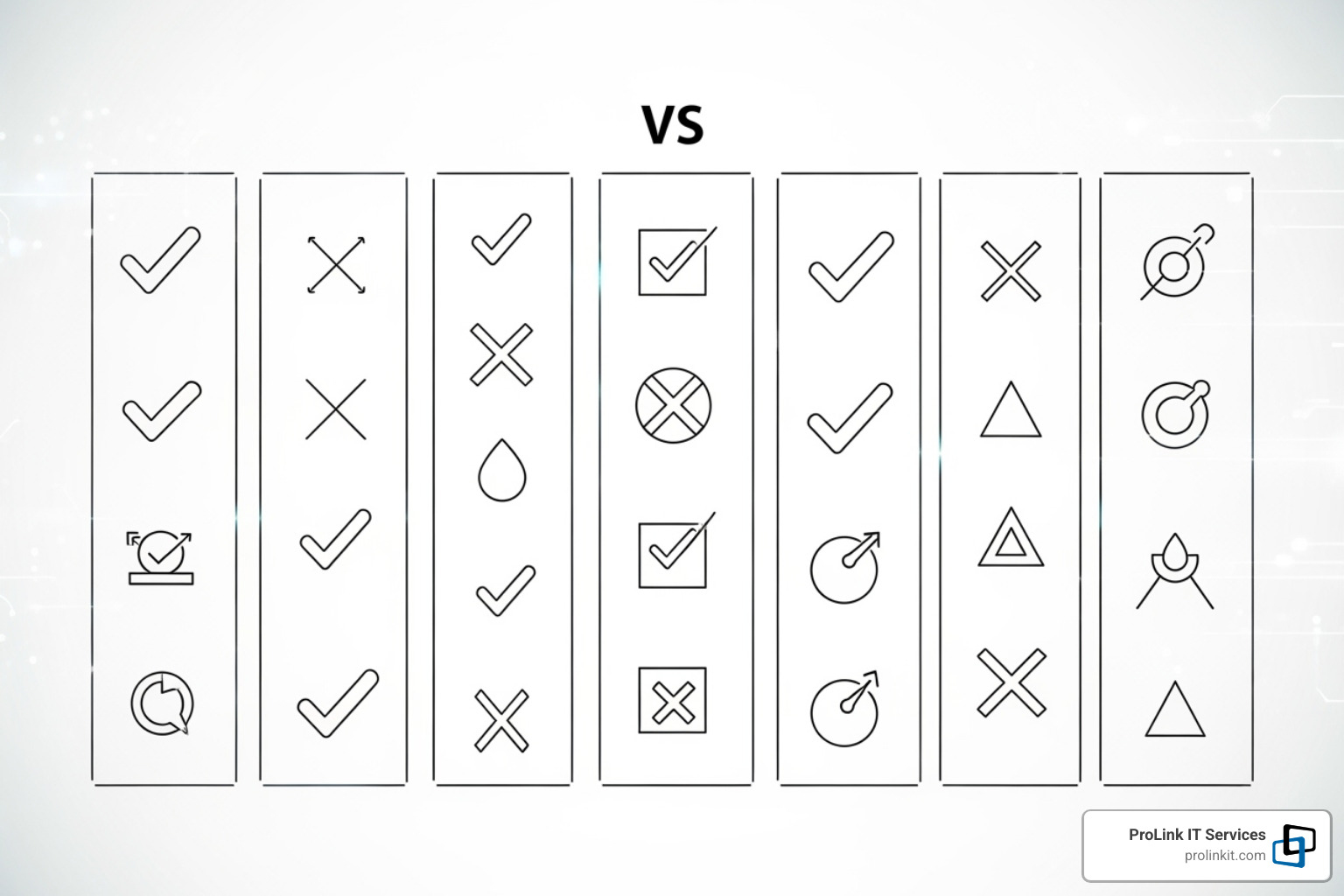
All-in-one platforms are powerful but require more investment. Cloud-native solutions are affordable and easy to manage. Open-source tools offer maximum flexibility but demand significant technical skill.
All-in-One Enterprise Platforms
These are the powerhouses of monitoring, built for large organizations with complex networks. They offer comprehensive feature sets, including deep packet inspection and advanced reporting. Their on-premises focus provides complete control over data and infrastructure, which is crucial for strict security or compliance requirements. While they have a higher upfront cost and require more expertise to manage, their scalability and granular control are invaluable for large enterprises.
Cloud-Native and SaaS Solutions
Cloud-native and SaaS remote network monitoring systems are game-changers for modern businesses, especially those with distributed teams or a cloud-first strategy.

Their main advantages are fast deployment (often in minutes) and predictable subscription-based pricing. Because they are web-based, they are ideal for distributed teams, allowing IT staff to monitor and troubleshoot from anywhere. The vendor handles all automatic updates and maintenance. Many platforms include AI-driven analytics and multi-tenancy capabilities, making them perfect for managed service providers and a great fit for our Cloud-Based Managed IT Services.
Open-Source and Customizable Tools
For organizations with a strong technical team and unique requirements, open-source tools offer maximum flexibility. The primary draw is the no licensing costs, but this is often offset by the time and expertise required for setup and maintenance. They lack the plug-and-play experience of SaaS platforms but offer best customization potential.
These tools benefit from strong community support, with extensive documentation and plugins. Features like scriptable checks and modular design allow your team to build a monitoring system custom to your exact needs. They are a great option for businesses looking for cost-effective, custom solutions, such as those exploring Why Remote IT Support is Essential for Small Businesses.
Frequently Asked Questions about Remote Network Monitoring
When setting up a remote network monitoring system, several technical questions consistently arise. Here are answers to the most common ones.
What is the role of SNMP in a remote network monitoring system?
SNMP (Simple Network Management Protocol) is a standard protocol that allows your remote network monitoring system to communicate with network devices like routers, printers, and servers. The system works on a manager-agent model. The monitoring system (manager) sends requests to agents on each network device. These agents maintain a Management Information Base (MIB), which is a database of information about the device’s status and performance, such as CPU usage and network traffic.
SNMP also allows devices to proactively send alerts, called SNMP traps, to the monitoring system when a significant event occurs, like a port failure or a temperature spike. Because of its universality, SNMP allows a single monitoring system to communicate with devices from hundreds of different manufacturers, enabling comprehensive monitoring across a distributed network.
What is the difference between agent-based and agentless monitoring?
This choice depends on your specific monitoring needs, and the best strategies often use both.
Agent-based monitoring involves installing a small software program on the device you want to monitor. This agent can collect very detailed, host-level metrics about specific applications, processes, and log files. It’s particularly useful for deep inspection of critical servers.
The downside is the need to install and maintain agents on every device, which can be time-consuming and use a small amount of system resources.
Agentless monitoring uses standard network protocols like SNMP, WMI, and ICMP to collect data without installing any software on the target device. This approach is easier to deploy and manage, especially in large environments, and is perfect for network equipment like switches and routers where installing an agent isn’t feasible. It’s this kind of flexible approach that aligns with modern IT strategies, as we discuss in Why Businesses Are Turning to Outsourced IT Support in 2025.
How does remote monitoring help ensure compliance and meet SLAs?
A remote network monitoring system is a critical tool for governance, providing the objective evidence needed to manage Service Level Agreements (SLAs) and meet regulatory compliance.
For SLA management, the system tracks performance against agreed-upon metrics, generating detailed uptime reports and performance baselines. This provides concrete data to show clients you are meeting your commitments. Immediate alerts also help minimize any SLA violations by enabling rapid response.
For compliance, the system maintains comprehensive audit trails of network events, changes, and access. This historical data is invaluable for demonstrating adherence to regulations like HIPAA or PCI-DSS. Security monitoring features also help identify potential vulnerabilities or unauthorized activities, a common requirement for many frameworks and a key part of our guidance on How to Address Vulnerabilities. Automated reporting can generate much of the data needed for audits, simplifying the compliance process.
Conclusion
Managing networks in today’s digital world feels a bit like trying to keep track of a sprawling family reunion where everyone’s scattered across different cities, but you still need to make sure everyone’s doing okay. That’s exactly why a robust remote network monitoring system has moved from “nice to have” to “absolutely essential” for any business serious about staying competitive.
Throughout our conversation, we’ve explored how these systems transform the way we handle IT operations. Instead of waiting for angry phone calls about slow internet or crashed servers, we can spot trouble brewing and fix it before anyone even notices. That shift from reactive firefighting to proactive problem-solving is genuinely game-changing.
The visibility these systems provide across our scattered networks is remarkable. Whether we’re managing branch offices, remote workers, or cloud applications, we finally get that bird’s-eye view we’ve always needed. Remote network monitoring systems give us the power to see everything from one central dashboard, making complex network management feel surprisingly manageable.
Choosing the right monitoring solution is absolutely critical, and there’s no one-size-fits-all answer. Your organization’s size, technical expertise, and specific needs will guide whether you need a comprehensive enterprise platform, a flexible cloud-native solution, or a customizable open-source tool. The important thing is getting the insights you need to make smart decisions and keep your network humming along smoothly.
The future of network monitoring looks incredibly promising. We’re seeing exciting developments in AIOps (Artificial Intelligence for IT Operations), automation, and predictive analytics. These advances will make our monitoring systems even smarter, eventually predicting and preventing issues we might never have seen coming.
At ProLink IT Services, we’ve built our reputation on discipline, integrity, and treating our clients as true partners. We know how challenging modern network management can be, and we’re passionate about helping businesses steer these complexities successfully. For expert help selecting, implementing, and managing the ideal monitoring solution for your business, explore our Network Management services. We’re here to make sure your network works as hard as you do.