

The A to Z of Network Services: Everything You Need to Know for Optimal Performance
Why Network Services Are the Digital Backbone of Modern Business
Network services are the fundamental applications and protocols that enable devices, users, and systems to communicate, share resources, and access data across digital networks. These services form the invisible infrastructure that powers everything from email and file sharing to cloud applications and secure remote access.
Quick Answer: What Are Network Services?
- Applications that run on networks to provide specific functionality
- Enable communication between devices, users, and systems
- Include services like DNS, DHCP, VPN, email, and file sharing
- Support business operations through data storage, security, and connectivity
- Available as on-premises, cloud-based, or hybrid solutions
In today’s digital landscape, network services have evolved far beyond simple connectivity. They now encompass everything from Domain Name System (DNS) translation that helps you steer the internet, to Virtual Private Networks (VPNs) that secure remote work, to Content Delivery Networks (CDNs) that ensure fast application performance worldwide.
The statistics tell a compelling story. The global network services market is projected to grow from $35.5 billion in 2023 to $60.2 billion by 2028, with organizations increasingly recognizing that reliable network infrastructure directly impacts productivity, security, and growth potential.
Whether your business relies on cloud applications, supports remote workers, or manages sensitive data, understanding network services isn’t just technical knowledge – it’s a business imperative. From preventing costly downtime to enabling seamless collaboration, these services determine how efficiently your organization operates in an interconnected world.
I’m Mitch Johnson, Founder and CEO of ProLink IT Services, where I’ve spent over 20 years helping Utah businesses optimize their network services for peak performance and security. My experience has shown me that the right network foundation can transform how companies operate and compete.
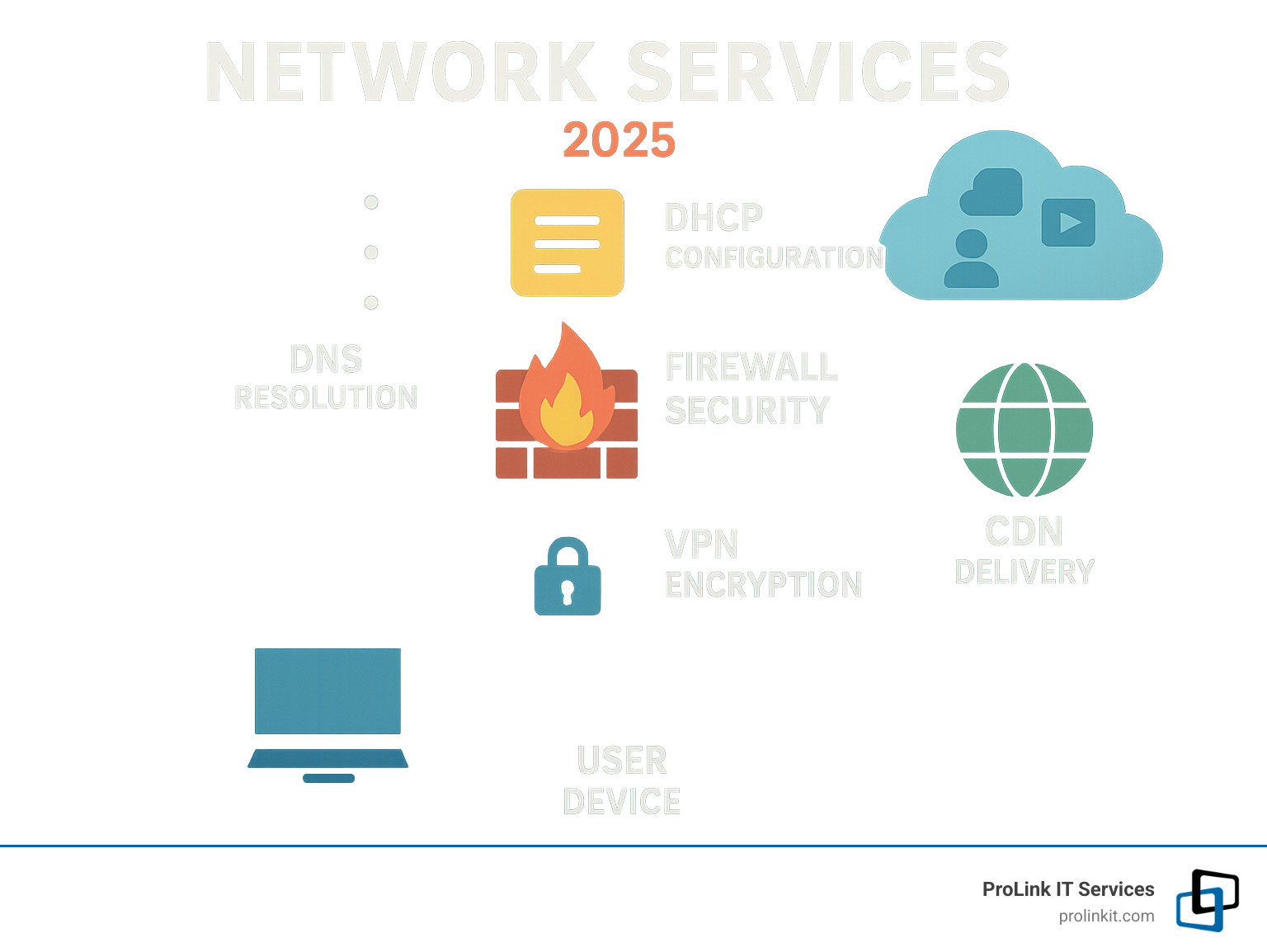
Network services vocab to learn:
Understanding the Core: Common Types of Network Services
Think of network services as the specialized tools that make your network truly useful. At their core, these are capabilities that facilitate network operations – applications running at the network layer and above that provide data storage, communication, and other essential functionality. Most operate using either client-server architecture (where one device serves many) or peer-to-peer architecture (where devices communicate directly), built on application layer network protocols.
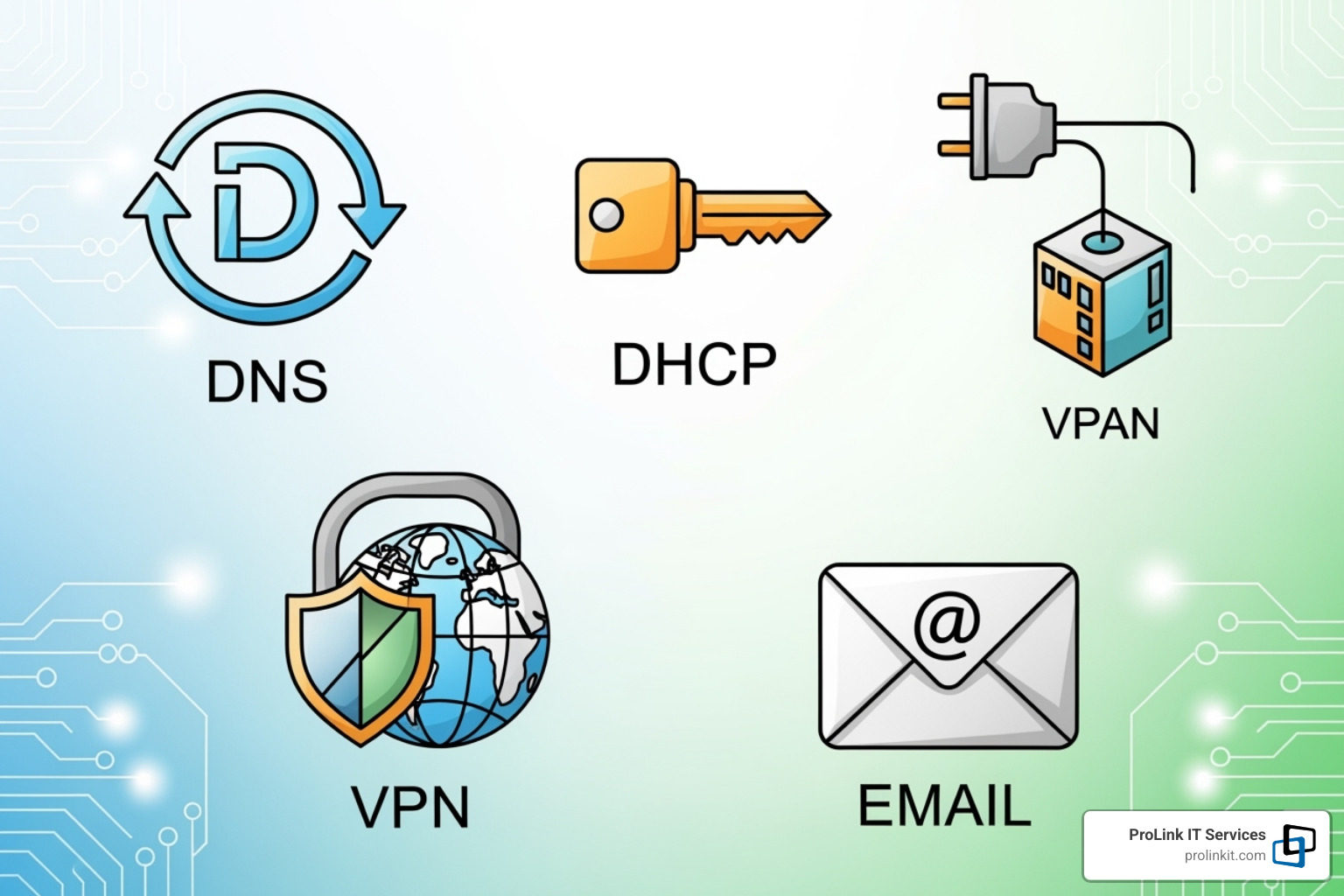
Every time you check email, browse a website, or access a shared file, you’re using multiple network services working together behind the scenes. Let’s explore the essential ones that keep your business running smoothly.
Foundational Directory and Configuration Services
These are the quiet workhorses of your network – services you rarely think about but absolutely can’t live without.
Domain Name System (DNS) is essentially the internet’s phone book. When you type “prolinkit.com” into your browser, DNS translates that friendly name into the numerical IP address that computers actually use to find each other. Without DNS, you’d need to memorize strings of numbers like 192.168.1.1 for every website you visit. DNS at work happens millions of times per day, making the internet user-friendly and accessible.
Dynamic Host Configuration Protocol (DHCP) saves network administrators from a major headache. Instead of manually assigning a unique IP address to every device that joins your network – your laptop, smartphone, printer, or visitor’s tablet – DHCP handles automatic IP assignment. It’s like having a digital receptionist that gives every new device its proper network credentials without any human intervention.
Network Time Protocol (NTP) ensures all your devices agree on what time it is. This might sound trivial, but time synchronization is crucial for security logs, financial transactions, and coordinating activities across your network. When something goes wrong, having accurate timestamps can mean the difference between quickly solving a problem and spending hours hunting for clues.
Essential Communication and Data Network Services
These services handle the actual movement of information across your network – the digital equivalent of your office mail system and file cabinets.
Email services involve more complexity than you might expect. When you hit “send,” SMTP (Simple Mail Transfer Protocol) handles delivery, while IMAP (Internet Message Access Protocol) and POP3 (Post Office Protocol version 3) manage retrieving messages from mail servers. These protocols work together to ensure your messages reach their destination reliably.
File sharing services make it possible to move documents, images, and other files between computers safely. While basic File Transfer Protocol (FTP) gets the job done, most businesses rely on secure versions like SFTP (SSH File Transfer Protocol) or FTPS (FTP Secure) that encrypt your data during transfer. This protection is essential when sharing sensitive business information.
Access, Security, and Delivery Services
These services focus on keeping your network secure while ensuring fast, reliable access to the resources your team needs.
Virtual Private Network (VPN) technology creates a secure, encrypted tunnel between remote users and your business network. This enables secure remote access through data encryption, allowing employees to work from anywhere while maintaining the same level of security as if they were in the office. VPNs are especially valuable when using public Wi-Fi or accessing sensitive company data from home.
Security services like firewalls and Intrusion Detection Systems (IDS) act as your network’s security team. Firewalls filter incoming and outgoing traffic based on predefined rules, while IDS monitors for suspicious activity and potential threats. These services work together to protect your business from cyberattacks and data breaches. For comprehensive protection, learn more about our network security services.
Content Delivery Networks (CDNs) solve the challenge of delivering web content and applications quickly to users regardless of their location. By caching content on servers closer to your users, CDNs achieve reduced latency and faster load times. This means your website loads quickly whether someone accesses it from across town or across the country, improving user experience and business performance.
Understanding these core network services helps you appreciate the sophisticated infrastructure supporting your daily business operations. Each service plays a specific role in keeping your organization connected, secure, and productive.
The Business Imperative: Why Robust Network Services Drive Growth
Let’s talk about something that keeps business owners up at night: the fear that their network will fail when they need it most. Network services aren’t just technical infrastructure—they’re the invisible foundation that either propels your business forward or holds it back.

The numbers don’t lie: companies with reliable network services experience higher employee productivity, better customer satisfaction, and stronger competitive positioning. When your network works seamlessly, your team focuses on growing the business instead of wrestling with technology. That’s the difference between surviving and thriving in today’s market.
Boost Productivity and Reduce Downtime
Picture this: it’s Monday morning, and your team is ready to tackle the week. Then your network crashes. Suddenly, nobody can access emails, cloud applications stop working, and that important client presentation gets delayed. Sound familiar?
Network downtime costs the average business $5,600 per minute. That’s not just lost revenue—it’s frustrated employees, disappointed customers, and missed opportunities that may never return.
Robust network services flip this script entirely. When your infrastructure is solid, your team enjoys seamless collaboration across departments and locations. Files transfer quickly, video calls run smoothly, and applications respond instantly. Your employees can focus on what they do best instead of waiting for pages to load or documents to sync.
High availability design is the secret sauce here. It means building redundancy into your network so that if one component fails, another takes over automatically. Your team keeps working, your customers stay happy, and your business keeps moving forward.
Improve Security and Ensure Compliance
Here’s a sobering thought: the average data breach costs small businesses $3.31 million. For many companies, that’s not just a financial hit—it’s a business-ending event.
Strong network services act as your digital bodyguard, implementing multiple layers of protection. Firewalls block malicious traffic before it reaches your systems. Intrusion detection systems spot suspicious activity and sound the alarm. Encryption ensures that even if data gets intercepted, it’s useless to cybercriminals.
But security isn’t just about preventing attacks—it’s about meeting regulatory requirements too. Whether you’re dealing with healthcare data, financial records, or customer information, centralized security policies help ensure compliance with industry standards. This protects you from hefty fines and the reputation damage that comes with security lapses.
Need practical guidance? Check out our 7 Top Network Security Tips for Businesses and explore our comprehensive cybersecurity solutions.
Achieve Scalability and Cost Savings
Growth is exciting, but it shouldn’t break your network—or your budget. Smart network services grow with your business, whether you’re adding new employees, opening additional locations, or adopting cutting-edge technologies.
The beauty of modern network architecture lies in its flexibility. Pay-as-you-go models mean you only pay for what you actually use, eliminating the need for massive upfront investments in hardware that might become obsolete in a few years. This approach converts large capital expenses into predictable operational costs, making budgeting much easier.
Efficient resource allocation is another game-changer. Instead of buying separate servers for every application, you can virtualize resources and share them across multiple functions. This reduces hardware investment while improving performance and reliability.
The result? Lower operational costs that free up budget for innovation and growth. Your IT spending becomes an investment in your future rather than just a necessary expense.
Curious how this works in practice? Learn more about our managed IT services and see how we help businesses optimize their technology investments.
Architecting Your Network: Models, Management, and Modernization
The way you structure and manage your network services can make or break your business operations. Think of it like choosing between building your own house, renting an apartment, or finding something in between. Each approach has its place, and understanding these options is crucial for creating a network that grows with your business.
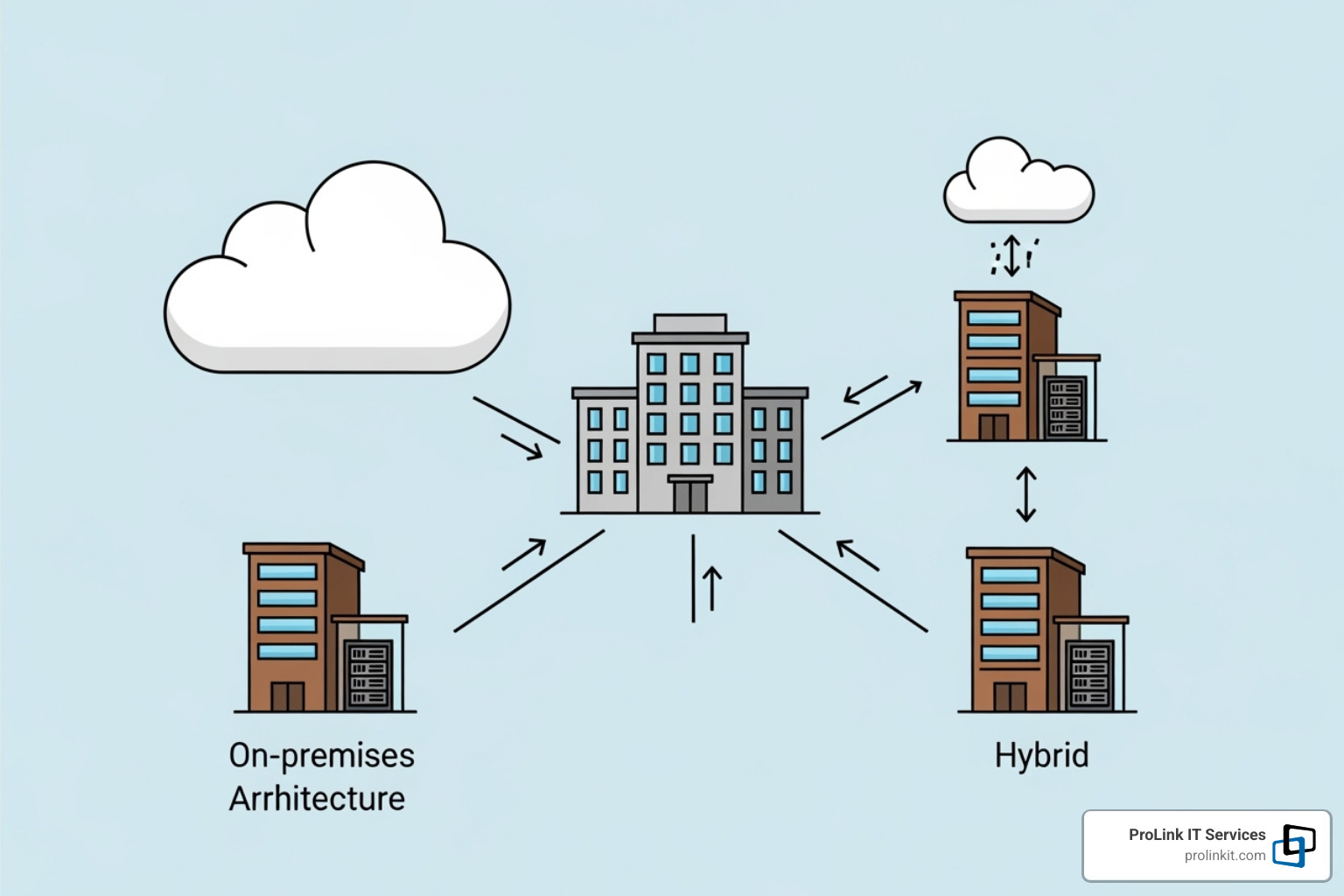
Comparing Network Service Models
When it comes to deploying network services, you’ve got three main paths to choose from. Each has its own personality, if you will, with different strengths and trade-offs.
On-premises networks are like owning your own home. You have complete control over every detail, from the hardware in your server room to the security policies protecting your data. This appeals to businesses in highly regulated industries like healthcare and finance, where compliance requirements demand total oversight. The downside? You’re responsible for everything – maintenance, upgrades, security patches, and that inevitable 2 AM emergency call when something breaks.
Cloud-based networks flip this model entirely. Instead of owning infrastructure, you’re essentially renting network capabilities from a provider. This approach offers incredible agility – need more bandwidth? Done. Want to add new locations? No problem. It’s perfect for startups and growing businesses that need to move fast without huge upfront investments. The trade-off is less direct control and dependence on your provider’s reliability.
Hybrid networks offer the best of both worlds, combining on-premises control with cloud flexibility. You might keep sensitive data on local servers while using cloud services for collaboration and backup. This balanced approach works well for established businesses that need both security and scalability.
| Feature | On-Premises | Cloud-Based | Hybrid |
|---|---|---|---|
| Cost | High upfront capital expenditure | Lower upfront, pay-as-you-go operational cost | Balanced upfront and operational costs |
| Control | Full control over hardware and software | Less control, relies on provider | Balanced control, some in-house, some outsourced |
| Scalability | Limited, requires physical upgrades | High, scales rapidly on demand | Flexible, scales based on need and resource location |
| Maintenance | High, managed by in-house IT team | Low, managed by cloud provider | Shared responsibility |
The Rise of “As-a-Service”: NaaS and SASE
The networking world is experiencing a fundamental shift toward service-based models. Instead of buying and managing complex hardware, businesses are increasingly consuming network services like utilities – paying for what they use when they use it.
Network as a Service (NaaS) represents this evolution perfectly. Rather than purchasing expensive routers, switches, and firewalls, you access these capabilities through a subscription model. It’s like switching from buying a car to using ride-sharing services – you get where you need to go without worrying about maintenance, insurance, or parking.
The numbers tell the story: the global NaaS market jumped from $11.5 billion in 2022 to a projected $45.8 billion by 2030. That’s an 18.9% annual growth rate, reflecting how businesses are embracing this flexible approach to networking.
Secure Access Service Edge (SASE) takes this concept even further by combining networking and security into a single cloud-delivered service. Think of SASE as your network’s Swiss Army knife – it handles connectivity, security, and access control all in one package.
What makes SASE particularly powerful is its accept of Zero Trust principles. Instead of assuming anyone inside your network is trustworthy, Zero Trust verifies every user and device before granting access. It’s like having a security guard who checks everyone’s ID, even if they’ve been in the building for years.
Industry experts predict that 60% of enterprises will have SASE strategies by 2025, making it one of the fastest-growing trends in network architecture.
Critical Functions of Managed Network Services
Here’s the reality: managing modern network services is incredibly complex. Between security threats, software updates, performance monitoring, and compliance requirements, it’s practically a full-time job for a team of specialists.
That’s where managed network services become invaluable. Think of it as having a dedicated IT team without the overhead of hiring, training, and retaining specialized staff.
Proactive monitoring forms the foundation of managed services. Instead of waiting for problems to surface, managed service providers continuously watch your network’s health, identifying potential issues before they impact your business. It’s like having a mechanic who spots problems before your car breaks down on the highway.
Infrastructure management takes care of the heavy lifting – planning, installing, configuring, and optimizing your network hardware and software. This ensures your systems run smoothly and efficiently without requiring your internal team to become networking experts.
Security and compliance management keeps your network protected against evolving threats while ensuring you meet regulatory requirements. This includes maintaining firewalls, intrusion detection systems, and security configurations that adapt to new threats.
Software maintenance and updates might sound mundane, but it’s critical for security and performance. Managed service providers handle the scheduling, testing, and deployment of updates, patches, and firmware upgrades without disrupting your operations.
Perhaps most importantly, 24/7 support means someone is always watching your network, ready to respond when issues arise. No more hoping problems wait until business hours to surface.
The managed network services market is expected to reach $78.5 billion by 2027, growing at 10.2% annually. This growth reflects businesses recognizing that expert management delivers better results than trying to handle everything internally.
Our comprehensive Network Management services take this burden off your shoulders, while our managed security services ensure your network stays protected around the clock.
The Future of Connectivity: Key Trends Shaping Network Services
The world of network services is changing at breakneck speed, and frankly, it’s pretty exciting to watch. As someone who’s been in this industry for over two decades, I’ve seen technologies come and go, but the changes happening now feel different – they’re reshaping the very foundation of how businesses connect and operate.
Artificial intelligence and automation are no longer futuristic concepts – they’re becoming essential tools in modern network services. Picture this: instead of your IT team scrambling to figure out why the network is slow at 2 AM, AI-powered systems are already analyzing traffic patterns, predicting bottlenecks, and even fixing issues before anyone notices. These smart systems use predictive analytics to spot problems days or weeks ahead of time, turning reactive firefighting into proactive prevention. It’s like having a crystal ball for your network health.
The explosion of IoT and edge computing is creating a completely new landscape. Your security cameras, smart thermostats, and even coffee machines are all generating data – and lots of it. Rather than sending everything to a distant cloud server, edge computing processes this information right where it’s created. This means faster response times and less strain on your main network connections. The numbers tell the story: by 2025, a whopping 80% of network traffic will come from video, IoT devices, and immersive experiences. That’s a massive shift from just a few years ago.
Cloud-native solutions are changing how we think about building and running network services. These aren’t just traditional applications moved to the cloud – they’re designed from the ground up to take advantage of cloud flexibility and scalability. When your network services are truly cloud-native, you can scale up during busy periods and scale down when things are quiet, paying only for what you use.
Perhaps the biggest driver of change is the increased demand for flexibility. The pandemic taught us that work happens everywhere – home offices, coffee shops, co-working spaces. Your network services need to support employees whether they’re in the office or working from their kitchen table. This isn’t just about having a VPN anymore; it’s about creating seamless experiences that work reliably from anywhere.
These trends aren’t just interesting technology developments – they’re reshaping how successful businesses operate. The companies that accept these changes early will have significant advantages over those that wait. Our cloud managed services help businesses steer these exciting changes while keeping everything secure and running smoothly.
Frequently Asked Questions about Network Services
Over my years helping businesses understand network services, I’ve noticed the same questions come up again and again. Let me share the answers to the most common ones I hear.
What is the fundamental role of network services in IT?
Think of network services as the invisible workforce that keeps your digital world running smoothly. They’re the foundation that makes everything else possible – from sending a simple email to accessing complex cloud applications.
Network services enable devices and users to communicate, share resources, and access applications securely and efficiently. They form the digital backbone of any organization, handling the essential tasks of data storage, manipulation, presentation, and communication. Without these services working behind the scenes, your computers couldn’t talk to each other, your employees couldn’t access shared files, and your business applications would be isolated islands.
It’s like having a well-trained support team that never sleeps – always making sure the right information gets to the right place at the right time. Modern IT infrastructure simply wouldn’t function without robust network services because they underpin everything from basic internet access to the most sophisticated cloud-based applications your business depends on.
How does a Content Delivery Network (CDN) improve performance?
Imagine ordering pizza from a restaurant across town versus one right around the corner. The closer restaurant will always deliver faster – and that’s exactly how CDNs work for your digital content.
A CDN improves performance by caching content on servers geographically closer to users. When someone requests content from your website or application, the CDN intelligently directs that request to the nearest server that has a cached copy of what they need.
This smart approach reduces the physical distance data must travel, which creates some impressive benefits. You’ll see lower latency (less delay), faster load times that keep users happy, and reduced bandwidth consumption on your main server. It’s like having multiple delivery locations instead of shipping everything from one central warehouse.
The result? Your users get a much faster, more reliable experience whether they’re accessing your content from across town or across the globe. CDNs are especially valuable for businesses serving customers in multiple geographic regions.
What is the difference between Network as a Service (NaaS) and traditional models?
The difference between NaaS and traditional networking is like comparing renting a fully-equipped office space versus buying land and building your own office from scratch.
NaaS is a cloud-based subscription model where businesses consume network functions on demand, eliminating the headache of owning, operating, and maintaining physical network infrastructure. You get all the network capabilities you need without the massive upfront investment or ongoing maintenance responsibilities.
Traditional models, on the other hand, require significant upfront capital investment in on-premises hardware like routers, switches, and firewalls. Plus, you’re on the hook for ongoing operational costs including power, cooling, maintenance, and dedicated IT staff to keep everything running smoothly.
NaaS transforms networking from a major capital expense into a predictable operational one. This means greater agility and scalability – you can scale network resources up or down rapidly based on your business needs without the complexities of managing physical infrastructure. It’s particularly valuable for growing businesses that need flexibility without the burden of becoming networking experts themselves.
For many of our clients, NaaS has been a game-changer, allowing them to focus on their core business while we handle the technical complexities of modern networking.
Conclusion: Partnering for a Future-Ready Network
Throughout this journey, we’ve seen how network services have evolved from simple connection tools into the strategic foundation that powers everything your business does. Whether it’s the DNS that helps users find your website instantly, the VPN that keeps your remote team secure, or the advanced SASE architecture that’s reshaping how we think about connectivity, these services are what make modern business possible.
The statistics don’t lie – organizations with robust network services see measurable improvements in productivity, security, and growth potential. But here’s the thing: technology alone isn’t enough. The rapid pace of change, from AI automation to the explosion of IoT devices generating 80% of network traffic by 2025, means you need more than just good equipment. You need a strategic approach that anticipates what’s coming next.
Building a future-ready network isn’t a solo mission. It requires deep expertise, constant vigilance, and the ability to adapt quickly when new challenges arise. That’s where having the right partner makes all the difference.
At ProLink IT Services, we understand that your network should be an enabler, not a roadblock. Our veteran-owned approach brings the same discipline and integrity we learned in service to every client relationship. We don’t just install equipment and walk away – we become part of your team, working alongside you to ensure your network services grow with your business.
Your network is too important to leave to chance. Every minute of downtime, every security vulnerability, every performance bottleneck directly impacts your bottom line and your team’s ability to do their best work. That’s why we focus on proactive monitoring, strategic planning, and 24/7 support that keeps you running smoothly.
Ready to transform your network from a necessary expense into a competitive advantage? Build a resilient and high-performing network with our expert network management services. Let’s work together to create the reliable, secure, and scalable foundation your business deserves.