

Managed Networks 101: Navigating the Invisible Web Around Your Devices
Why Understanding Managed Networks is Essential in Today’s Connected World
Managed networks are outsourced networking services where specialized providers design, install, monitor and maintain your infrastructure. Instead of keeping every switch, router and firewall under your roof, you subscribe to expertise delivered remotely by MSPs, telecom carriers or cloud companies.
Quick take-aways:
– What: Remote, subscription-based network management
– Who: MSPs, telecoms, cloud providers
– Core services: LAN/WAN, Wi-Fi, security, SD-WAN
– Financial upside: Swaps big capital buys for predictable monthly fees
– Ideal for: Growing firms that need top-tier skills without adding headcount
For businesses, the payoff is focus. Studies show 46 % of a typical IT workday disappears into routine network care. Handing that work to experts frees your team for innovation while still giving you enterprise-grade uptime and security.
The economics are equally persuasive. Worldwide, cybercrime now drains about $6 trillion a year, yet many companies can’t afford round-the-clock security staff. Managed network providers bring 24/7 protection and strict SLAs at a fraction of the cost of building your own NOC.
I’m Mitch Johnson, Founder and CEO of ProLink IT Services. After two decades helping organizations modernize infrastructure, I’ve seen managed networks turn technology from a headache into a competitive advantage.
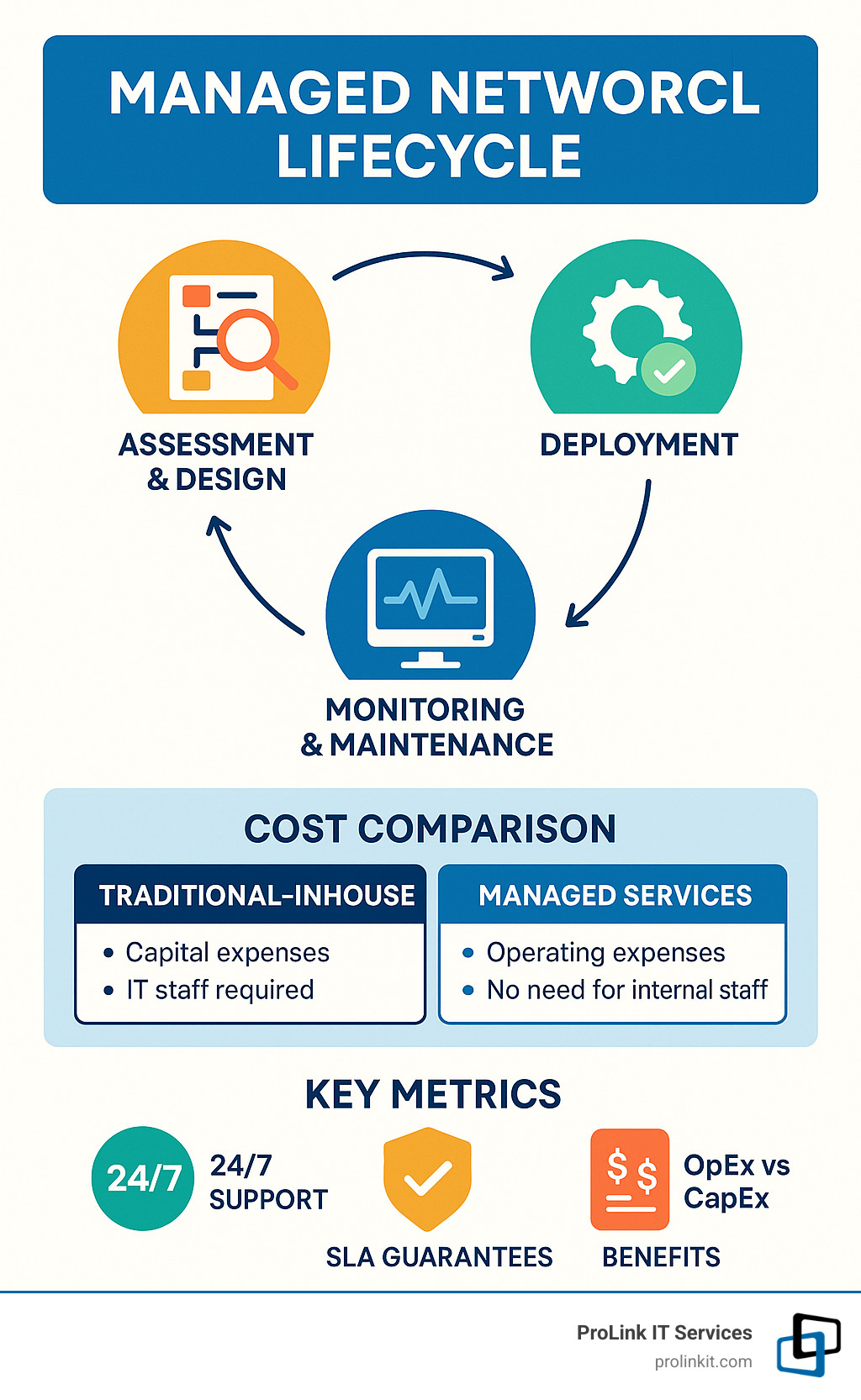
What Are Managed Networks?
Picture having a team of network experts working around the clock to keep your business connected – without them being on your payroll. That’s exactly what managed networks deliver. These services let external providers remotely operate, monitor, and maintain your networking infrastructure while you focus on running your business.
The concept traces back to the 1960s with Centrex PBX systems, but modern managed networks really took off after the 1996 Telecommunications Act opened up competition. Today’s services have evolved to include complete network lifecycle management – everything from initial design and procurement to installation, configuration, and ongoing support.
Most managed service providers host these services in their own data centers, delivering them under strict Service Level Agreements (SLAs). This approach gives your business access to enterprise-grade infrastructure and expertise without the massive capital investment that used to be required.
Managed Networks vs. Traditional Self-Managed Setups
The difference between managed networks and traditional setups is like comparing a full-service car lease to buying and maintaining your own vehicle. With traditional networks, you purchase all the hardware, hire internal IT staff, and handle every aspect of network management yourself.
Traditional self-managed networks require large upfront capital expenses for equipment, plus you need specialized in-house staff to keep everything running. Managed network services flip this model entirely. Instead of big upfront costs, you get predictable monthly operational expenses. Rather than hiring and training internal staff, you gain access to entire teams of specialists.
| Feature | Self-Managed | Managed Networks |
|---|---|---|
| Initial Cost | High CapEx | Low/No CapEx |
| Staffing | Internal hiring required | Provider’s expert team |
| Scalability | Hardware-dependent | Service-level adjustments |
| Support Hours | Business hours only | 24/7/365 |
| Technology Updates | Manual upgrades | Automatic updates |
| Risk Management | Internal responsibility | Provider SLAs |
Core Components of a Managed Network Stack
Modern managed networks aren’t just one service – they’re multiple layers of technology working together seamlessly.
Local Area Network (LAN) management handles your internal network infrastructure including switches, access points, and all the connections between devices within your office or facility.
Wide Area Network (WAN) and SD-WAN services connect multiple locations and provide internet access. Software-Defined WAN (SD-WAN) leverages multiple connection types – broadband, cellular, even satellite – with intelligent traffic routing for cost-effective, resilient connectivity.
Wi-Fi and wireless management covers everything from access point deployment and configuration to ongoing optimization, including guest network setup and seamless roaming between access points.
Security services integrate multiple layers of protection including firewalls, intrusion detection, content filtering, and threat intelligence. Many providers now offer Secure Access Service Edge (SASE) solutions that combine networking and security in a single, cloud-delivered platform.
Analytics and monitoring provide real-time visibility into network performance, user behavior, and potential issues. Advanced platforms use machine learning to predict problems before they impact users and automatically optimize performance.
Types of Managed Network Services
Think of managed network services as a buffet where you can pick exactly what your business needs. Some companies want the full feast – complete infrastructure management from switches to security. Others prefer à la carte options, maybe just Wi-Fi management or security monitoring.
At ProLink IT Services, we’ve helped businesses find their perfect combination of services, whether that’s comprehensive Network Management or targeted solutions for specific challenges.
Managed LAN & Wi-Fi
Your Local Area Network is like the nervous system of your office – it connects everything and keeps information flowing smoothly. Managed LAN services take care of all the behind-the-scenes work that keeps your switches, cables, and connections running perfectly.
This includes network access control to keep unauthorized devices off your network, traffic prioritization so your important applications get the bandwidth they need, and network segmentation for security.

Wi-Fi management has become a science all its own. Managed Wi-Fi services solve connectivity issues with seamless roaming between access points, automatic channel optimization to avoid interference, and load balancing so no single access point gets overwhelmed.
The real magic happens with zero-touch provisioning. When you add a new location or replace equipment, everything configures itself automatically.
Managed WAN & SD-WAN
Traditional Wide Area Networks were like having one expensive highway between your locations – usually an MPLS connection. Software-Defined WAN (SD-WAN) is like having a smart GPS that can use highways, side roads, and even dirt paths to get your data where it needs to go.
SD-WAN services combine broadband internet, cellular connections, and even satellite links into one intelligent network. The system automatically chooses the best path for each type of traffic.
The latest research on global networking trends shows businesses are embracing SD-WAN because it cuts costs while actually improving performance.
Managed Security & SASE
Network security used to be like having a guard at the front door – once you were inside, you could go anywhere. Modern managed security services work more like a security system that watches everything, everywhere, all the time.
Secure Access Service Edge (SASE) combines networking and security into one cloud-delivered service. Instead of having separate systems for firewalls, web filtering, and access control, SASE handles everything from a single platform.
Our 24/7 Protection: How Network Security Services Keep Your Data Safe approach includes threat intelligence, zero-trust network access, and compliance reporting.
Network as a Service (NaaS) vs. Managed Networks
Network as a Service takes the subscription model to its logical conclusion. Instead of buying equipment and then paying for management services, NaaS includes everything – hardware, software, management, and support – in one monthly payment.
Gartner’s research on NaaS adoption shows growing interest in this model, especially among businesses that want predictable costs and don’t want to deal with technology refresh cycles.
The choice between managed networks and NaaS often comes down to control versus convenience. Managed services give you more flexibility with equipment choices and provider changes, while NaaS offers simplicity and predictable costs at the expense of some control.
Business Value: Benefits, Pricing Models & SLAs
The real magic of managed networks is that they turn a cost center into a growth engine. Once routine break-fix work moves off your plate, your in-house staff can focus on projects that actually improve customer experience or drive revenue.
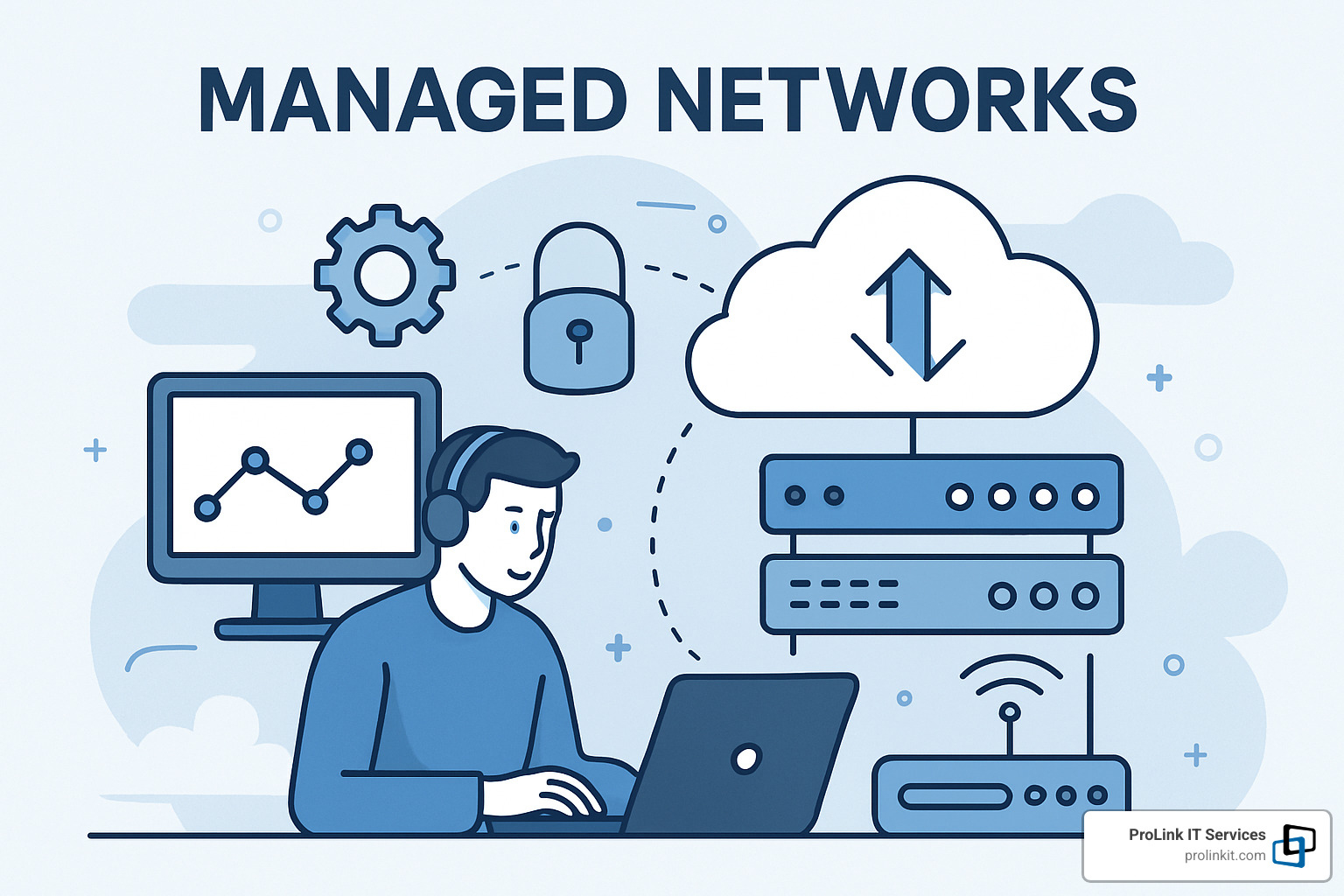
Key Benefits
- Reclaim up to 46 % of internal IT time now spent on upkeep.
- Tap hard-to-find network engineering talent without hiring wars.
- Shift to OpEx for smoother budgeting and fewer surprise expenses.
- Get 24/7 monitoring and security SLAs most firms can’t staff themselves.
Our Managed IT Services model treats these outcomes as a partnership goal, not just a service list.
Common Pricing Models
- Per device – $100-$500 monthly for each switch, firewall or access point.
- Per user – $25-$100 per employee per month, useful for stable headcounts.
- Tiered bundles – choose monitoring-only, standard, or premium levels.
Always confirm what’s included—after-hours support, security monitoring and onsite visits often differ by tier.
Why SLAs Matter
SLAs are your safety net. Look for 99.9 % (or better) uptime, rapid response targets for critical issues and clear performance dashboards so you can verify the promises in real time.
Implementation Insights: Choosing a Provider & Overcoming Challenges
Picking a managed network partner is a strategic decision, not a commodity buy. At ProLink IT Services, our veteran-owned culture emphasizes discipline and transparent expectations from day one.
Selection Checklist
- Proven expertise – ask to meet the engineers who will support you.
- True 24/7 NOC – confirm live staffing, not after-hours voicemail.
- Local field support – remote fixes are great until hardware fails.
- Relevant compliance experience – crucial for healthcare, finance, etc.
- Customer references – call peers of similar size and industry.
A favorite question: What happens if a core switch dies at 2 AM? The answer reveals real-world readiness.
Mitigating Common Risks
- Loss of control – demand visibility dashboards and shared decision rights.
- Data privacy – review access policies and encryption standards.
- Integration pitfalls – test critical apps during pilot phases.
- Vendor lock-in – clarify exit terms before you sign.
Foundation for Cloud & Digital Change
Modern managed networks are the launchpad for hybrid cloud, AI-driven operations and edge computing. Choose a provider that views your network as a strategic asset, not just another support ticket.
Real-World Perspectives & Future Trends
The true test of managed networks isn’t in the sales brochure – it’s in how they perform when your business depends on them. With $6 trillion lost globally to cyberattacks last year, the stakes couldn’t be higher.
Quick Case Study Snapshots
A regional retail chain came to us frustrated with their 50 locations and skyrocketing MPLS costs. We implemented managed SD-WAN services that cut their connectivity costs by 40% while actually improving performance. The game-changer? Zero-touch provisioning. New stores went from weeks to connect down to just days.
A hospital system needed to support thousands of medical devices, staff smartphones, and patient Wi-Fi across multiple buildings. Managed Wi-Fi services provided the specialized healthcare expertise they couldn’t hire internally. The 24/7 monitoring meant critical medical applications never lost connectivity, and compliance reporting happened automatically.
When the pandemic hit, a professional services firm suddenly needed 500 remote workers online immediately. Managed network services provided the rapid scaling and security optimization that would have taken their small IT team months to implement.
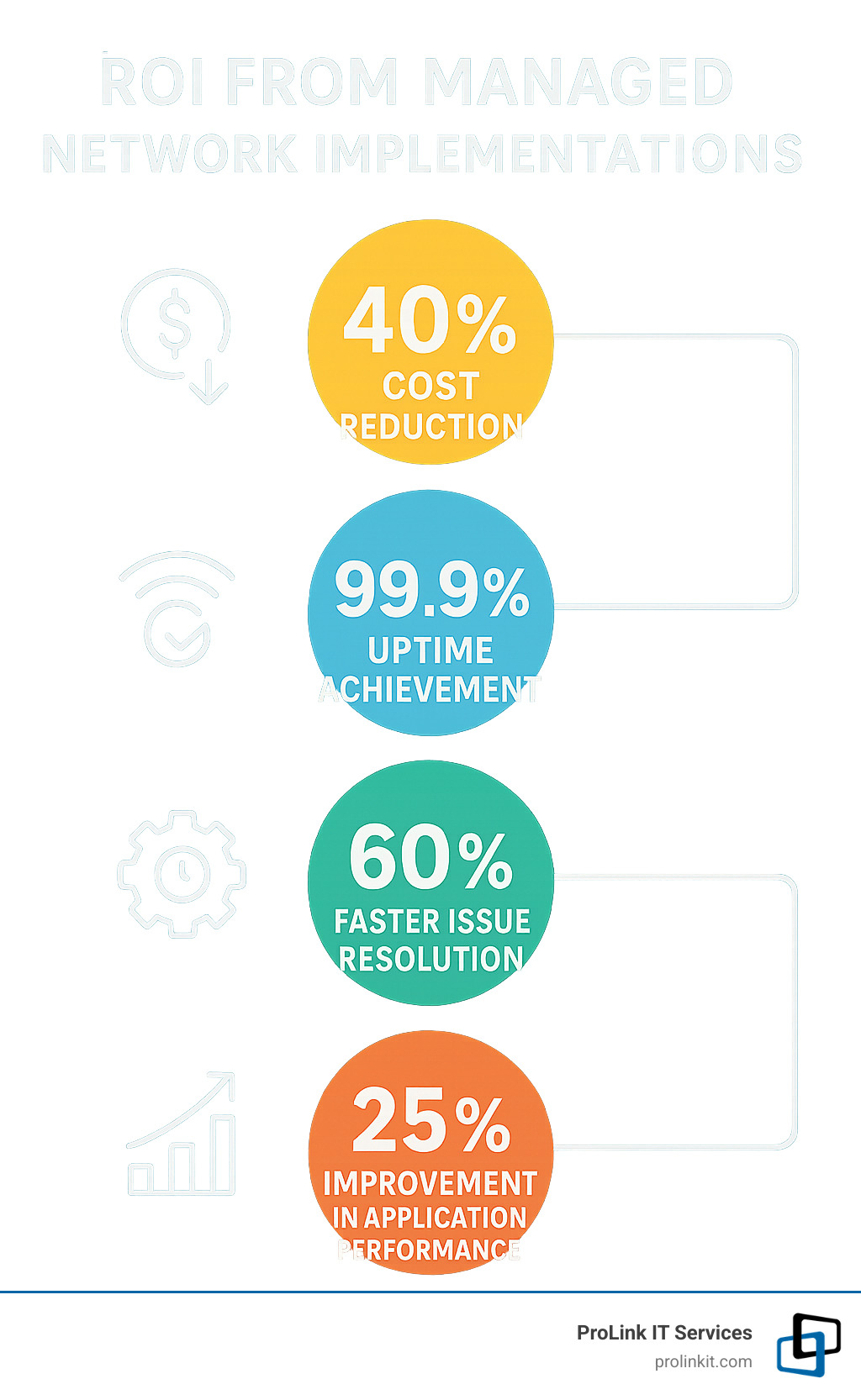
What strikes me about these examples is the agility factor. Each business achieved results that seemed impossible with their internal resources. More importantly, they freed their teams to work on projects that actually grew their business.
Consumer Angle: Managed Networks on iPhone & Beyond
You’re already using managed networks more than you realize. Check your iPhone’s Wi-Fi settings right now – see those “T-Mobile Managed” or “Verizon Managed” entries? Those are managed network profiles working behind the scenes to make your life easier.
When you make a Wi-Fi call, your phone automatically connects through these managed profiles. They handle authentication, call routing, and seamless handoffs between Wi-Fi and cellular networks. The magic is that it just works – you don’t think about the complex technology making it possible.
This consumer experience perfectly illustrates what business managed networks should feel like. When implemented properly, they disappear into the background while making everything work better.
Looking Ahead: AI, Automation, SASE & 5G Powering Managed Networks
The future of managed networks is arriving faster than most people realize. Networks are becoming genuinely intelligent, not just monitored by smart people.
Artificial intelligence is changing network operations through self-healing capabilities. Modern managed networks can predict equipment failures, automatically reroute traffic around problems, and even resolve common issues without human intervention.
SASE platforms are revolutionizing how we think about network security. Instead of separate networking and security tools, SASE combines everything into cloud-delivered platforms. This is particularly powerful for businesses with remote workers and cloud applications.
5G network slicing opens possibilities we’re just beginning to explore. Managed service providers can create dedicated network segments with specific performance characteristics.
The trend toward automation and zero-touch operations means managed networks will become even more reliable and easier to use. Self-service portals, automated policy enforcement, and predictive maintenance are becoming standard features.
At ProLink IT Services, we’re excited about these emerging technologies and how they’ll benefit our clients. Our veteran-owned approach means we evaluate new capabilities carefully, focusing on proven solutions that deliver real business value.
Frequently Asked Questions about Managed Networks
What is a managed network in simple terms?
Think of managed networks like having a dedicated pit crew for your race car – except instead of keeping your car running at peak performance, they’re keeping your business’s internet and network infrastructure humming along perfectly.
Here’s how it works: Instead of your internal team spending half their day troubleshooting network issues, fixing Wi-Fi problems, or updating security settings, an external provider takes care of all that technical stuff remotely. They’re watching your network 24/7 from their operations center, catching problems before they turn into headaches for you and your team.
The beauty is that you get access to a whole team of network specialists without having to hire them full-time. These folks live and breathe networking technology – they know the latest security threats, understand how to optimize performance, and can spot potential issues long before they impact your business operations.
Most of the time, you won’t even know they’re working. Your internet just works better, your Wi-Fi is more reliable, and those mysterious network slowdowns become a thing of the past.
How are managed networks priced?
Managed network pricing can seem confusing at first, but most providers use pretty straightforward models once you understand the basics.
Per-device pricing is probably the most common approach. You’ll pay somewhere between $100-500 monthly for each piece of network equipment they manage – things like your switches, firewalls, and wireless access points. The price varies based on how complex the device is and what level of service you want.
Per-user pricing works differently – instead of counting devices, they charge based on how many people use your network. This typically runs $25-100 per person monthly and can be great for businesses with lots of users but simpler network setups.
Some providers offer tiered service levels where you can choose between basic monitoring, standard management, or premium service with all the bells and whistles. Think of it like choosing between economy, business, or first-class service.
The all-inclusive approach gives you unlimited devices and users for one flat monthly fee. This can be cost-effective for larger businesses but might be overkill if you’re just getting started.
Here’s the thing most people don’t realize: those monthly costs often pay for themselves through reduced downtime, fewer emergency IT calls, and freeing up your team to work on projects that actually grow your business. Plus, you get predictable monthly expenses instead of surprise bills when equipment breaks or needs upgrading.
Do managed networks replace my IT team?
This is probably the biggest misconception about managed networks – they’re not about replacing your IT team, they’re about making your team more effective and less stressed.
Think about it this way: if your IT person spends most of their time putting out network fires, when do they have time to work on the technology projects that actually help your business grow? Managed networks handle all that routine maintenance stuff so your team can focus on the interesting challenges.
Your internal team will still handle the strategic stuff that requires understanding your business – planning new technology initiatives, helping users with applications, figuring out how technology can solve business problems, and managing relationships with all your different vendors.
The managed network provider takes care of the behind-the-scenes technical work – monitoring network performance around the clock, applying security updates, troubleshooting connectivity issues, and making sure everything stays running smoothly.
For smaller businesses without a dedicated IT person, managed networks can provide enterprise-level network management that would be impossible to achieve on your own. You get access to expertise that would cost a fortune to hire full-time.
For larger organizations, it’s about efficiency and expertise. Your team gets to work on projects that directly impact the business while network specialists handle the technical details they’re trained for.
The result? Your IT team is happier because they’re not constantly fighting fires, your network runs better because it’s managed by specialists, and your business benefits from both improved reliability and more strategic technology planning.
Conclusion
The journey through managed networks reveals a fundamental truth about modern business: the most successful organizations focus on what they do best while partnering with experts for everything else. Just like you wouldn’t perform surgery on yourself, managing complex network infrastructure is best left to specialists who live and breathe this technology every day.
Think about those sobering statistics we discussed. Nearly half of your IT team’s time gets consumed by routine network operations, while cyberattacks drain $6 trillion from the global economy annually. These aren’t just numbers – they represent real businesses struggling with technology complexity instead of focusing on growth and innovation.
Managed networks offer an neat solution to this challenge. By shifting from ownership to partnership, from capital expenses to predictable monthly costs, and from reactive problem-solving to proactive monitoring, businesses can access enterprise-grade networking capabilities without the traditional headaches and overhead.
The change isn’t just about cost savings. It’s about freeing your team to work on projects that actually move your business forward. It’s about sleeping better at night knowing that network experts are watching your systems around the clock. It’s about having the confidence to scale rapidly without worrying about infrastructure limitations.
Your smartphone already shows you how seamless managed networks can be. Those carrier-managed Wi-Fi profiles work invisibly in the background, switching between cellular and Wi-Fi connections without you even noticing. That same level of seamless operation is possible for your business network – when it’s managed by the right partner.
At ProLink IT Services, our veteran-owned approach brings something unique to this partnership model. We understand discipline, integrity, and the importance of having reliable systems when it matters most. Our military backgrounds taught us that preparation prevents problems, and that philosophy guides everything we do in Network Management.
The future is already here, and it’s increasingly managed, intelligent, and service-based. AI-driven operations, SASE security, and 5G capabilities are changing what’s possible with network infrastructure. The businesses that accept this evolution will have significant advantages in agility, security, and cost-effectiveness.
The question isn’t whether managed networks will become the standard – they already are for forward-thinking businesses. The question is whether you’ll lead this change in your industry or spend years playing catch-up while struggling with increasingly complex infrastructure requirements.
We’d welcome the opportunity to discuss how managed networks could transform your specific situation. Every business has unique requirements, challenges, and goals, and the best managed network solutions are custom to support those individual needs.
The invisible web of connectivity that powers our modern world doesn’t have to be a source of stress and complexity for your business. With the right partner, it becomes a competitive advantage that enables everything else you want to accomplish.