

Managed Network Services Explained – Because Your Network Shouldn’t Manage You
Why Your Network Is Too Important to Wing It
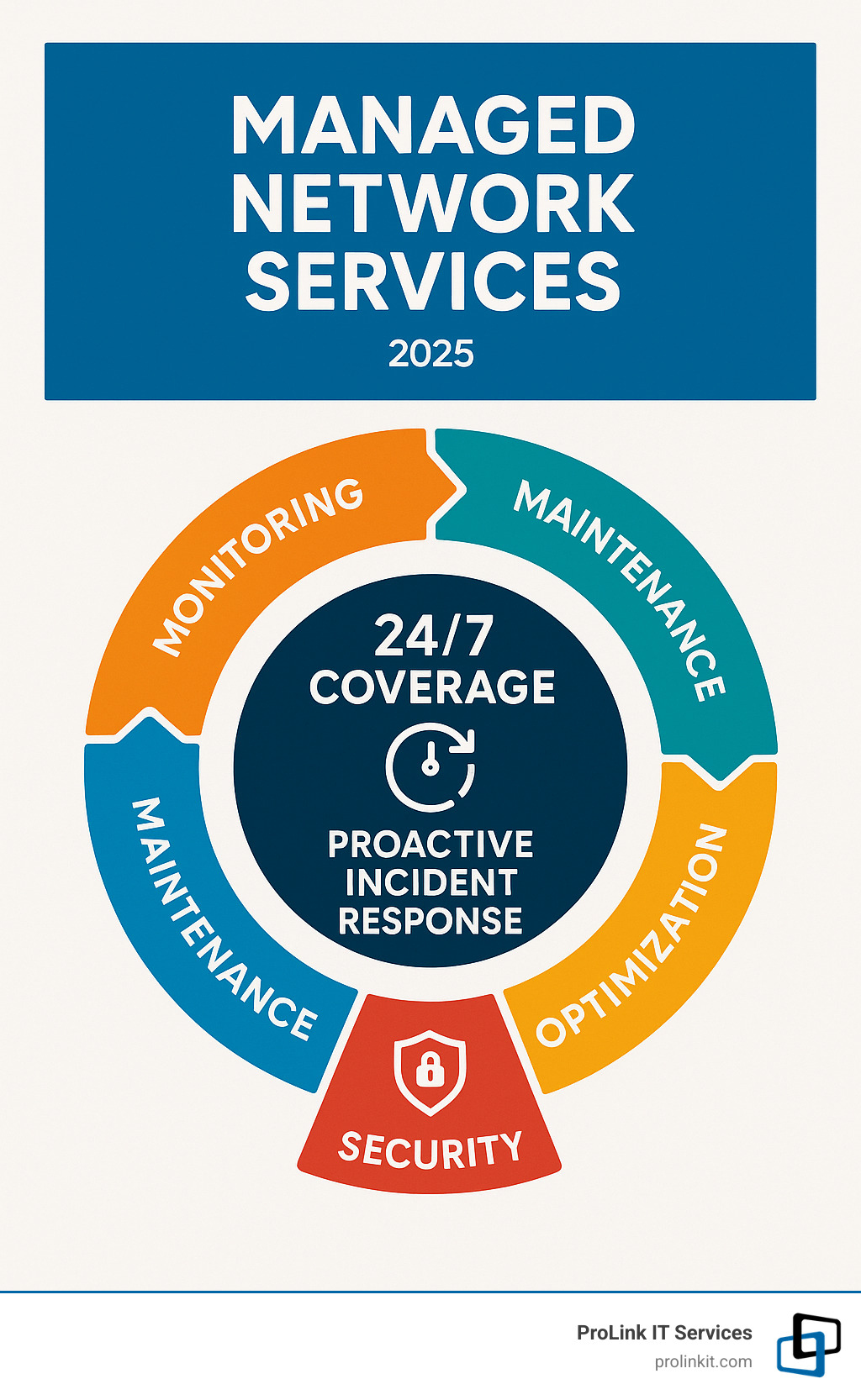
Managed network services are third-party solutions that handle the design, monitoring, maintenance, and optimization of your business network infrastructure. Here’s what you need to know:
Core Services Include:
- 24/7 network monitoring and support
- LAN/WAN management and optimization
- Security management (firewalls, VPNs)
- Cloud connectivity and SD-WAN
- Performance analytics and reporting
- Disaster recovery planning
Key Benefits:
- Reduced downtime (saves $5,600 per minute on average)
- Lower IT costs (vs. $130,000+ median IT salaries)
- Improved security (ransomware attacks happen every 11 seconds)
- Expert support without hiring full-time staff
If your business relies on network connectivity – and let’s be honest, whose doesn’t these days – then your network infrastructure is mission-critical. Network downtime costs businesses an average of $5,600 per minute, while IT professionals command median salaries of $130,000 annually. Meanwhile, ransomware attacks occur every 11 seconds, and 94% of companies now use cloud computing daily.
The math is simple: you can’t afford network problems, but you might not be able to afford the expertise to prevent them.
That’s where managed network services come in. Instead of playing IT roulette with your business operations, you get professional-grade network management without the professional-grade price tag of building an entire IT department.
I’m Mitch Johnson, and I’ve spent over 20 years helping businesses steer complex IT challenges through managed network services and comprehensive technology solutions. At ProLink IT Services, we’ve seen how the right managed network services approach transforms businesses from reactive fire-fighting to proactive growth.
Why This Guide Matters
The digital change isn’t coming – it’s here. With the average organization using 36 cloud-based services per day, the complexity of managing modern networks has exploded beyond what most internal IT teams can handle effectively.
Consider these realities:
- Cost of downtime: At $5,600 per minute, even brief outages can cost thousands
- Skills gap: Finding qualified network engineers is increasingly difficult and expensive
- Digital change: Cloud adoption, remote work, and cybersecurity threats require specialized expertise
We’ve written this guide to help you understand how managed network services can address these challenges while positioning your business for growth rather than just survival.
What Are Managed Network Services?
Think of managed network services as having your own expert IT team, but without the headaches of hiring, training, or wondering if they’ll quit right before your busy season. These are networking applications, functions, and services that you outsource to be remotely operated, monitored, and maintained by a managed service provider.
Here’s what makes managed network services work: outsourcing your network operations to specialists who live and breathe this stuff, getting Network Operations Center (NOC) functionality with 24/7 monitoring, and proactive monitoring that catches issues before your employees even know something’s wrong.
The coverage is comprehensive too – we’re talking about your LAN, WAN, wireless networks, and security components all working together. Modern services include SD-WAN management for optimized application performance and Network as a Service (NaaS) models that treat your connectivity like a utility – you just use it, and it works.
For businesses looking to understand how this fits into their broader IT strategy, our Network Management services provide a comprehensive foundation that covers all the bases.
Managed Network Services vs. In-House IT
The biggest difference between managed network services and traditional in-house IT isn’t just what gets done – it’s how you pay for it and sleep at night.
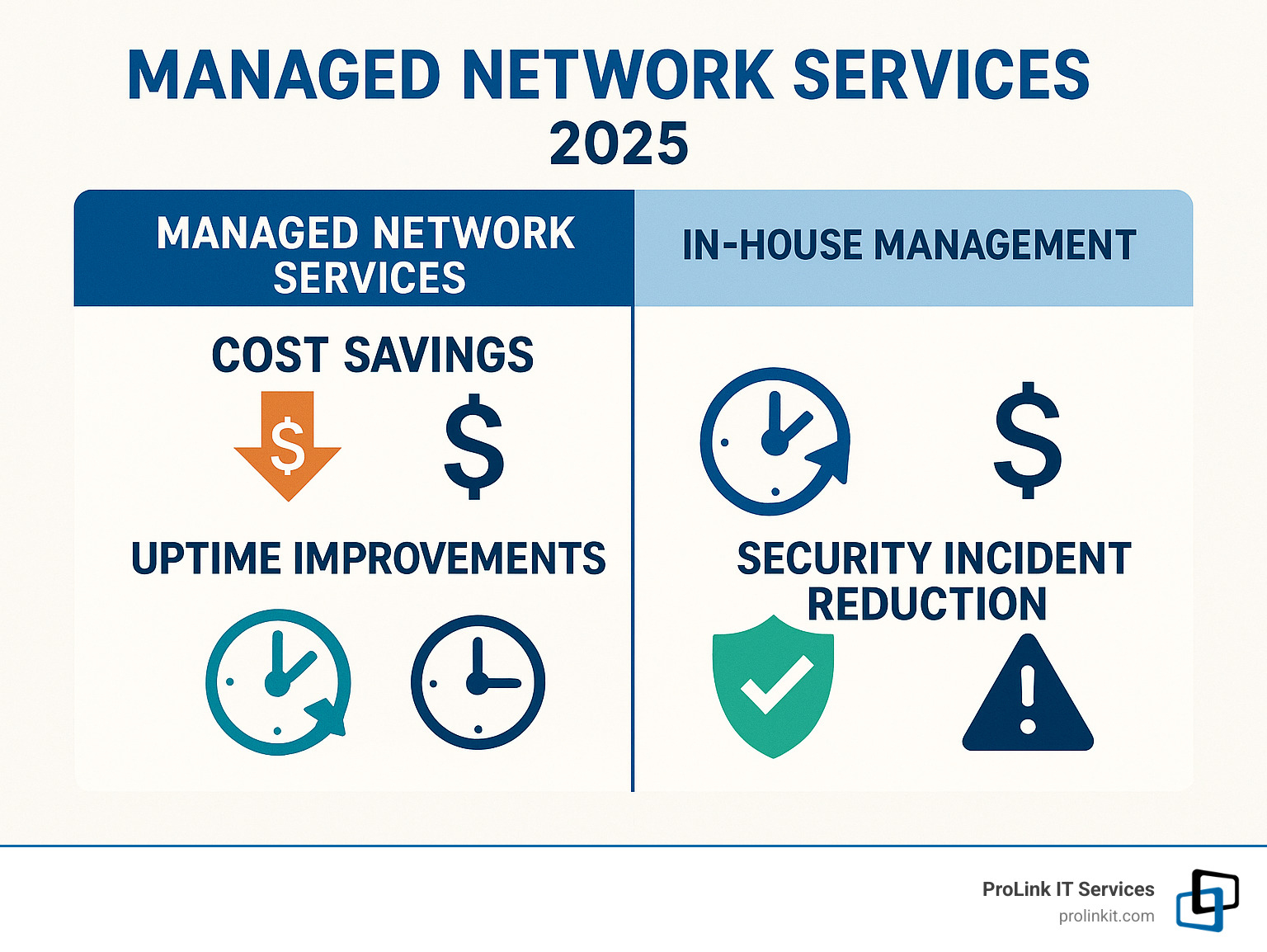
The financial model shift is huge. Instead of massive CAPEX to OPEX changes where you’re buying expensive equipment upfront, you pay predictable monthly fees. No more surprise $50,000 server purchases that make your accountant cry.
Staffing costs tell the real story. IT professionals command $130,000+ median salaries, plus benefits, training, and the constant worry they might leave for a better offer. With managed services, you get 24/7 support without paying for multiple shifts of internal staff who need vacation time and sick days.
| Aspect | In-House IT | Managed Network Services |
|---|---|---|
| Staffing | Hire, train, retain | Instant access to experts |
| Coverage | Business hours (typically) | 24/7/365 monitoring |
| Expertise | Limited to team knowledge | Access to specialized skills |
| Technology | Purchase and maintain | Latest tools included |
| Scalability | Hire more staff | Adjust service levels |
Evolution of Managed Network Services
The story of managed network services shows how we got from “fix it when it breaks” to “prevent it from breaking in the first place.”
Starting with 1960s Centrex managed PBX services, the concept evolved through the 1984 Bell System breakup and 1996 Telecommunications Act, which opened up competition. The 2000s brought MPLS networks with reliable, high-performance managed WAN services.
Around 2010, SD-WAN changed everything. Software-defined networking enabled more flexible and cost-effective managed services. Today, we’re in the SASE and cloud era, where modern managed network services integrate Security Access Service Edge architectures, combining networking and security in cloud-delivered services.
For organizations exploring these modern architectures, What is NaaS, and should I adopt it? provides valuable insights into Network as a Service models.
Core Components of Managed Network Services
Think of managed network services as the complete toolkit that keeps your business running smoothly. It’s like having a Swiss Army knife for your network – everything you need is right there when you need it.
At the foundation level, you’ve got your managed LAN services covering switch configuration, VLAN setup, and Quality of Service (QoS) settings. Managed WAN services handle the bigger picture – connecting your locations and optimizing data flow with router management, bandwidth optimization, and failover systems.
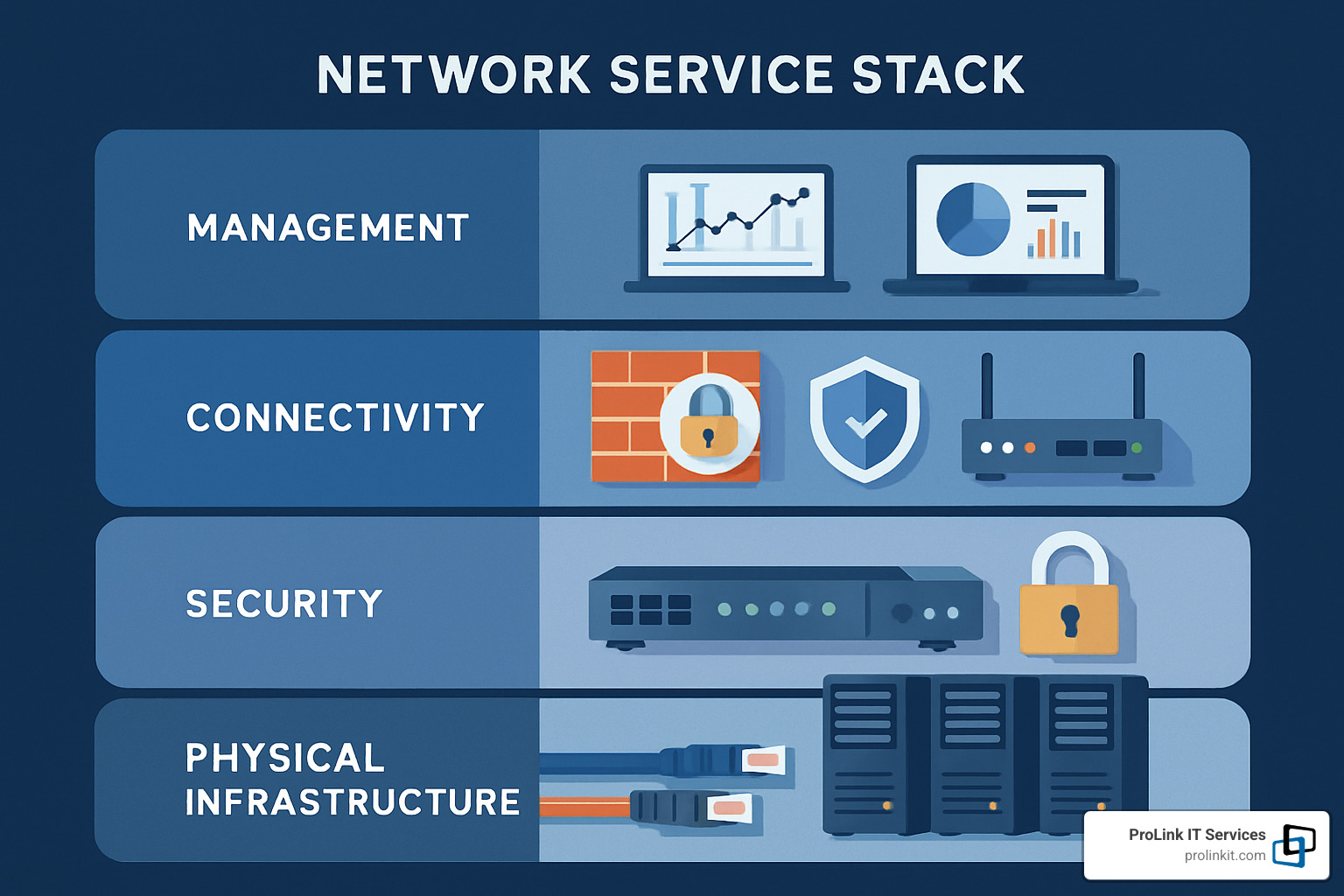
Wireless management ensures everyone stays connected with properly placed access points, guest networks, and wireless security. Firewall and VPN services act as your digital security guards with next-generation firewalls, secure VPN tunnels, and intrusion detection systems.
Cloud connectivity has become essential as businesses accept cloud services. Whether you’re using AWS, Microsoft Azure, or other platforms, managed services ensure your cloud connections are fast, reliable, and secure.
Disaster recovery planning means you’re ready when things go wrong with network backup systems, tested failover procedures, and clear recovery plans. Performance analytics turn your network data into actionable insights with real-time monitoring, bandwidth reports, and capacity planning.
The Managed Network Services Toolbox
Behind the scenes, managed network services rely on sophisticated tools that most businesses could never afford or manage on their own.
Monitoring tools watch your network 24/7, catching issues before they impact your business. Ticketing and workflow systems ensure nothing falls through the cracks with automated ticket creation and escalation procedures.
Automation capabilities handle routine tasks like configuration changes, patch deployments, and backup scheduling. AI and machine learning analytics predict failures before they happen, detect security threats, and recommend optimizations.
Managed Network Services: Key Functions
The beauty of managed network services lies in how they cover every aspect of your network’s lifecycle.
Planning starts with understanding your business needs and designing networks that support your goals. Deployment involves getting everything set up correctly with equipment procurement, configuration, and testing.
Optimization is where managed services really shine with continuous monitoring that identifies opportunities to improve performance and reduce costs. Compliance management ensures you meet regulatory requirements with automated monitoring and policy enforcement.
| Function | In-House Approach | Managed Services Approach |
|---|---|---|
| Planning | Limited by internal expertise | Access to industry best practices |
| Deployment | Resource-intensive | Streamlined with proven processes |
| Monitoring | Business hours coverage | 24/7/365 monitoring |
| Optimization | Reactive improvements | Proactive optimization |
Benefits, Challenges & Risk Mitigation
Let’s be honest: managed network services aren’t a magic wand, but they do deliver impressive benefits while helping you steer challenges that keep business owners awake at night.
The numbers tell a compelling story. When your network goes down, you’re looking at $5,600 per minute in costs. With professional managed services typically achieving 99.9% uptime or better, you’re protecting your revenue stream.
Then there’s the talent challenge. Finding a qualified network engineer means competing for professionals who command median salaries of $130,000 or more. Managed network services flip this equation with predictable monthly costs instead of capital expenses that hit your budget hard.
The security benefits alone justify the investment. With ransomware attacks happening every 11 seconds and data breaches averaging $4.35 million in costs, professional security management isn’t optional – it’s survival. You get 24/7 security monitoring, threat intelligence, and rapid incident response.
For a comprehensive look at these advantages, check out our analysis of the Top Benefits of Using Managed IT Services for Your Business.
How Managed Network Services Reduce Risk
Ransomware defense starts with real-time monitoring that catches threats before they spread. Professional providers implement network segmentation, automated patch management, and incident response procedures that minimize damage.
Compliance frameworks become manageable instead of overwhelming. Whether dealing with HIPAA, PCI-DSS, or SOX requirements, automated compliance monitoring tracks everything continuously with regular audit preparation and policy enforcement.
Incident response transforms from chaos to coordinated action with 24/7 security operations centers, defined escalation procedures, and forensic analysis capabilities.
According to Forbes data on downtime, businesses investing in proactive risk management see significantly lower downtime costs and faster recovery times.
Managed Network Services Challenges & Solutions
Vendor lock-in worries are legitimate. The solution lies in choosing providers who use open standards and offer clear exit strategies. Maintain your own documentation and ensure data portability is part of your contract.
Transparency concerns are valid when handing over control of critical systems. Demand detailed reporting and dashboard access. Establish clear communication protocols and schedule regular reviews.
SLA dependence means your success is tied to provider performance. Negotiate comprehensive service level agreements with meaningful penalties and regular performance reviews.
The secret to success is treating the relationship as a true partnership rather than a vendor transaction.
Security, Reliability & Scalability Built In
When your business depends on staying connected, you need managed network services that work under pressure, grow with you, and keep threats out.
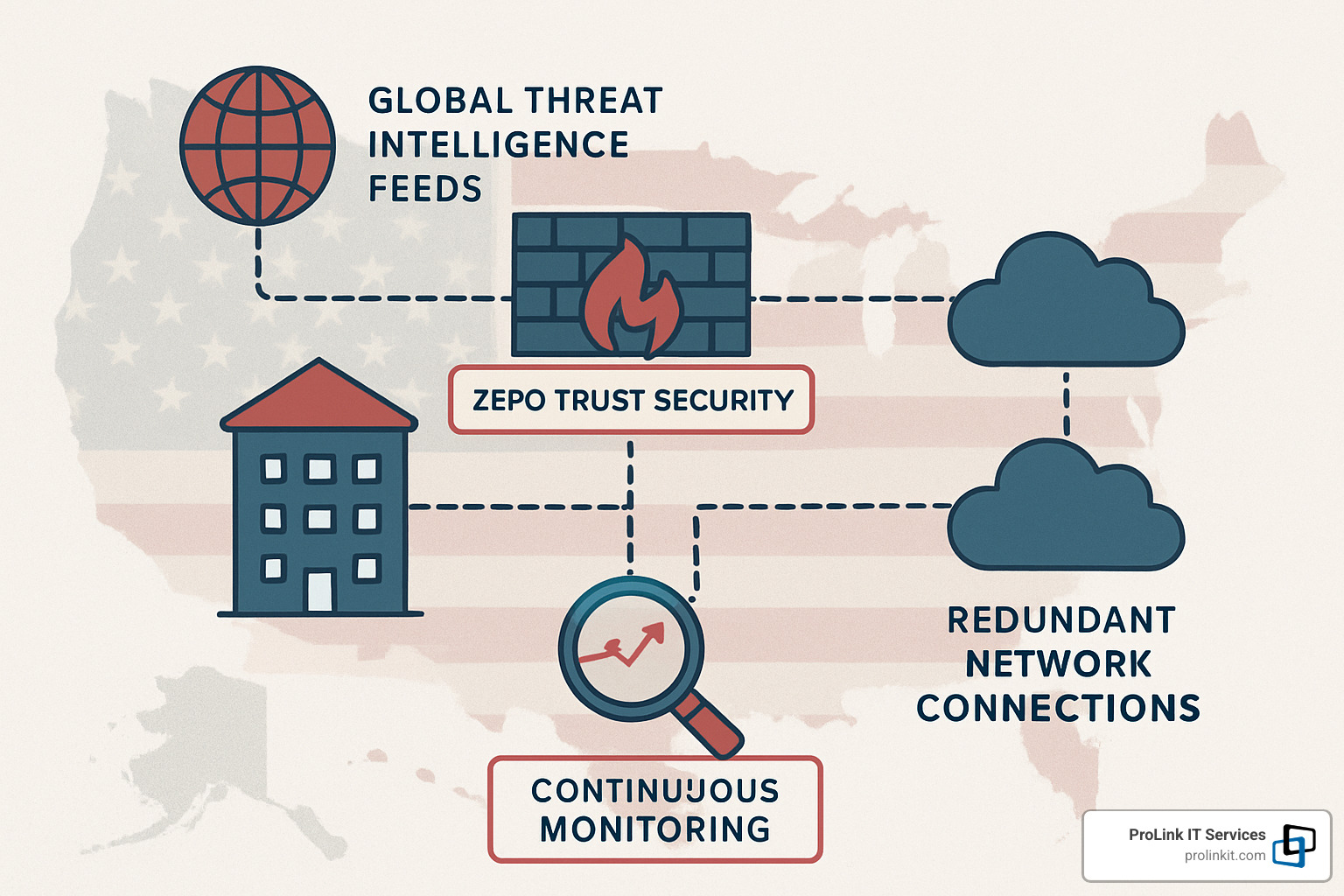
Threat intelligence integration means your provider isn’t just waiting for problems – they’re plugged into global security feeds that spot trouble before it reaches your door. Real-time threat updates, behavioral analysis, and coordinated responses to new exploits all happen automatically.
The zero-trust architecture approach treats everyone like a stranger until proven otherwise. Every user and device gets verified, access stays limited to what’s needed, and continuous monitoring catches suspicious activity.
For businesses needing comprehensive security, our guide on 24/7 Protection: How Network Security Services Keep Your Data Safe explains how these pieces fit together.
Managed Network Services for Security & Uptime
Managed firewalls get constant attention with 24/7 monitoring and rule management. When threats appear, automated responses kick in immediately with regular policy reviews and compliance reporting.
DDoS protection works like having a bouncer at your network’s door. Traffic analysis spots trouble patterns, automated mitigation scrubs bad traffic, and capacity scaling handles massive attacks.
The goal is five-nines availability – 99.999% uptime, or less than 5.26 minutes of downtime per year. This happens through redundant infrastructure, automated failover, smart maintenance scheduling, and continuous optimization.
Scaling with Managed Network Services
Business growth should be exciting, not terrifying. Managed network services make scaling your network as easy as flipping a switch.
On-demand bandwidth means you get exactly what you need, when you need it. Automatic allocation handles basics, burst capacity covers busy periods, and pay-as-you-grow pricing keeps costs reasonable.
Branch rollout support takes the headache out of opening new locations with standardized configurations, remote deployment, centralized management, and consistent security policies.
Seasonal spike management handles predictable busy times with predictive capacity planning, temporary bandwidth increases, and load balancing. Hybrid workforce support keeps remote workers connected safely with VPN access, cloud optimization, mobile device management, and unified communications.
Choosing the Right Managed Network Services Provider
Finding the right managed network services provider isn’t just about comparing price sheets. It’s about finding a partner who understands your business and can grow with you.
Provider Evaluation Framework
When evaluating providers, start with fundamentals. Certifications and expertise matter – look for Cisco, Juniper, or other vendor certifications along with security certifications like CISSP, CEH, or SANS and compliance certifications such as SOC 2 and ISO 27001.
Industry experience tells you whether a provider can deliver. Check their years in managed network services, client retention rates and testimonials, and ask for case studies from similar organizations.
Geographic coverage becomes critical when you need support. You want local presence for on-site support, national or global coverage for multiple locations, and 24/7 support across time zones.
Pricing models significantly impact budget predictability. Per-device pricing offers fixed monthly costs per managed device for predictable budgeting. Tiered service levels provide different response times and features with upgrade flexibility.
All-you-can-eat models provide fixed monthly fees for unlimited services, while usage-based pricing lets you pay for actual consumption, ideal for seasonal businesses.
For comprehensive security alongside network management, our Managed Security Services provide integrated protection.
Critical SLA Elements for Managed Network Services
Service Level Agreements are your safety net. Uptime guarantees should include network availability commitments of 99.9% or higher with clear planned maintenance windows and service credits for missed targets.
MTTR commitments define how quickly problems get fixed with maximum resolution times by severity and clear escalation procedures. Penalty clauses give SLAs teeth with service credits for violations and contract termination rights for repeated failures.
Reporting cadence keeps you informed with monthly performance reports, real-time dashboard access, quarterly business reviews, and annual strategic planning sessions.
Ten Questions to Ask About Managed Network Services
Before signing, get clear answers to essential questions. Service scope clarity prevents surprises – know exactly what’s included. Response times matter when your network is down, so get guaranteed times in writing.
Understand the onboarding process timeline and your involvement. The support model should include 24/7 support with dedicated account management. Data ownership becomes crucial if you change providers – ensure you own your configurations and documentation.
Scalability questions reveal how quickly services can scale. Integration capabilities determine compatibility with existing systems. Compliance support should cover required frameworks. Cost transparency prevents budget surprises, and references from similar clients provide real-world insight.
Frequently Asked Questions about Managed Network Services
What exactly falls under “managed network services”?
When people ask about managed network services, they’re often surprised by how comprehensive these services can be.
At the core infrastructure level, managed services handle everything from routers and switches to wireless access points. This includes ongoing monitoring that catches problems before outages, performance optimization, and proper configuration management.
Security is a huge component that many businesses underestimate. Your provider handles firewall management, VPN setup and maintenance, and monitors for security threats around the clock.
Cloud connectivity has become increasingly important as businesses move operations online. This includes SD-WAN deployment, cloud connectivity optimization, and multi-site networking.
The support and maintenance aspect means 24/7 monitoring and technical support. No more waiting until Monday to fix Friday’s network problem.
How do pricing models for managed network services work?
Understanding pricing for managed network services uses one of four main approaches.
Per-device pricing is straightforward – you pay monthly for each piece of equipment managed. This typically runs $50-200 per device monthly, depending on complexity and service level.
Tiered service models offer different service levels at different price points. Higher tiers include faster response times, more comprehensive monitoring, or additional services like security management.
Flat-rate pricing means one monthly fee regardless of device count or support needs. This works well for larger organizations with complex networks.
Usage-based pricing charges based on actual bandwidth consumption or service usage, working well for businesses with seasonal fluctuations.
How can managed network services fill my organization’s skills gap?
The IT skills shortage affects businesses everywhere. With network engineers commanding $130,000+ salaries, many organizations can’t afford the expertise they need.
You get immediate access to expertise that would take months to recruit. These are certified professionals with experience across multiple technologies who know industry best practices.
The continuous learning aspect is often overlooked. Technology changes constantly, and keeping teams current requires ongoing training. Managed service providers make this investment because it’s their core business.
Scalable expertise means you get the right support level when needed. Complex redesign gets senior engineers, routine maintenance gets dedicated support staff, and security incidents get immediate specialist response.
At ProLink IT Services, we’ve seen how this partnership transforms organizations. Instead of struggling to find specialized talent, you get access to a full expert team who become an extension of your business.
Conclusion
Your network isn’t just cables and routers – it’s the backbone of everything your business does. With managed network services, you’re not just outsourcing IT headaches; you’re building a partnership that transforms how your business operates.
When network downtime costs $5,600 every minute and cyber attacks happen every 11 seconds, hoping your current setup holds together isn’t a strategy – it’s a gamble. The real question isn’t whether you can afford managed network services, but whether you can afford to keep rolling the dice with your operations.
The Partnership Difference
At ProLink IT Services, we’ve learned that technology works best when backed by genuine partnership. Our veteran-owned approach brings military discipline and integrity to every client relationship, understanding that your success is our success.
We don’t just monitor your network – we get to know your business, understand your challenges, and build solutions that make sense for your goals. Whether you’re cutting costs, locking down security, or just want to sleep better knowing your network won’t crash at 2 AM, we’re in your corner.
Future-Ready Networks Today
With 94% of companies using cloud computing and businesses juggling 36 different cloud services, network complexity isn’t going away. But that complexity doesn’t have to be your problem.
Managed network services give you access to expertise and resources needed to handle whatever technology throws at you next. While you focus on growing your business and serving customers, we handle the technical complexity that keeps everything running smoothly.
Your Network Should Work for You
The best networks are ones you don’t have to think about. They just work, day after day, supporting your team and serving customers without drama or downtime. That’s what we build – networks that enable your business instead of managing it.
Ready to see what a true partnership approach to managed network services looks like? We’re here to help you build a network strategy that supports your goals rather than limiting them.
For more information about our comprehensive approach to network infrastructure, visit our Network Management services page to find how we can help your organization thrive in today’s connected world.
Remember: you started your business to solve problems for your customers, not to become a network engineer. Let us handle the complexity while you focus on what you do best – building something great.