

Top Cloud Computing Management Software – Because Excel Sheets Won’t Cut It
Beyond the Spreadsheet: Why Manual Cloud Management Is Holding You Back
Cloud computing management software is a comprehensive solution that enables organizations to monitor, control, and optimize cloud resources across public, private, and hybrid environments from a centralized interface. These platforms automate tasks like resource provisioning, cost tracking, security monitoring, and compliance management that would otherwise require manual effort and multiple tools.
Top Cloud Computing Management Software Categories:
- Multi-Cloud Management: Unified control across AWS, Azure, Google Cloud (CoreStack, Morpheus Data, Flexera One)
- Cost Management & FinOps: Track spending, identify waste, optimize resources (VMware Aria Cost, IBM Turbonomic, CloudZero)
- Automation & Orchestration: Infrastructure as Code, automated provisioning (Terraform, Red Hat OpenShift, Kubernetes)
- Security & Compliance: Threat detection, policy enforcement, audit trails (TotalCloud, DivvyCloud, Lacework)
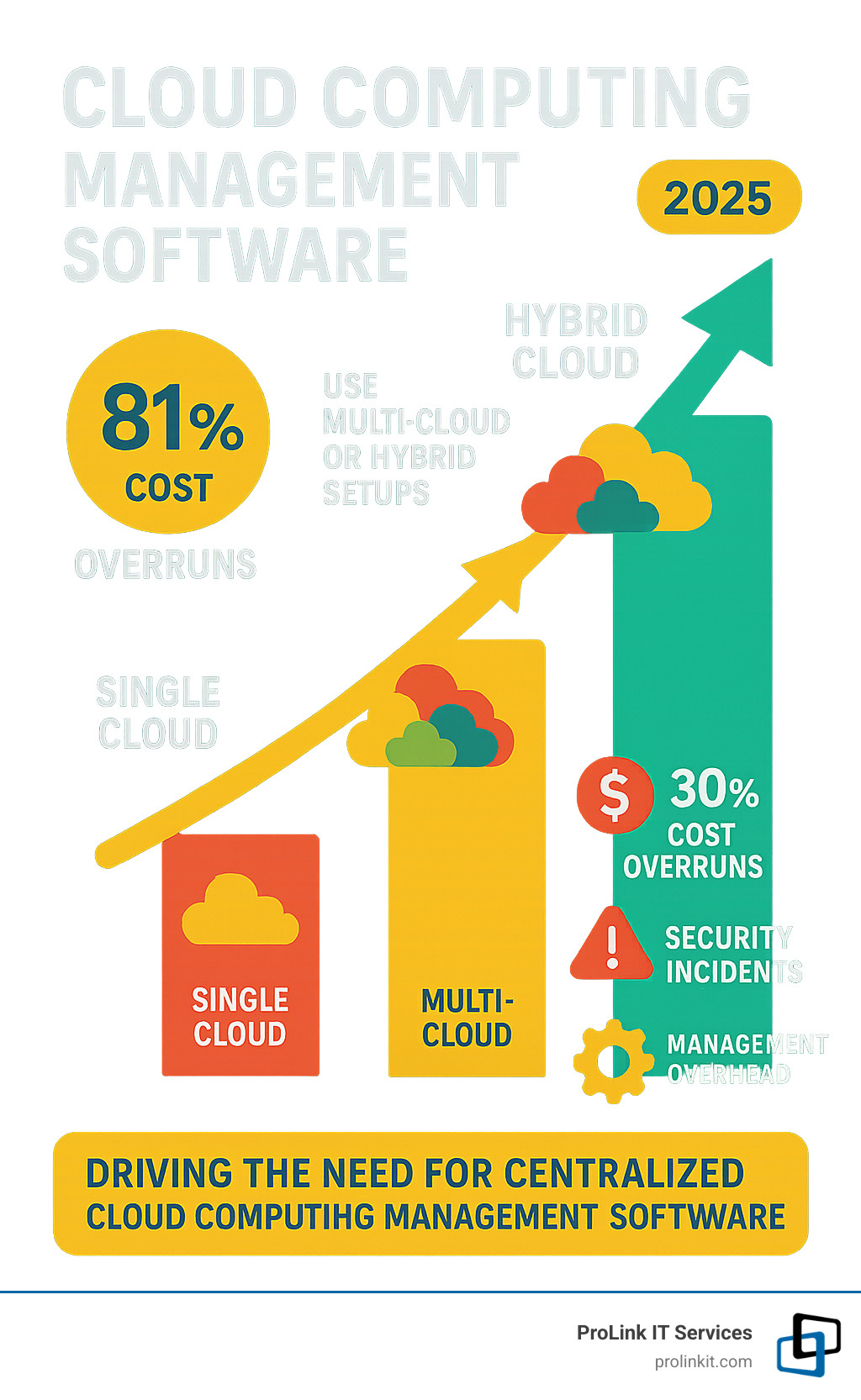
If you’re still tracking cloud costs in Excel or juggling multiple vendor dashboards, you’re not alone. 81% of companies use multi-cloud or hybrid setups, but most lack the tools to manage them effectively. The result? Wasted resources, security gaps, and the kind of surprise bills that make CFOs very unhappy.
Modern businesses need platforms that can optimize cloud costs by 30% or more while automating the routine tasks that eat up IT team time. The right software transforms cloud chaos into organized, cost-effective operations.
I’m Mitch Johnson, and over my 20 years in technology, I’ve helped countless businesses transition from manual cloud management to automated cloud computing management software solutions. At ProLink IT Services, we’ve seen how the right platform can turn cloud complexity into a competitive advantage.
Basic cloud computing management software terms:
The Core Benefits of Taming Your Cloud Environment
Managing multiple cloud environments without the right tools is like conducting an orchestra with musicians in different rooms. Cloud computing management software brings everything together, giving you a conductor’s clear view of every section.
The most immediate change is centralized control. Instead of jumping between AWS, Azure, and Google Cloud dashboards, everything lives in one place, providing a crucial bird’s-eye view.
This unified approach leads to significant cost optimization. These platforms track spending in real-time, spot unused resources, and help you rightsize everything, preventing wasted budget on idle virtual machines. The reduced waste can be eye-opening, as companies often over-provision servers without clear visibility into usage patterns.
With data breaches averaging nearly $5 million in costs, security is critical. These platforms provide improved security through centralized monitoring and proactive risk management, sending alerts before problems escalate into disasters.
Automation drives increased efficiency. By handling routine tasks like server scaling automatically, these platforms free your team to focus on strategic projects. Performance monitoring becomes effortless with real-time tracking and automatic adjustments, ensuring high availability even during traffic surges and preventing late-night emergencies.
As your business grows, the platform provides scalability and governance, adapting to expanding needs while enforcing consistent policies and security standards. These benefits are interconnected: better visibility leads to cost savings, automation improves security, and centralized control boosts efficiency. To learn how these advantages apply to you, check out our cloud-based managed services page.
Key Categories of Cloud Computing Management Software
Searching for cloud computing management software can feel overwhelming, as the landscape is huge and every platform seems to promise everything. Fortunately, these tools fall into four main categories, each designed to solve specific cloud challenges. This breakdown is your roadmap to finding the right solution for your biggest challenge first.
Multi-Cloud & Hybrid Cloud Management
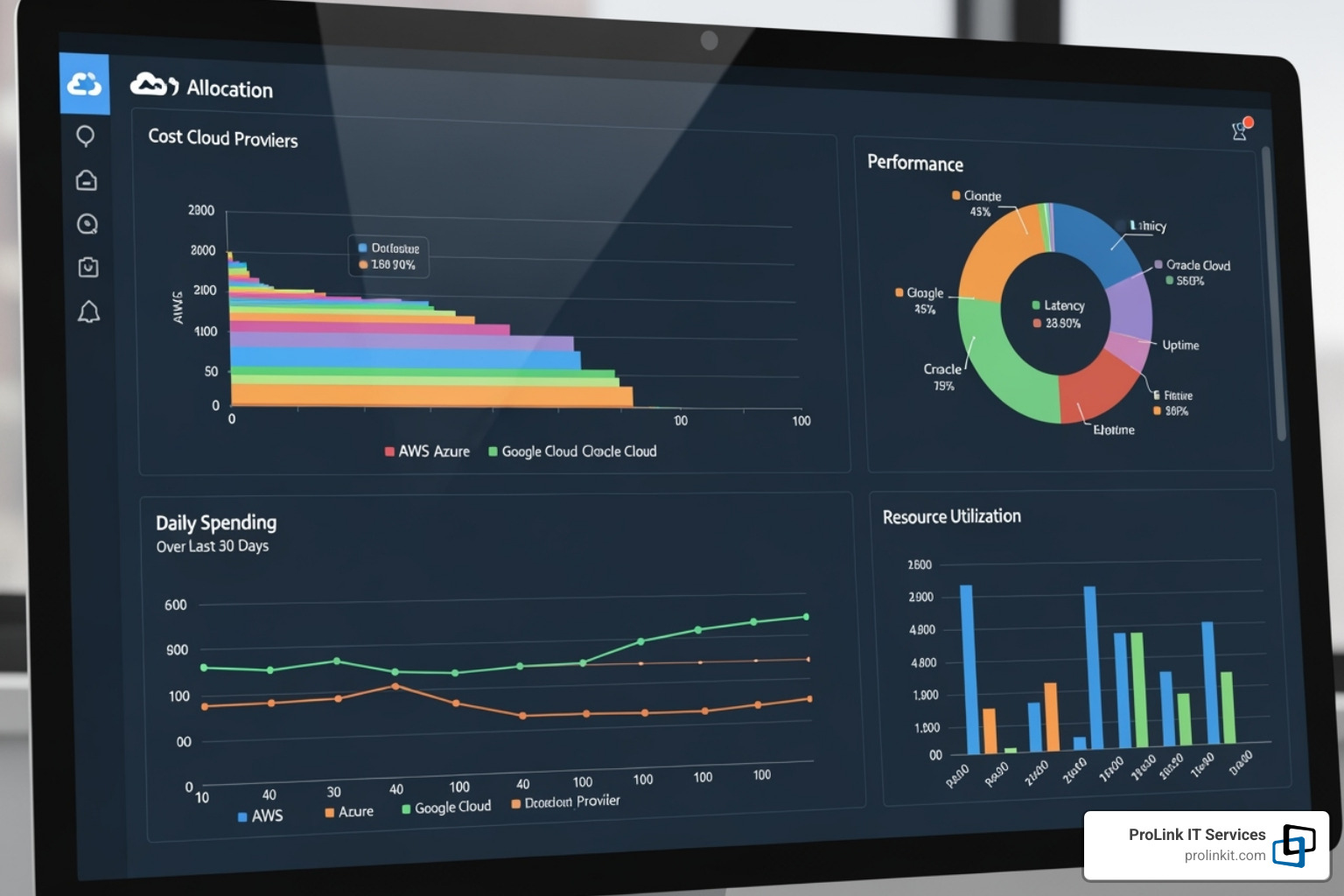
With 81% of companies using multi-cloud or hybrid setups, juggling providers like AWS, Azure, and on-premises servers is common. Multi-cloud management platforms solve this complexity with a unified dashboard. Instead of logging into multiple consoles, you get a single, clear view of all resources, changing chaos into clarity through centralized management.
These platforms focus on interoperability, helping your systems talk to each other seamlessly. Good cloud computing management software makes workload mobility—moving a workload from AWS to Azure for cost or performance reasons—feel as simple as dragging a file.
CoreStack excels in multi-cloud FinOps, helping forecast spending across providers. Morpheus Data offers an agnostic approach to orchestration for private, public, or hybrid clouds. Flexera One provides a comprehensive view for large enterprises, covering IT assets, SaaS governance, and financial operations. Nutanix Cloud Platform simplifies infrastructure by integrating computing, storage, and networking.
When evaluating these platforms, look for unified visibility, robust policy enforcement, and tools for automated workload placement and migration.
Cloud Cost Management & FinOps
Cloud bills can be complex and confusing. If you’ve ever been baffled by a cloud invoice, you need better cost management. Cloud computing management software in this category transforms mysterious bills into clear, actionable insights. These platforms provide granular cost tracking, showing exactly where every dollar goes, and enable accurate budgeting and forecasting so you can predict spending.
The real magic is anomaly detection, which learns your spending patterns and alerts you to unusual activity, like a developer accidentally leaving a large database running. They also excel at resource optimization and rightsizing by identifying over-provisioned servers.
VMware Aria Cost offers excellent multi-cloud visibility for optimizing spending and utilization. IBM Turbonomic automatically adjusts resources to prevent over-provisioning while maintaining performance. CloudZero provides granular cost breakdowns by feature, team, or customer, helping you understand true unit economics.
For more strategies on optimizing cloud productivity, check out our guide to Explore Top Cloud Services to Boost Productivity.
Automation & Orchestration
Manually setting up servers, configuring networks, and installing software is tedious and error-prone. Automation and orchestration tools are designed to eliminate these manual tasks that consume valuable IT team time.
The foundation is Infrastructure as Code (IaC), where you define infrastructure in code files for version control. This enables automated provisioning that can spin up complex environments in minutes. The best platforms include self-healing capabilities to detect and fix problems automatically. Workflow automation and CI/CD integration create smooth pipelines that accelerate development and deployment.
Terraform is a leader in IaC, allowing you to manage resources across any cloud with configuration files. For containerized applications, Red Hat OpenShift Container Platform is a comprehensive enterprise solution. Kubernetes remains the gold standard for container orchestration, offering flexibility and self-healing capabilities.
Automation can extend to your entire network. Learn more with our managed network services.
Security & Compliance
In the cloud, security is paramount. With sensitive data in remote data centers, maintaining airtight security and meeting regulatory requirements is a 24/7 job. The average data breach costs nearly $5 million, making robust security tools a necessity.
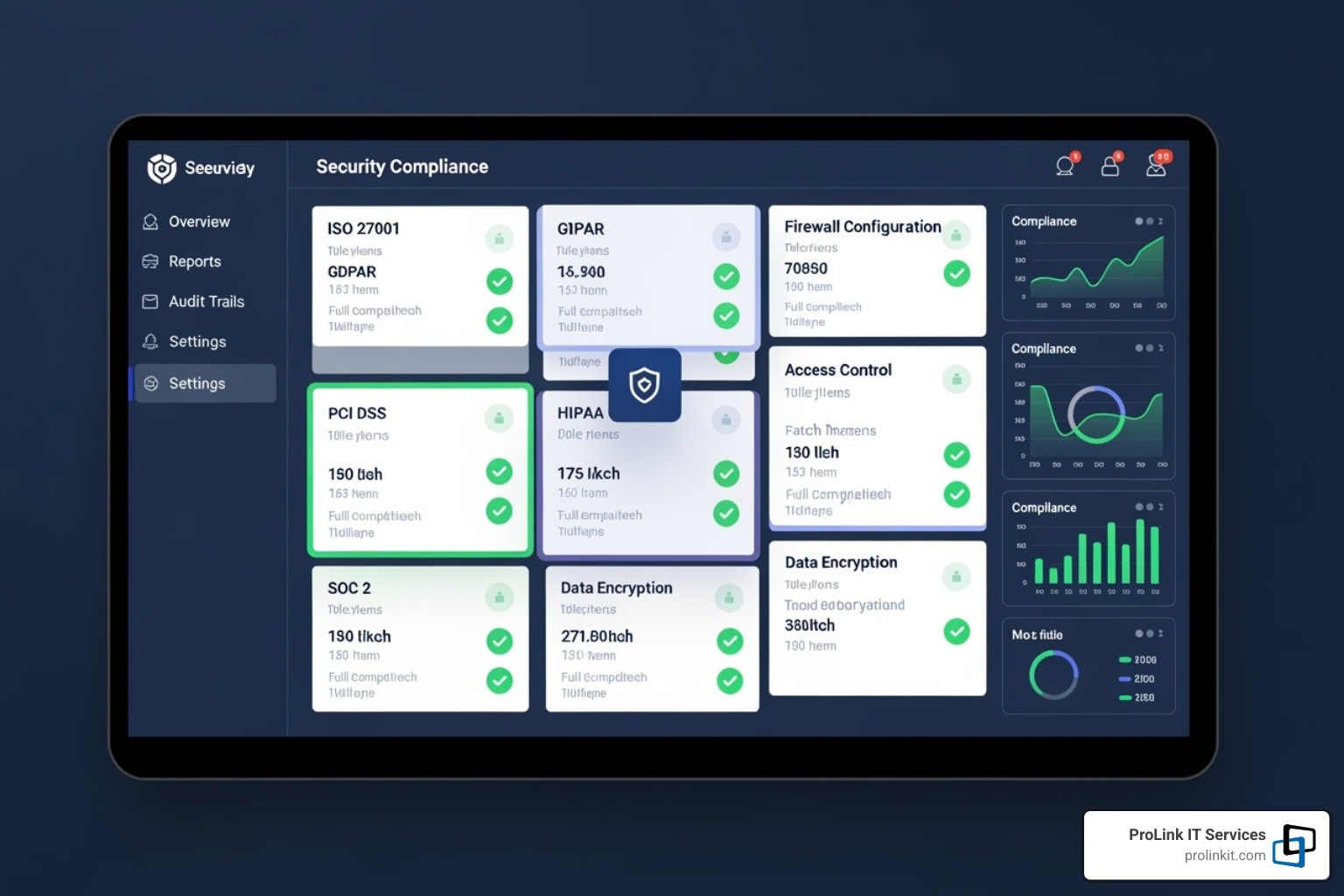
Cloud computing management software for security provides continuous threat detection and vulnerability scanning to identify problems before they become disasters. They use policy enforcement to ensure every resource follows your security guidelines.
Automated compliance features help you meet standards like HIPAA, GDPR, or ISO 27001 without manual effort. These tools continuously monitor your environment and generate detailed audit trails, making compliance reporting straightforward.
TotalCloud from Qualys allows for customized security automation, including vulnerability scanning and remediation. DivvyCloud (now part of Rapid7) specializes in automating security for public cloud and container environments. Lacework uses AI to correlate threats across platforms for comprehensive protection.
For deeper insights into protecting your cloud environment, explore our specialized cloud security managed services.
How to Choose the Right Platform for Your Business
Choosing the right cloud computing management software is a critical decision. It’s not one-size-fits-all; what works for a large enterprise might be overkill for a startup. The key is finding a reliable, compatible platform that meets your specific needs.
Start with a thorough business needs analysis. Identify your primary pain points: are they surprise cloud bills, security vulnerabilities, or the complexity of managing multiple clouds? A clear definition of your problems helps you focus on solutions that matter.
Consider your scalability requirements. Your chosen platform must evolve with your business, handling traffic spikes and integrating new services as you grow. A scalable platform prevents the future headache of switching tools.
Integration capabilities are crucial. The platform must work seamlessly with your existing tools, like help desks and CI/CD pipelines. Poor integration creates data silos and manual workarounds.
A good user interface is essential for adoption. If a platform is too complex, your team won’t use it. Look for clean, intuitive interfaces that make complex tasks manageable.
Customer support is your lifeline when issues arise. Look for vendors with responsive support, comprehensive documentation, and an active user community.
Finally, analyze the total cost of ownership, not just the monthly price. Factor in implementation, training, and maintenance costs. A platform that’s easier to deploy can save money long-term.
What to Look for in Cloud Computing Management Software
When helping clients across Utah choose cloud computing management software, we focus on separating marketing promises from real-world performance. Here’s what actually matters.
- Core functionality: Ensure the platform reliably handles your most critical needs, whether it’s cost tracking, security monitoring, or automation.
- Key features: Look for differentiators like AI-driven insights, advanced analytics, or sophisticated automation that can justify the investment.
- Usability: How easy is setup and daily use? A cumbersome tool will be abandoned, no matter how powerful it is.
- Value for money: Focus on return on investment, not just the lowest price. A platform that saves you $1,000 in wasted resources for a $100 monthly fee is a bargain. Entry-level software starts around $10 to $50 monthly, with enterprise solutions costing more.
- Contextual reporting and root cause analysis: The best platforms don’t just alert you to problems; they help you understand why they happened.
- Self-service capabilities: Empower developers and other teams to provision resources within safe guardrails, accelerating projects and freeing up IT.
- Governance policies: Easily set and enforce rules for resource usage, security, and compliance to maintain control.
For real-world insights, check detailed user reviews on sites like G2. Look for patterns in feedback to gauge a platform’s true strengths and weaknesses.
The Growing Role of AI and Emerging Trends
The cloud management landscape is evolving rapidly, led by artificial intelligence.
- AI-driven optimization: Modern platforms predict demand, automatically adjust resources, and suggest architectural improvements.
- Machine learning for cost prediction: Systems can now forecast future costs based on project timelines, seasonal patterns, and business growth.
- AIOps: These systems learn your infrastructure’s patterns, predict failures, and often fix problems before you’re even aware of them.
- FinOps evolution: This cultural shift brings engineering, finance, and operations together to optimize cloud spending, driving demand for accessible cost data.
- Serverless management: Specialized tools are emerging to track, debug, and optimize ephemeral, event-driven serverless functions.
- Sustainability metrics: Forward-thinking platforms are providing carbon footprint insights alongside performance and cost metrics.
- GitOps: This approach treats infrastructure configuration like application code, using familiar Git-based workflows for deployment and rollbacks.
These trends are shaping how businesses operate in the cloud. For more insights into modern IT infrastructure, explore our IT infrastructure services offerings.
Frequently Asked Questions
Over the years at ProLink IT Services, we’ve heard the same questions pop up when businesses explore cloud computing management software. Here are the most common questions and our answers.
What is the difference between cloud computing and a cloud management platform?
Think of cloud computing as the raw utility, like electricity. It’s the on-demand delivery of IT resources like computing power and storage over the internet. A cloud management platform is the smart system that controls that utility. It’s the cloud computing management software that lets you monitor, control, optimize, and secure those resources. While you can use the cloud without a management platform, doing so is like manually flipping switches instead of using an automated system. The platform provides essential control and efficiency.
How does cloud computing management software handle security?
Cloud computing management software provides multi-layered security to prevent costly data breaches, which average nearly $5 million. Key features include real-time threat monitoring to watch for suspicious activity 24/7 and automated policy enforcement to ensure only authorized users access the right resources. The software simplifies audits with automated compliance reporting for standards like HIPAA and GDPR. It also centralizes access control management and ensures data encryption for data in transit and at rest, significantly reducing your organization’s attack surface.
Are these platforms suitable for small businesses?
Absolutely. Modern cloud computing management software is not just for large enterprises. Thanks to scalable pricing and SaaS models, many platforms are accessible to small businesses, with plans often starting in the $10 to $50 monthly range. These tools are especially valuable for smaller teams, as automation benefits allow a single IT person to manage tasks that would normally require a full team. SaaS models provide enterprise-level efficiency, cost savings, and security without the high cost or complexity, freeing small teams to focus on growth. If you’re curious about how managed services can specifically benefit smaller operations, check out our insights on the Top Benefits of Using Managed IT Services for Your Business.
Conclusion: From Chaos to Control with the Right Partner
We’ve taken quite a journey together through cloud computing management software, haven’t we? What started as a conversation about spreadsheet chaos has revealed how these powerful platforms can completely transform your business operations. They turn scattered cloud environments into organized, cost-effective powerhouses that actually work for you instead of against you.
Think about where we started – juggling multiple dashboards, surprise bills, and security gaps that keep you up at night. Now imagine having centralized control over everything, slashing unnecessary expenses by 30% or more, and bolstering security with automated monitoring that never sleeps. These platforms don’t just automate the tedious stuff; they free up your team to focus on the strategic work that drives real business growth.
The importance of strategic cloud management has never been clearer. When 81% of companies use multi-cloud or hybrid setups, trying to manage them manually is like trying to conduct an orchestra while blindfolded. The ability to effectively monitor, optimize, and secure these complex environments isn’t just nice to have anymore – it’s absolutely essential for staying competitive.
Choosing the right tool for your specific needs is your first crucial step. It requires honest reflection about your business objectives, a clear look at your existing infrastructure, and realistic planning for future growth. Whether you’re a small business looking to level the playing field or an enterprise managing complex multi-cloud environments, there’s a solution that fits.
But here’s the thing – you don’t have to steer this complex landscape alone.
At ProLink IT Services, we bring something special to the table. As a veteran-owned company, we approach every client relationship with the same discipline, integrity, and partnership mindset that served us well in the military. Located in West Jordan, UT, and proudly serving businesses across Utah, our team has spent years mastering the nuances of cloud technology.
We help you select, implement, and manage your cloud environment for optimal performance and cost-efficiency. Our expertise ensures you get the maximum return on your cloud investment, turning those potential headaches into seamless operations that just work. We’ve seen too many businesses struggle with the wrong platform or poor implementation – we make sure that doesn’t happen to you.
Ready to move from Excel sheets and multiple dashboards to a truly intelligent cloud computing management software solution? Let’s have a conversation about where you want your business to go. Get expert help with our Managed Cloud Services and take the first step toward real cloud control.